Business
Cooking gas scarcity pushes price to N3,000 per kg

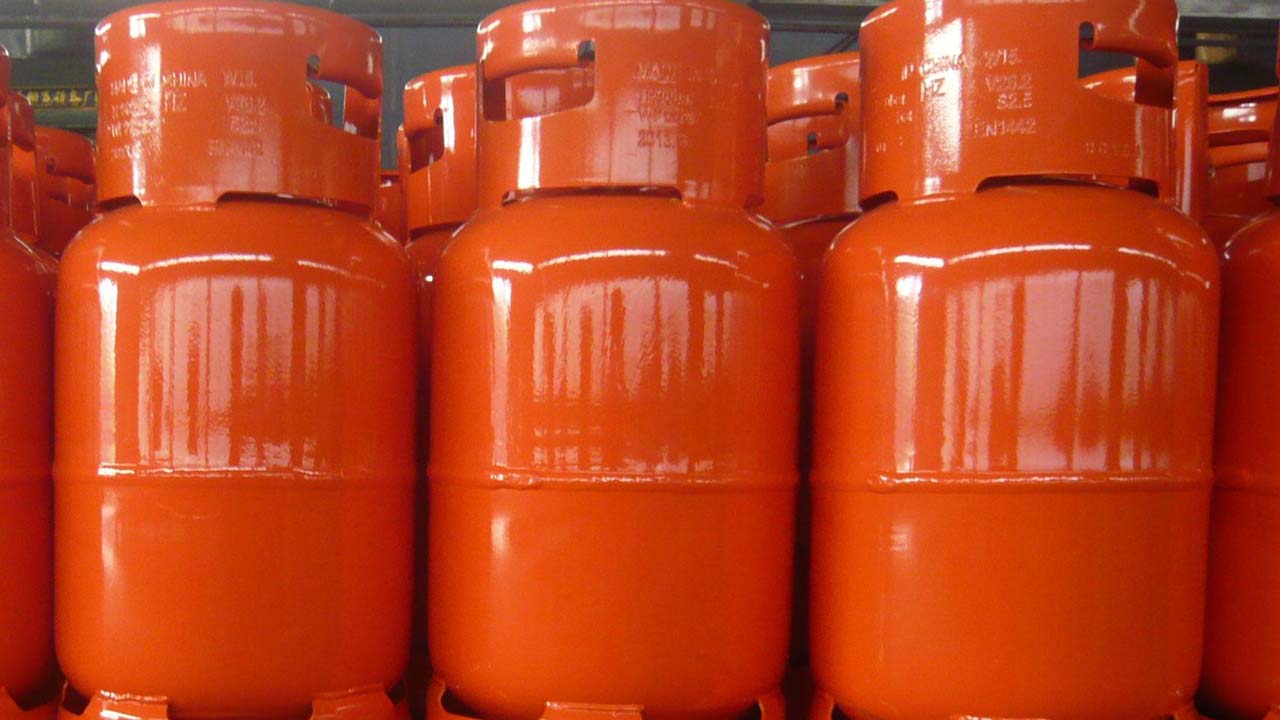
Despite the National Bureau of Statistics (NBS) reporting a drop in the average cost of refilling a 5kg cylinder of Liquefied Petroleum Gas (LPG) from N8,243.79 in July to N6,404.02 in August 2025, The Guardian’s market survey reveals a sharp surge in retail prices, with a kilogram now selling between N1,800 and N3,500 across parts of Lagos and Ogun states.
At Ijeshatedo in Lagos State, a consumer, who struggled to refill her cylinder, described the experience as frustrating and exhausting. She said that long queues had become a daily ordeal, with retailers selling between N3,000 and N3,500 per kilogramme, while filling stations offered slightly lower prices at N2,500, often with hundreds of customers waiting for their turn.She recounted how she spent hours searching for gas the previous day and eventually gave up.
According to her, the situation has become unbearable, forcing many households to consider electric or charcoal alternatives. Similarly, residents at Atan in Ogun State said they bought between N2,000 and N2,500 even with much strain and stress, while in Igando, residents reported paying between N1,800 and N2000 per kilogramme depending on the location. Many complained that the product is not only expensive but increasingly scarce.
President of the Nigerian Association of Liquefied Petroleum Gas Marketers (NALPGAM), Olatunbosun Oladapo, attributed the scarcity and sharp rise in cost to a temporary supply distortion triggered by the PENGASSAN strike and internal maintenance at the Dangote Refinery.

He said that while the strike disrupted vessel berthing at Lagos terminals, the NLNG had supplied Port Harcourt in large volumes, which explains why the South-South region did not experience the same level of scarcity.Oladapo added that normalcy is expected to return within days as Dangote and other suppliers would soon resume full-scale loading.
The NALPGAM President said, “At the moment, I can tell you authoritatively that most of our LPG supply is produced locally. Importation is minimal. In fact, if you import now, you might incur losses because local supply has increased significantly.”
Also, energy law expert and Partner at Bloomfield LP, Dr Ayodele Oni, lamented that despite improved upstream gas and NGL production, Nigeria continues to experience periodic domestic shortages and sharp price increases.
According to him, higher production does not automatically translate into greater domestic bottled-LPG availability, as much of the locally produced LPG is still exported.
He noted that while domestic gas sales rose by about 22 per cent year-on-year to roughly 65,632 metric tonnes in March 2025, a significant share of LPG is monetised through exports instead of being channelled into local bottling and retail.(Guardian)
-

 News16 hours ago
N267bn in education funds lie idle as 70% of Nigerian children can’t read
-
Sports14 hours ago
Celebrity boxing: Boom for entertainers, bane of professional boxers?
-
News16 hours ago
Child soldier: US threatens to cut military aid to Nigeria
-
News16 hours ago
Obasanjo urges increase in 13% derivation for oil-producing states
-
Metro16 hours ago
Hardship: Jigawa almajiri pupils lament decline in free food
-
Business14 hours ago
Power plants record zero output amid grid instability
-
Business23 hours ago
Nigerian Govt can no longer cover electricity tariff shortfalls — Power Minister
-
Politics16 hours ago
Tinubu’s re-election crucial to Nigeria’s prosperity – Hamzat