
News
State debt mounts: Lagos, Edo exceed N100,000 per capita

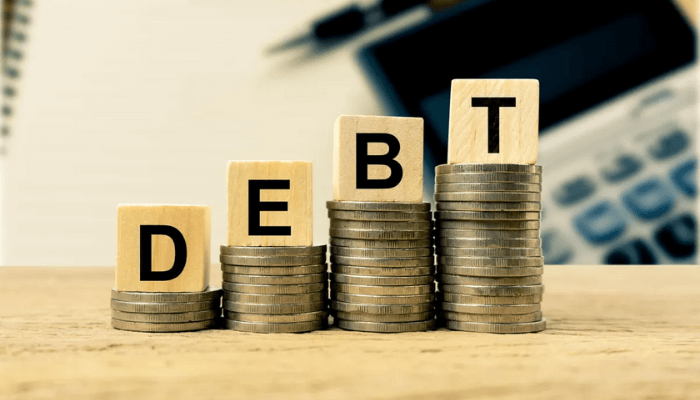
Amid ongoing fiscal tightening, Nigeria’s states are piling up more debt on their citizens. Fresh data from BudgIT’s latest ‘State of States’ report shows that average debt per capita rose slightly from N40,469 in 2023 to N41,766 in 2024, underscoring the growing strain on state finances and public resources.
The report entitled ‘A Decade of Subnational Fiscal Analysis: Growth, Decline and Middling Perfomance’ was launched on Tuesday in Abuja.
According to the report, 12 states—including Lagos, Edo, Kaduna, and Cross River – exceeded the national average. Lagos and Edo stood out with the highest debt per capita, each surpassing N100,000.
The other states above the N41,766 average include: Ogun, Ekiti, Bayelsa, Bauchi, Abia, Enugu, Ebonyi, and Adamawa states.

The debt-per-capita is a metric that calculates the average debt per individual by dividing the total debt by the state’s population. The increase in the metric implies that debt burdens are mounting despite the efforts of the subnational governments to repay their loan obligations.
BudgIT’s press statement, as seen by BusinessDay, attributes this increase to additional liabilities amid current economic challenges.
It stated, “Additional subnational liabilities continued to present challenges, totalling N1.24 trillion in 2024, up from N1.19 trillion in 2023. These included contractor arrears (₦434.87 billion), pension and gratuity obligations (N626.81 billion), salary and staff claims (N33.74 billion), judgement debts and litigation (N62.33 billion), and other miscellaneous liabilities (N73.25 billion).”
States making effort to reduce debt burden
The report also revealed that the state governments are putting efforts to reduce exposure to naira volatility. In the 2024 fiscal year, the 35 reporting states (minus Rivers state) repaid over $200 million in foreign debts.
Lagos, Enugu, and Gombe states recorded the largest reductions in foreign debt, cutting $74.56 million, $33.39 million, and $21.88 million, respectively.
On the domestic front, over N2 trillion was repaid by the subnational governments. In the period under review. Thirty-one states reduced their domestic debt by at least N10 billion, with Lagos, Cross River, and Delta each cutting over N100 billion.
Throwing more light on the source data, BudgIT said, “For some states, there was a disparity between total debt figures quoted in the state’s audit report and values reported by Nigeria’s Debt Management Office (DMO).”
BudgIT further said, “In this light, we used debt data as of 31st December 2024 published by the DMO for each of the 35 states for consistency. A uniform exchange rate of N1,535.3176/$1 (as of 31st December 2024) was adopted for converting external debt components of each state’s debt.”
While giving the keynote address at the launch on Tuesday, Taiwo Oyedele, chairman of the Presidential Fiscal Policy and Tax Reforms Committee, urged citizens to ensure that their state governments use the borrowed monies correctly.
He said: “Borrowing is not the problem. Unproductive accumulation of debt is the problem. If you pay taxes and you do not follow the money, you are at best making a donation. Beyond the dividends of democracy, you must demand value for the taxes.” (BusinessDay)
-

 Politics14 hours ago
As Elections Near, Darkness Tests Tinubu’s Record
-
African News14 hours ago
Ebola: DRC Records 10,668 Cases, 5,198 Deaths, Says WHO
-
Business14 hours ago
Between Peter Obi and Tompolo
-
Politics14 hours ago
I Have Seen the Light – Okowa Gives Reason Why He Ditched Atiku
-
Politics13 hours ago
Hope you’ll visit 33 other states after Akwa Ibom ‘sleep’ – Obi tells Tinubu
-
News14 hours ago
Gas Network Not Responsible for Drop in Electricity – NNPC Counters Power Minister
-
Sports14 hours ago
Nigeria’s Flamingos Win Historic 2026 U17 Women’s World Cup, Beat Japan 2-1
-
Metro14 hours ago
Ex-Oba Joseph Oloyede: The Audacity of a Fallen Monarch