News
Boko Haram’s propaganda was military’s biggest challenge – Ex-Army spokesman

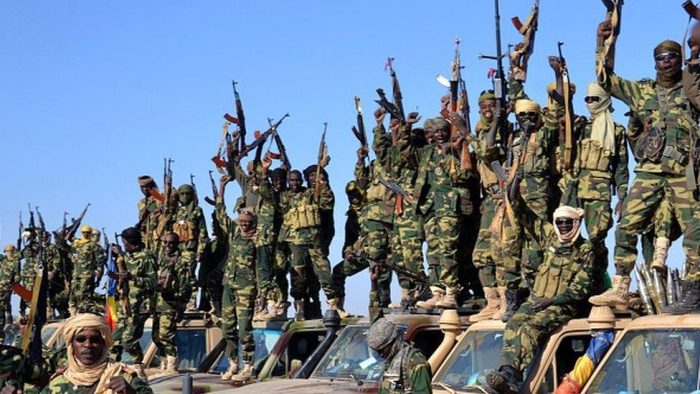
Former Nigerian Army spokesman, Brigadier General Sani Usman (retd.), has revealed that one of the toughest battles in Nigeria’s fight against Boko Haram was not on the ground but in the battle for information and public trust.
Usman said the military, during his time as spokesman, had to overhaul its communication strategy to counter the insurgents’ sophisticated propaganda campaigns.
The retired general stated this on Saturday at an event marking the 35th anniversary of the Federal Capital Territory chapter of the Nigerian Institute of Public Relations (NIPR),
He recalled that 2014 marked a particularly challenging period, when Boko Haram’s threats often seemed more credible than official statements, leaving many Nigerians unsure whom to trust.

“We were in the middle of an information war that tested our credibility, speed, and strategic communication under pressure. Again, we fought two wars simultaneously.
“One was a physical war against insurgents on the ground and the other, an information war against their digital propaganda and global misinformation network.
“In 2014, we had a situation where the average Nigerian did not even know whom to believe, whether the insurgents or the government.
“And this was because, sincerely speaking, when the insurgents threatened they would do something, they always went ahead to do it. So, that was the situation I inherited,” he noted.
Boko Haram, under the leadership of Abubakar Shekau, gained global infamy after the 2014 abduction of nearly 300 schoolgirls in Chibok.
Shekau reportedly killed himself in 2021, paving the way for the Islamic State West Africa Province (ISWAP) to become the dominant jihadist faction in the North-East.
The insurgency, now in its 15th year, has caused countless deaths and displaced more than two million people across the Lake Chad basin, with rival factions still clashing over territory and influence.
The former army spokesman described how Boko Haram exploited social media platforms, especially YouTube, to recruit followers, instill fear, and shape public perception.
He warned that merely mentioning the group or its leader, Abubakar Shekau, could put individuals at risk.
To counter this, he said the military adopted a proactive communication doctrine centred on transparency and narrative control.
“At the time, he said, merely mentioning “Boko Haram” or its leader, Abubakar Shekau, openly could lead to being targeted.
“They were all over social media platforms, particularly YouTube, where they exploited the Internet and emerging technologies to shape narratives, build followers, whip up sentiments, and, in fact, instil fear in Nigerians,” he said.
Chairman of the FCT NIPR chapter, Stanley Ogadigo, commended the institute’s 35 years of “impactful living” and its commitment to strengthening professional ethics among public relations practitioners. (Guardian)
-

 News14 hours ago
Abuja Workers Turn To Pick-Up Trucks Amid Rising Transport Costs
-
 Politics19 hours ago
Security Operatives Guard Tinubu’s Billboards Ahead Campaign Launch
-
 News14 hours ago
Ebola patient in Nigeria is Swiss, had not visited DR Congo – Foreign Ministry
-
Politics14 hours ago
Results With Discrepancies Won’t Be Uploaded On IREV – INEC
-
 News14 hours ago
Zamfara Community Fights Back
-
Politics14 hours ago
2027: You Can’t Hide Voters’ Register And Expect Trust – Atiku Tells INEC
-
Politics14 hours ago
South-East has better presidential options than Peter Obi – Umahi
-
Politics14 hours ago
Kaduna rally: ‘Your posters enjoy protection Nigerians can only dream of’ — Atiku tackles Tinubu