Business
15% Tariff: PMS Consumers To Spend Additional N3bn Daily

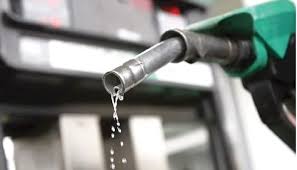
The Major Energies Marketers Association of Nigeria (MEMAN) has said that the 15 per cent ad-valorem tariff on imported fuel and diesel recently approved by President Bola Tinubu, if not reviewed downward, will cause fuel users in the country to spend additional N3 billion per day.
Chief Executive Officer, MEMAN, Mr Clement Isong, in an interview with New Telegraph at the weekend, stated that the N3 billion per day was enormous and opined that it could be more when oil prices rise at the international market.
He explained that if Nigeria’s fuel consumption is 30 million liters per day and there is an increase of N100 per liter, it would amount to N3 billion per day and noted that the amount would be higher if the increment is more than N100 per liter.
He said: “The point is: Do you really want to take out that amount of money out of the pockets of Nigerians? It is a lot of money. In deciding the 15 per cent tariff, do we need that much? We suggest a tariff of 2.5 per cent to 5% or use of currency denomination, that is the exact amount to be added.

If you do that you are sure of what you are taking out of the pocket of the people but when you put per cent, 15 per cent can reach to N122 per litre, if the price goes up internationally, then what you take out of their pockets is even more.”
Giving rationale for the proposed tariff, he stated that there were many solutions available to promote in-country refining, import tariffs being one of them. According to him, there appears to be considerable confusion about the rationale for and impacts of a 15 per cent tariff on imported fuel and diesel.
He noted that advocates argued local production costs exceed landed import costs, and so a 15 per cent tariff would raise the imported product cost and let local refiners recover costs and margins. “As at today’s landed costs, a 15% tariff would add N122.46 to PMS/fuel (from N827.24 –> N949.7) pushing pump prices to about N998/L in Lagos and N1,028/L in many upcountry markets; diesel would rise to roughly N1,154 – N1,194/L depending on margins.
“MEMAN advocates a public policy debate, transparent numbers, evidence-based, time-limited relief, independent regulator verification and regulatory safeguards/guardrails to protect consumers from higher pump prices,” he said.
Giving complementary and alternative solutions to tariffs, Isong said the tariff must start with a deliberate term and sunset clause and that regulator must actively monitor local refining economics in order to sunset the tariffs earlier, should there no longer be need and to cushion consumers from its negative impacts.
He also advocated phased or conditional implementation of tariffs (starting with lower tariff rates) tied to independently verified increases in domestic supply and clear performance mile-stones.
According to him, there should be the adoption of a Competitive Market Framework that emphasises published benchmark pricing, standardised cost disclosures and graduated, evidence -led remedies consistent with competition law.
He advocated for periodic publication by the regulator of international benchmarks with local refining economics to identify high local cost for mitigation. He also said it is important to ensure stronger anti-smuggling enforcement and customs valuation reform to prevent evasion.
The MEMAN boss said there should be fast-tracking solutions to achieve early onboarding of NNPC heritage refineries, and expansion of existing modular refineries to create alternatives to domestic fuel availability.
Such solutions, he stated, include direct or indirect financial aid (e.g. cash payments, low interest loans, tax breaks) given to domestic producers to help them become more competitive against dominant players and foreign imports without directly raising the price of imported goods for consumers.
He added that this is often considered a superior economic policy to tariffs if the goal is to support the domestic industry. He also advocated for production linked incentives and temporary tax credits tied to uptime, investment and job creation instead of general trade protection.
He stated that there should be government procurement restrictions, adding that directing government agencies to buy domestically produced goods can help local industries without imposing across the board tariffs. For him, an undervalued exchange rate can make exports cheaper and imports more expensive, functioning as a generalized form of protection for domestic industries.
Speaking on Market Context and Local Refineries Protection, he stated that in the new refining model, refineries were expected to sell products directly to multiple off takers. He explained that the regulatory stance is to ensure operators of wholesale infrastructure and/or refineries do not exercise undue market dominance.
He added that to ensure a level playing field, similar restrictions will apply to any other dominant private sector participant in the market.
He said, nevertheless, under the Petroleum Policy, a strong refining sector is sine qua non for the future of Nigeria and that steps will be taken to ensure successful, commercially viable high volume, high utilization refineries in Nigeria.
Isong said: “This policy seeks to develop a strong refining sub – sector with significant private sector participation. Impediments to private sector participation in the sub – sector will be addressed to ensure a robust and competitive local refining industry that ensures local product availability, product export and feedstock availability to related industries.
“The government will also encourage the construction of private sector refineries. Under the market-based nature of the Petroleum Policy, NNPC refineries will have to compete in an open market along with any other entrant, competing with international refineries for light crude and with any new private refineries in Nigeria which the government will encourage to develop.”
-

 Metro24 hours ago
My wife miraculously woke up after six months in coma – Akpabio
-
Politics24 hours ago
Presidential Campaign Council: We don’t need your validation – OK Movement replies NDC
-
Sports23 hours ago
Haaland Makes EPL Record As Manchester City Overcome Sunderland In 8-Goal Thriller
-
News24 hours ago
Former Kogi governor Ibrahim Idris dies at 77
-
Politics24 hours ago
2027: Remo group warns sons against breaking Ogun zoning pact
-
News23 hours ago
Niger govt unaware of miners’ arrest before deaths in NSCDC custody — Bago
-
Politics23 hours ago
Tinubu deserves second term, says Mimiko
-
Politics23 hours ago
2027: I’ll Never Spend Holidays Abroad If Elected – Obi