Business
Yuletide: Local flights break N300,000 mark

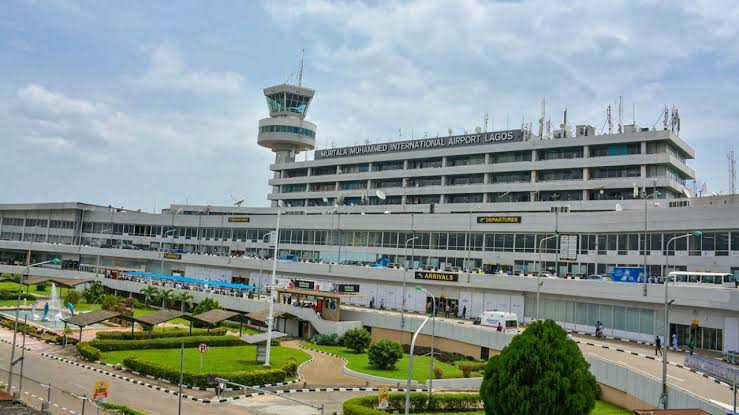
The cost of airfares on some domestic routes has jumped by about 150 per cent, crossing N300,000, as travellers now experience an astronomical rise in air ticket rates due to the high passenger volume associated with the Yuletide, among others.
Checks by The PUNCH showed that the hike in airfares was particularly on the South-South and South-East routes. These routes have high patronage, as most domestic air movements during the festive period are to these areas.
Usually, during the Yuletide rush, airfares are raised due to the high demand for tickets. But this season, passengers say prices of air tickets are out of reach following various economic challenges. Operators told our correspondent that the shortage of aircraft further compounded the airfare hike.
Before the festive period, air tickets on domestic routes hovered around N120,000. But an analysis of domestic airfares on the websites of airlines on Tuesday showed that ticket costs, particularly to the South-South and South-East regions, have increased by about 150 per cent compared to what the prices were before the Yuletide.

A flight search on the booking platform of Air Peace showed that a one-way economy ticket from Lagos to Asaba in Delta State moved from about N120,000 to over N300,000. The airline, between December 24 – 29, put the same ticket at N337,500.
Also, Delta State–bound passengers from Abuja will buy tickets from the airline for N335,500 between 23 – 28 December of this year. But the price may drop to N240,000 between 29 – 31 of the same month.
However, Aero Contractors offered a seat for N238,452 to Asaba on December 24, 2025. United Nigeria Airlines will also fly Lagos to Asaba at N399,999 and fly Abuja to Asaba between December 22 – 26 at prices ranging from N335,499 and N360,499.
Findings further showed that Air Peace may only fly between Lagos and Enugu from December 28 – 29 for prices ranging between N335,500 and N430,700. The airline will also sell its ticket for N335,500 from December 24 – 28, and sell for N240,200 on the 29th of the same month for domestic passengers flying from Abuja to Enugu.
Lagos to Calabar on Aero Contractors will cost between N187,976 and N151,786 between December 22 – 24, while United Nigeria will sell a seat on its Lagos–Benin flight for N335,499 between December 22 – 30, but it increased the price by N10,000 on December 31.
Air Peace will sell its Lagos–Port Harcourt ticket for N335,500 between the 23rd–29th of the month.
Most dramatic flights are within a one-hour range. For instance, Asaba and Benin are about 40 minutes by air and about four hours by road.
Many Nigerians prefer air travel not only because it is faster but also because it helps them avoid security challenges across the country.
Lagos–Anambra on December 17, on United Nigeria Airlines will cost N399,999. From December 18 – 21 have been sold out. For Owerri-bound passengers from Lagos on the UNA flight, prices fluctuate between N335,499 and N499,998 from December 16, 2025.
Following the new price surge, some passengers are now considering travelling by road to their destinations as an alternative amidst the insecurity currently ravaging the country. Meanwhile, aside from the lack of adequate aircraft to operate, operators also lament multiple taxation as another reason for the hike in airfares.
Experts in the industry ascribed one of the reasons for the aircraft shortage to maintenance hiccups. Many of the airlines’ planes are parked in different Maintenance, Repair, and Overhaul hangars scattered abroad.
In a recent paper, Charles Grant, Chief Financial Officer, Aero Contractors, said Nigerian airlines use only 38 serviceable aircraft—one of the clearest signs that the aviation system requires intervention.
He blamed the low number of aircraft on multiple charges and unfriendly government policies, appealing to the government to stop seeing aviation as a revenue-generating sector and instead reinvest funds amassed from aviation back into the sector.
“Today, most Nigerian airlines operate with just four to six active aircraft, despite national demand. That’s not a choice; it’s the result of punitive economics,” Grant stated.
Also, in a dramatic turn of events, Nigeria’s largest carrier, Air Peace, disclosed that in the past weeks it has experienced several operational disruptions, resulting in flight delays and cancellations after its lessor, SmartLynx Airlines, withdrew three aircraft from its fleet unannounced after receiving payment in advance.
Chief Commercial Officer at Air Peace, Nowel Ngala, explained that the airline entered a wet-lease agreement with SmartLynx because 13 of its aircraft are currently undergoing scheduled maintenance abroad. Ngala stated that to avoid service gaps, Air Peace leased aircraft from SmartLynx in a bid to support Nigerian passengers during peak travel periods.
But he lamented that the “abrupt and unjustified withdrawal of four aircraft we wet-leased from SmartLynx Airlines caused disruptions. This withdrawal was done without prior notice, a clear violation of industry standards and of the agreement between both parties.”
He, however, assured that despite these setbacks, some of its aircraft have completed maintenance and are returning to service.
Experts speak
Speaking with our correspondent over the phone, President of the Aircraft Owners and Pilots Association of Nigeria, Dr Alex Nwuba, confirmed that airlines are currently faced with capacity shortfalls but stressed that airlines are striving to bridge the gap.
He said, “You are correct that airline capacity shortfalls often contribute to higher fares during festive periods. In the case of Nigeria this season, we have seen some disruptions. For example, Air Peace lost a number of aircraft, which reduced their daily capacity by roughly 300 seats. At the same time, however, the airline has announced the return of several aircraft, which should help to fill those gaps and at least maintain current capacity levels.
“In addition, two more airlines are expected to commence operations during this period, which will further expand available seats and improve overall industry capacity. If external challenges such as security do not interfere, the industry should fare reasonably well this year.”
Nwuba further said passengers should expect higher fares, describing the pattern as seasonal.
“That said, consumers should still expect higher fares, as this is traditionally the seasonal pattern. Demand always rises during festive periods, and prices reflect that. Nigeria, however, stands to benefit from this increased travel activity, as it supports tourism and boosts confidence in the aviation sector. All things being equal, the outlook remains positive,” he stressed.
Former Director-General of the Nigeria Civil Aviation Authority, Harold Demuren, appealed to the Federal Government to do whatever is possible to support Nigerian operators to achieve more capacity. Demuren added that if it would entail renegotiation of some Bilateral Air Service Agreements that are one-sided against Nigerian operators, the government should not hesitate.
He said, “In BASA, both parties must benefit; it should not be one-sided. The Nigerian government needs to protect the local carriers. You can’t be wrong supporting your own. You can renegotiate your BASAs. It may be difficult, but you can renegotiate.”
Industry expert, Olumide Ohunayo, described the situation as seasonal but appealed to the airlines to pay attention to airline staff so as to get the best from them in handling the passenger volume that the season brings professionally.
“This is seasonal, but I can only greet airline operators who are working at this time. However, the season comes with its attendant challenges, and airlines must pay attention to passengers and airline staff members, too. Because it is when they are well taken care of that they will also handle passengers professionally as expected,” he said. (Punch)
-

 Sports20 hours ago
Italy to miss third straight World Cup after shoot-out defeat to Bosnia
-
Business21 hours ago
How Nigerian banks defied odds to raise N4.6trn in 2yrs
-
News14 hours ago
Gunmen abduct eight charcoal burners in Plateau
-
News21 hours ago
Court orders forfeiture of London property linked to Useni, Ozekhome
-
News20 hours ago
Tinubu Moves For New Loans, Debt To Hit N195trn
-
News21 hours ago
Court orders final forfeiture of ₦3.44bn linked to ex-NNPC official
-
News13 hours ago
BREAKING: El-Rufai To Remain In Custody As Court Adjourns Bail Application To April 14
-
Politics20 hours ago
2027: Abba Vs Gawuna Again?