News
INEC Faces Probe over Missing ₦55.9bn Meant to Buy Smart Card Readers, Ballot Papers

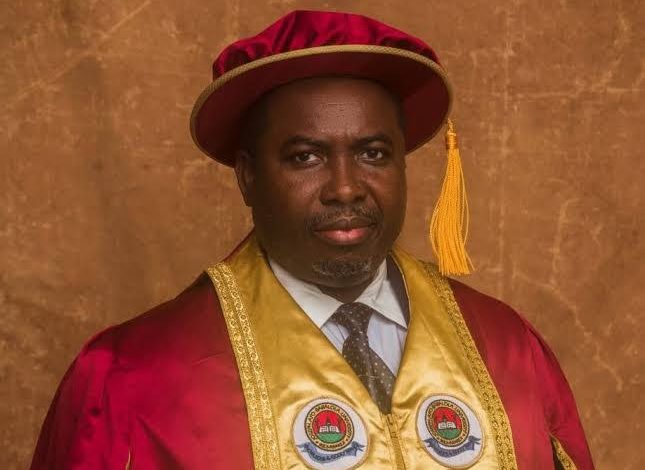
The Independent National Electoral Commission (INEC) has come under renewed scrutiny following fresh revelations about billions of naira allegedly unaccounted for during the procurement of materials for the 2019 general elections.
Rights group, the Socio-Economic Rights and Accountability Project (SERAP), has asked the new INEC Chairman, Professor Joash Amupitan, to immediately explain what happened to ₦55.9 billion reportedly released for smart card readers, ballot papers, result sheets and other election items.
SERAP made the demand in a letter dated December 6, 2025.
The organisation said the findings published in the latest annual report of the Auditor-General on 9 September 2025 raise serious questions about transparency in the commission.

The group insisted that INEC must identify the contractors who received the money, disclose their directors, and provide their addresses.
SERAP stressed that the public deserves to know why such significant funds cannot be traced to actual deliveries.
According to the organisation, the allegations strike at the heart of Nigeria’s democratic process. It warned that elections cannot be credible if the body responsible for conducting them is unable to show accountability in its use of public funds.
SERAP noted that the Auditor-General’s report detailed several transactions that appear inconsistent with procurement laws.
The report stated that over ₦5.3 billion was released to a contractor for smart card readers without any record proving the items were supplied.
It also flagged the absence of required approvals from the Bureau of Public Procurement and the Federal Executive Council.
The Auditor-General dismissed INEC’s justification that the contract fell under “national security” matters, saying the excuse had no basis in the Procurement Act.
He expressed worry that the money may have been diverted and directed that it be retrieved and returned to the national treasury.
The audit further revealed that more than ₦4.5 billion was paid to six contractors for ballot papers and result sheets without any evidence that the materials were delivered.
There was also no trace of competitive bidding, no proof of eligibility of the companies, and no “No Objection” certificates issued by the BPP.
In another section of the report, auditors queried payments amounting to ₦331 million described as “doubtful,” noting that supporting documents contradicted one another.
One of the flagged cases involved a contract for 25 generating sets where payment receipts were issued months before the contract was even signed.
INEC defended some of the violations by saying urgent decisions were taken to avoid a constitutional crisis during the 2019 elections. But auditors described the explanation as insufficient and insisted that those funds must also be recovered.
The Auditor-General also reported that over ₦2.1 billion in stamp duties were not deducted from payments to contractors between 2018 and 2019, contrary to financial regulations.
INEC claimed it had not received any circular directing such deductions, but the auditors rejected the defence and maintained that the funds must be refunded.
Another concern raised was the failure to retire cash advances totalling more than ₦630 million issued to several officers. Some officials reportedly received new advances even when earlier ones had not been cleared.
The audit equally questioned the procurement of printed election materials worth over ₦41 billion, stating that the contracts went to companies with no proven track record in printing.
Some were said to be construction firms and oil and gas companies, which violates financial regulations guiding procurement.
In addition, the commission allegedly purchased four Toyota Land Cruisers for ₦297 million, with each unit priced far above the market value recorded for 2019. The contracts were reportedly signed without mandatory approvals.
SERAP warned that the allegations, if ignored, could damage public trust in the commission and weaken confidence in future elections.
The group wants the matter submitted to appropriate anti-corruption bodies for investigation and possible prosecution of anyone found culpable.
The organisation gave INEC seven days to take decisive action or face legal measures aimed at compelling compliance.
-

 Politics22 hours ago
Oyo 2027: Makinde moves to name successor
-
Politics22 hours ago
Obidients mobilise for #OccupyINEC protest
-
Politics22 hours ago
Talks intensify as Bauchi gov delays ADC defection
-
Business22 hours ago
Bakare announces full repayment of N4bn Wema Bank loan
-
News22 hours ago
FG hikes 2026 borrowing plan by N11tn
-
News14 hours ago
Fire Service CG’s Massive Convoy Sparks Reactions
-
Metro22 hours ago
PHOTOS: Policemen Murdered By Boko Haram Laid To Rest
-
Politics22 hours ago
No secret deals with factional chair – ADC