News
Kidnapping schoolchildren still a ‘lesser evil’ than killing soldiers, says Gumi

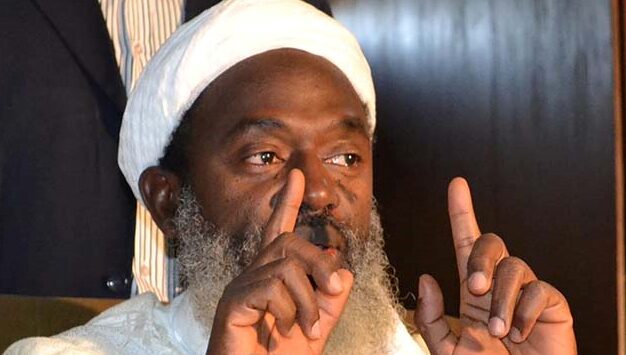
Ahmad Gumi, the Kaduna-based Islamic cleric, says the abduction of schoolchildren is a “lesser evil” when compared with the killing of soldiers.
Speaking in an interview with the BBC published on Tuesday, he noted that while both actions are condemnable, they are not equal in severity.
Gumi defended his earlier comments, saying his comparison is based on moral hierarchy rather than endorsement of criminality.
“Saying that kidnapping children is a lesser evil than killing your soldiers — definitely it is lesser,” he said.

“Killing is worse than kidnapping, but they are all evil. Not all evils are of the same power.”
Gumi noted that neither scripture nor global practice supports the claim that governments should refuse to negotiate with terrorists.
He said such a position is unrealistic and contradicted by the actions of countries that publicly denounce negotiation but privately engage in it when necessary.
“That phrase, ‘we don’t negotiate with terror’, I don’t know where they got it from. It’s not in the Bible. It’s not in the Quran. In fact, it’s not even in practice. Everybody is negotiating with outlaws, non-state actors — everybody,” he said.
“We negotiate for peace and our strategic interests. If negotiation will bring a stoppage to bloodshed, we will do it.”
Responding to long-standing criticism that his engagements with bandits legitimise criminal groups, Gumi dismissed such arguments as uninformed and detached from the realities of conflict mediation.
“Anybody who thinks that way doesn’t understand the intricacies and what we go through,” he said.
“I go there with the authorities. I don’t go alone. And I go there with the press.”
According to him, his most recent interaction with bandit groups took place in 2021, during efforts to facilitate dialogue.
He claimed that state authorities were open to his involvement but the federal government “wasn’t keen”.
Gumi also called for a stronger military presence in affected regions but stressed that the armed forces cannot resolve the crisis alone, noting that military commanders themselves acknowledge the limits of a purely force-based approach.
“We need a robust army… but even the military is saying our role in this civil unrest, in this criminality, is 95 percent kinetic,” he said.
“The rest is the government, the politics, and the locals. The military cannot do everything.”
He described the bandits primarily as Fulani herdsmen engaged in what he termed an “existential war” tied to their livelihoods and inheritance patterns.
“They are fighting an existential war. Their life revolves around cattle… They’ll tell you, ‘This cow I inherited from my grandfather’. They are mostly Fulani herdsmen, not the Fulani town — we have to differentiate between the two,” he added.(The Cable)
-

 Business22 hours ago
How 18yrs multiple gas policies sidelined domestic consumers
-
Politics23 hours ago
2027: Atiku demands names of firms printing INEC’s ballot papers
-
Business23 hours ago
Refiners back forward crude sales, oppose petrol price cap
-
Business23 hours ago
Nigeria’s debt interest soars 124% above revenue
-
Politics22 hours ago
Crude shortfall makes Atiku’s subsidy plan not workable – Presidency
-
 News23 hours ago
World Bank report affirms reform gains — Tinubu
-
News22 hours ago
NDLEA Arrests 83-Year-Old Woman Again, Intercepts Drugs At Nigerian Airports
-
Politics22 hours ago
2027: Tinubu can break Obi’s Southeast hold – Group