News
Reps Back 2-Year Jail Term, N5m Fine For Vote Buyers, Sellers

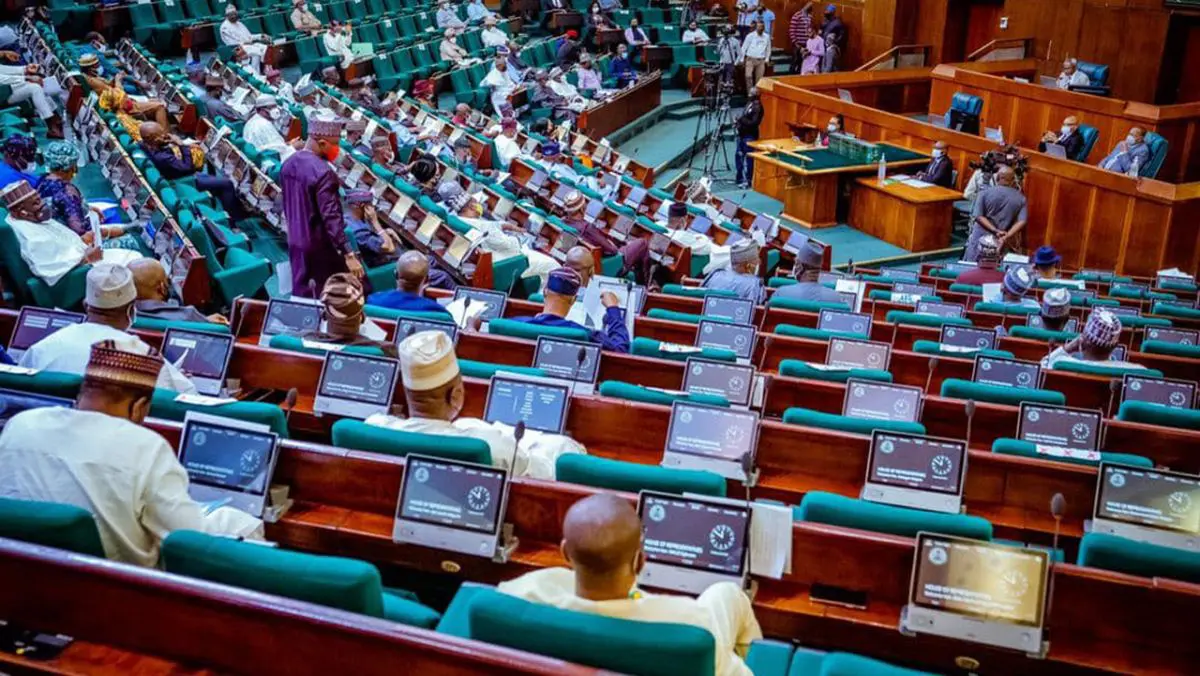
The House of Representatives has approved far-reaching amendments to the Electoral Act, introducing stiffer penalties for vote buying and selling, including a minimum of two years’ imprisonment or a N5 million fine, or both, alongside a 10-year ban from contesting elections.
The decision was taken during the clause-by-clause consideration of the report of the House Committee on Electoral Matters at the Committee of the Whole, presided over by the Deputy Speaker, Benjamin Okezie Kalu.
Under the amended Clause 22 (a and c), individuals involved in the buying or selling of votes and voter cards now face significantly tougher sanctions than previously provided, where penalties were capped at N500,000 or a maximum of two years’ imprisonment.
In a move aimed at enhancing transparency and credibility of elections, the House also adopted an amendment to Section 60(3) of the Electoral Act, mandating the Independent National Electoral Commission (INEC) to electronically transmit results from polling units to the INEC Result Viewing Portal (IREV) in real time, alongside physical collation of results.

The new provision states that result transmission must be carried out simultaneously with physical collation, strengthening safeguards against manipulation.
Lawmakers further amended the sanctions for presiding officers who deliberately breach procedures on counting, announcement, and transmission of polling unit results. A new Section 60(6) prescribes a minimum fine of N500,000 or at least six months’ imprisonment, or both, for any presiding officer who willfully contravenes the provisions.
The House also approved a clause mandating the release of election funds to INEC at least one year before a general election, in a bid to enhance early planning and efficient conduct of polls.
To curb electoral fraud, lawmakers increased penalties for multiple voter registration. Under the amended Clause 12(3), offenders now risk a minimum fine of N100,000 or at least one year’s imprisonment, or both.
In another adjustment, the House extended the deadline for political parties to submit their list of candidates to INEC from 180 days to 210 days before an election, allowing the Commission more time for processing.
The House further approved provisions allowing the use of electronically generated voter identification, including downloadable voter cards with unique QR codes, or any other identification prescribed by INEC, for voter accreditation and voting.
Consideration of the remaining clauses of the Electoral Act amendment bill is still in progress.(Daiky trust)
-

 News23 hours ago
Tragedy Averted As Private Jet Loses Door Mid-Air
-
Politics12 hours ago
2027: ADC campaign accuses Kwankwaso of working for Tinubu
-
News12 hours ago
DSS arrests fleeing Maina’s son in Abuja
-
Metro22 hours ago
Anglican Church suspends Archbishop ‘with immediate effect’ over alleged misappropriation of N2 billion
-
Business23 hours ago
Importation, Insecurity Threaten Nigeria’s Food Sufficiency
-
Politics11 hours ago
2027: Tinubu afraid to face Nigerians – ADC
-
Politics11 hours ago
Buhari considered it distasteful for Osinbajo to contest against Tinubu – Babachir Lawal
-
Business22 hours ago
Households lament as sachet water hits N500 per bag in Lagos