News
NELFUND: Why private universities are excluded from student loans

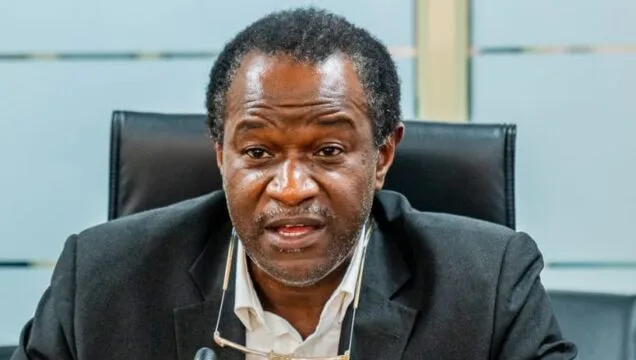
The Managing Director of NELFUND, Akintunde Sawyerr, has explained that Private university students are temporarily excluded from student loans due to high fees, limited student financial capacity data and funding constraints.
He explained this during an interview on Arise Television, addressing equity concerns.
The clarification comes amid growing concerns about equity and accessibility for students in private tertiary institutions.

What he said
Sawyerr made it clear that private university students are not permanently left out of the scheme and also explained that fee structures and limited data on students’ financial capacity also influenced the initial decision.
“The private sector institutions tend to charge more. We also don’t have accurate information about the financial capacity of people,” he noted
As a result, he said the scheme currently relies on what he described as a blunt assessment approach.
“We are using a little bit of a blunt instrument at the moment to say, look, people who are short of money tend to, tend to go to the public sector,” he said
He stated that discussions with President Tinubu, whose vision it was to bring this to the fore, are that he would like to see all Nigerians get it.
“And I think that will happen when the resources are there. I think that we will have to go back and amend the law so that all can get it. The point is, there is political will to support every Nigerian having access to this loan.
“The exclusion is a temporal thing in my view. I think once we’ve been able to cover those who really need it, then we will look at those,” he said
Politically neutral
Responding to concerns that the scheme could be politicised or tilted in favour of children of ruling party members, Sawyerr said the application process is neutral and open to all Nigerians.
He explained that the NELFUND portal does not ask applicants about their political party, ethnic background, or region.
“It is totally agnostic. When you go to that portal, it doesn’t ask you whether you’re a member of a political party. It doesn’t ask you whether you’re a member of a particular tribe.
“This is a national programme. It’s a national welfare scheme that everybody can apply for. Everybody,” he said
Sawyerr added that NELFUND has no mechanism to identify applicants by political affiliation.
“There’s absolutely no way we manage this that we know which party you belong to or when you defected, for that matter,” he added.
More details
Sawyerr stressed that the long-term vision of the student loan scheme is to make tertiary education accessible to all Nigerians. Explaining the rationale behind the current structure of the scheme, Sawyerr pointed to Nigeria’s large youth population and limited funding capacity.
“We are a nation with a very high number of youth. So over 70% of our 230 million plus people are under the age of 35.”
He said many young Nigerians are unable to attain the level of education they desire due to financial constraints. According to him, the law establishing the loan scheme is designed to address access to tertiary education within a resource-constrained environment.
“The law is trying to fix a couple of things. First of all, it’s trying to fix the fact that people who want to get education at tertiary level should be able to. They should be able to access it in an environment where resources are limited.”
“The second issue is that there’s been a significant degree of underfunding of publicly owned tertiary institutions,” he said
-

 Metro7 hours ago
Motorist ‘abducts’ traffic officer in Ondo, takes him to ‘unknown destination’
-
Politics7 hours ago
APC moots N100m presidential, N50m governorship forms
-
Politics7 hours ago
We’ve Taken Over PDP Headquarters – Pro-Wike Faction
-
Politics21 hours ago
No APC guber hopeful has been anointed in Lagos…. but I’ll back eventual pick – Jandor
-
 News8 hours ago
AfDB Approves $200m Loan For Nigeria’s Digital Infrastructure
-
 Metro7 hours ago
I Had Throat Surgery After Al Jazeera Interview – Bwala
-
News7 hours ago
‘Kenyans Earn N170,000 Equivalent As Minimum Wage’ – Atiku Lambasts Tinubu For Comparing Fuel Prices In Nigeria With African Countries
-
Business21 hours ago
Oil Production Drops As NNPCL Generates N2.68trn In January