Opinion
In saner climes: The phrase Nigerians reach for when things fall apart

BY HAMZAT WARIS
“In saner climes” is a phrase figuratively used to express or refer to places or societies that are considered more rational, civilised, and just. The phrase is often used to contrast a problematic or chaotic situation in one’s own country or community with what is perceived as a more stable and enlightened environment elsewhere. For instance, someone might say, “In saner climes, corruption is not tolerated,” to express their frustration with the level of corruption in their own country. In essence, “saner climes” is a euphemistic way of referring to societies that are seen as more functional and morally upright.
In Nigeria, whenever something bad happens, all other phrases suddenly become out of reach except “in a saner clime.” This phrase, either used consciously or unconsciously, becomes the most available option to discuss the crisis surrounding the matter. This year alone has given Nigerians numerous reasons to invoke these “saner climes,” with various incidents highlighting systemic failures that many believe would not have occurred elsewhere.
In December, stampedes at palliative distribution events in Ibadan, Abuja, and Okija claimed over 60 lives, many of them children and elderly citizens. The scenes were jampacked—crowds surging forward, bodies trampled in the struggle for food items and cash. After this occurred, commentators immediately noted that in developed nations, such humanitarian distributions employ crowd management systems, barriers, ticketing, and adequate security personnel.

The national grid has collapsed twice this year, plunging entire regions into darkness and crippling economic activity, leading to a crisis that prompts comparisons to countries where stable electricity is simply taken for granted. Each incident became another opportunity to invoke and compare those distant, better-functioning countries.
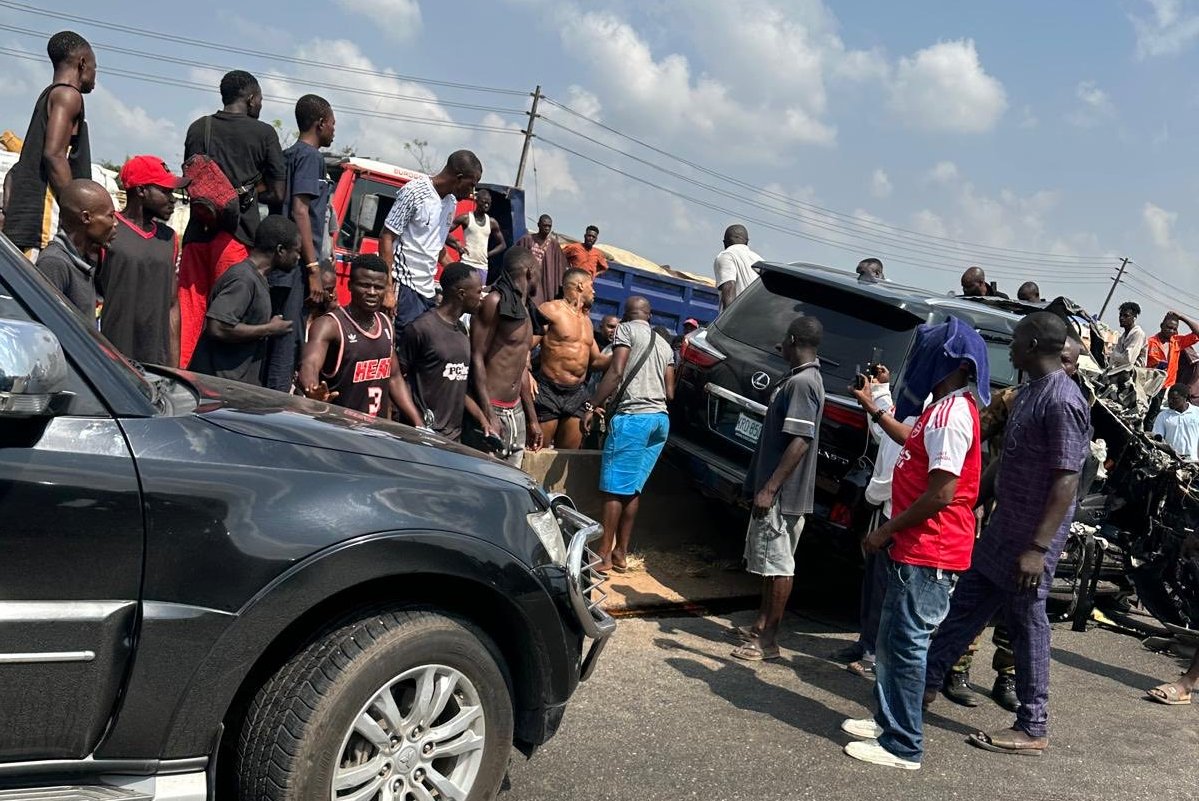
This brings us to the most recent occurrence: the accident that claimed two lives and left Anthony Joshua hospitalised. Although accidents are unplanned by nature, there are measures that should be in place to mitigate their consequences. The available footage and reports from the scene revealed that bystanders are unsure of what to do, there are prolonged delays before any organised help arrives, and an absence of the rapid response protocols that characterise functional emergency systems. The scene reflected a broader crisis: Nigeria’s emergency response infrastructure remains dangerously inadequate.
These repeated tragedies expose a fundamental gap in how we prepare our citizens for communal life. Beyond acquiring degrees and certificates, have we truly learned how to be useful to one another in moments of crisis? The evidence suggests otherwise. According to the World Health Organisation, countries with high rates of first aid training among the general population see significantly better outcomes in medical emergencies. Yet in Nigeria, first aid training is virtually absent from our educational curriculum. Most Nigerians complete their education without ever learning CPR, how to treat shock, how to manage bleeding, or how to recognise the signs of common medical emergencies like asthmatic attacks, cardiac arrest, or strokes.
The Nigerian education system is profoundly flawed, and the cardinal error lies in how it was introduced to us and the intention behind it. It was designed primarily to produce workers for colonial administration, not to cultivate citizens equipped with practical, life-saving skills. This legacy persists as we prioritise abstract knowledge while neglecting the concrete competencies that make communities resilient.
First aid training must become a mandatory course from primary school through university. This is not optional knowledge; it is essential civic education that could mean the difference between life and death. Countries like Denmark, Norway, and Singapore have made first aid certification compulsory at various educational levels, resulting in populations where a significant percentage of citizens can respond effectively to emergencies. Nigeria must follow this model.
Beyond education, we must confront harder questions about our emergency infrastructure. How many minutes does it take for emergency services to arrive at an accident scene in Lagos? In Abuja? In rural communities? Where is this data, and is it publicly available? According to international standards, emergency medical services should reach patients within 8-15 minutes in urban areas. Anecdotal evidence suggests Nigerian response times frequently exceed 30 minutes, if help arrives at all. This gap is deadly. Where are the strategically positioned ambulances? Where are the equipped trauma centres? Where are the functional emergency hotlines that citizens can reliably call? Where are the publicly accessible defibrillators and first aid stations that exist in shopping malls, airports, and public spaces in developed nations?
Honestly, the conversation should not end at invoking “saner climes.” It must begin with the concrete actions we can take now to build the society we envision. This could be any one of us in that next emergency. The question is whether we will have built the systems that could save our lives or whether we will once again reach for the hollow phrase, lamenting what exists elsewhere while doing nothing to create it here.
For instance, in 1952, London’s Great Smog killed thousands and exposed catastrophic failures in environmental and public health management. The United States experienced devastating urban fires in the 19th and early 20th centuries, including the Triangle Shirtwaist Factory fire that killed 146 workers, before implementing comprehensive building codes and fire safety regulations.
Things do not simply start perfectly; they improve to the stage they are at, and change is continuous. The same evolution can happen here in Nigeria, but only if we commit to deliberate, sustained reform rather than cyclical outrage. It is a process, and we are moving through it. Now that these incidents have happened, the pertinent question should be: what is the way forward?
We must move beyond playing the blame game and demand accountability paired with concrete action. There is no truly sane or saner clime as far as things are concerned. There will always be occurrences and challenges in every society. That some things are not done or are unlikely to occur in certain places does not make them inherently saner. Similarly, that such incidents occur here does not make us insane.
This is why labels such as underdeveloped, developing, and developed exist for countries. The government should act, citizens should do their part, or we will find ourselves writing these same words after the next preventable tragedy.
Hamzat Waris is a writer and graduate of library and information science at the University of Ibadan. He can be reached via Warishamzat61@gmail.com
-

 News22 hours ago
UK universities withdraw admission offers to Nigerians over visa crackdown
-
News22 hours ago
Benue: Suspected herdsmen kill nine in fresh Ukum attacks
-
News22 hours ago
Why kidnappers target NYSC members — Security experts
-
Politics22 hours ago
2027: Protest, relief as INEC releases final candidates’ list
-
Politics22 hours ago
2027: Opposition, APC clash over campaign funding
-
World News22 hours ago
US gunman shoots dead 7 relatives, family friend
-
Business22 hours ago
Fitch revises Nigeria’s outlook to positive, affirms ‘B’ rating
-
Opinion22 hours ago
Did Obi actually win in 2023?