News
Nigeria’s labour was once funded by KGB, CIA, says Obasanjo

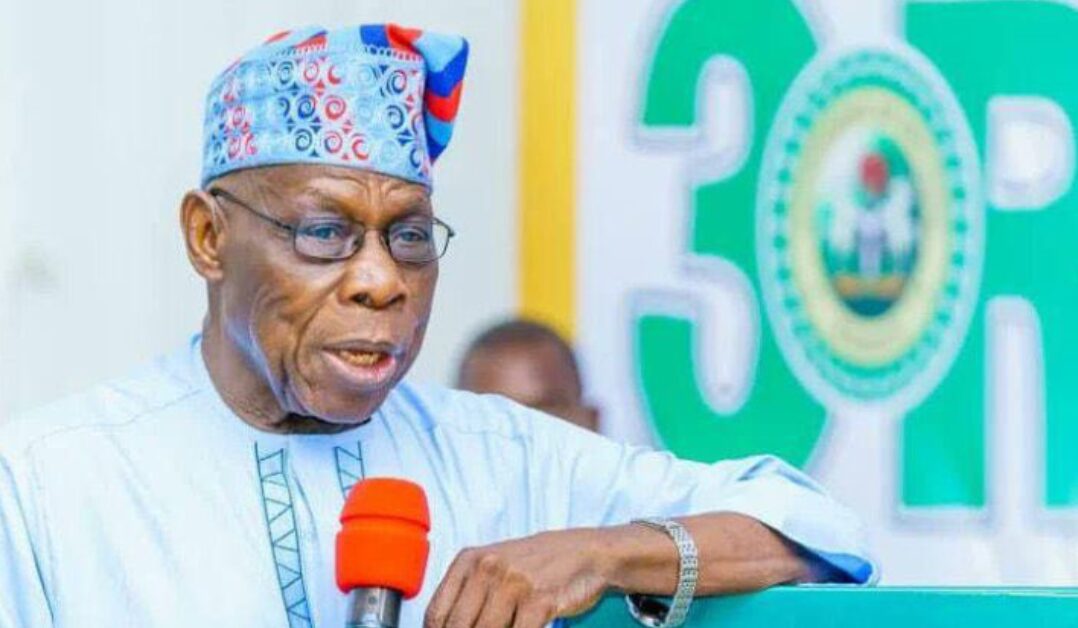
Former President Olusegun Obasanjo says Nigeria’s labour movement once depended heavily on foreign funding during the Cold War, endangering national sovereignty and independent decision-making.
Mr Obasanjo made the remarks at the 85th birthday celebration and memoir presentation of former Nigeria Labour Congress (NLC) president, Hassan Adebayo Sunmonu, held in Abuja.
He was represented at the event by a former NLC president and former governor of Edo, Adams Oshiomhole.
Mr Obasanjo recalled that rival labour organisations were aligned with opposing global powers during the ideological rivalry between East and West.

According to him, one labour group received funding from the Soviet Union’s KGB, while another was backed by the United States’ Central Intelligence Agency (CIA).
He said the foreign influence weakened cohesion within the labour movement and threatened Nigeria’s political independence.
Mr Obasanjo explained that the situation prompted deliberate labour reforms aimed at ending external control and internal division.
Those reforms, he said, produced a unified labour structure firmly controlled by Nigerians.
He noted that the process eventually led to the establishment of the Nigeria Labour Congress as a single national body.
Mr Obasanjo urged Nigerians to stop lamenting economic hardship and instead organise collectively against unjust and harmful policies.
“If it is wrong, fight it. Justice is not won through tears or emotional speeches,” he said.
He stressed that workers’ rights were historically secured through organised struggle rather than appeals for government sympathy.
Mr Obasanjo recalled that Nigeria’s first national minimum wage was achieved through sustained pressure from organised labour.
“Minimum wage exists to protect workers without power or bargaining strength,” he said.
He said inflation and currency devaluation had significantly eroded workers’ earnings over time.
Describing the trend as “invisible robbery,” Mr Obasanjo said workers were losing value without realising it.
On taxation, he said low-income earners currently bear a disproportionate share of the tax burden.
“People below a living threshold should not be taxed,” he added.
He called for stronger alliances between labour unions and civil society organisations to push progressive reforms.
The president of the NLC, Joe Ajaero, criticised new tax laws and Nigeria’s growing public debt.
“Policies made without labour deepen poverty and weaken democracy,” Mr Ajaero said.
The book reviewer, Catholic Bishop of Sokoto Diocese, Matthew Kukah, urged leaders to embrace service, integrity and moral responsibility.
“Leadership is an avenue to serve society, not to seek personal gain,” Mr Kukah said.
Mr Kukah said the memoir chronicles Sunmonu’s upbringing, family life, labour activism and international engagements across Africa and beyond.
He noted that the book reflects on leadership, integrity and Nigeria’s unfulfilled national aspirations.
“This book explains why Nigeria’s greatness remains a dream deferred,” Mr Kukah said.
Mr Kukah described ‘Organise, Don’t Agonise’ as accessible and reflective, portraying Mr Sunmonu’s life as a lesson in discipline, sacrifice and commitment to workers’ welfare.
(NAN)
-

 News22 hours ago
N267bn in education funds lie idle as 70% of Nigerian children can’t read
-
Sports20 hours ago
Celebrity boxing: Boom for entertainers, bane of professional boxers?
-
News22 hours ago
Child soldier: US threatens to cut military aid to Nigeria
-
Metro22 hours ago
Hardship: Jigawa almajiri pupils lament decline in free food
-
News22 hours ago
Obasanjo urges increase in 13% derivation for oil-producing states
-
Business20 hours ago
Power plants record zero output amid grid instability
-
Politics22 hours ago
Tinubu’s re-election crucial to Nigeria’s prosperity – Hamzat
-
Politics22 hours ago
Pantami Gives INEC 72 Hours To Publish Name On guber List