Politics
Politicians scrambling for power while Nigerians fall into poverty, Obi laments

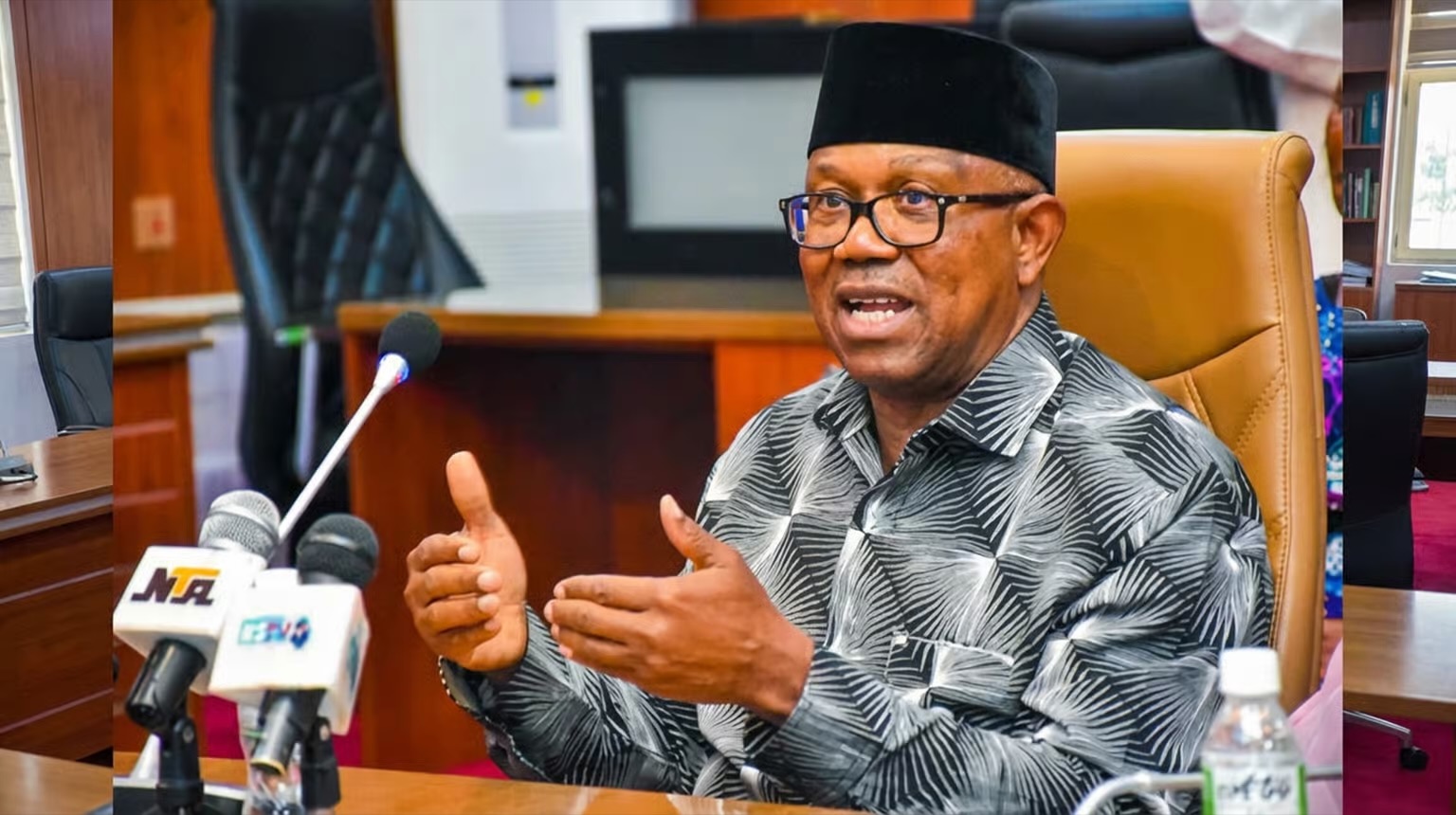
Former governor of Anambra State and 2023 Labour Party(LP) presidential candidate, Peter Obi, has sounded the alarm over Nigeria’s worsening poverty crisis, saying the country is falling behind its peers while the political elite remain consumed by internal power struggles.
In a statement on his official X handle, Obi noted that as politicians jockey for positions and control of party structures, millions of Nigerians are being pushed deeper into poverty.
He warned that weak income growth, high costs of living, and inadequate social protections were driving the crisis, particularly for low-income households spending up to 70 per cent of their income on food.
“While politicians scramble for positions and party control, even before elections conclude, millions of Nigerians are being pushed deeper into poverty,” Obi said. He revealed that about 62 per cent of Nigerians, roughly 141 million people, now live below the poverty line.

World Bank data show that the number of Nigerians living in poverty surged from 81 million in 2019 to about 139 million in 2025. Between 2023 and 2024 alone, 14 million more Nigerians fell into poverty, it added.
Projections indicate that by 2026, 141 million people (62 per cent of the population) will be living in extreme hardship. Obi, who recently pitched a tent with the African Democratic Congress (ADC), cited the Nigeria Economic Outlook 2026 report, ‘Turning Macroeconomic Stability into Sustainable Growth’, which highlights weak real income growth and persistently high living costs as key drivers of worsening poverty.
Even as headline inflation moderates, rising energy prices, logistics costs, and exchange-rate fluctuations continue to hit households the hardest, particularly low-income families.
“The rising tide of poverty weakens purchasing power, stifles small businesses, and threatens economic recovery,” Obi said. He added that Nigeria’s trajectory contrasts sharply with countries like India and Indonesia, which have dramatically reduced poverty over the past two decades through investments in education, health and social protection.
Obi stressed that children born in Nigeria today face one of the highest risks of being born into poverty globally, calling the situation a national failure and a threat to the country’s future.
He urged urgent structural reforms, including investment in agriculture, food systems, logistics, education, health and large-scale job creation, warning that the measures were no longer optional but imperative.
The trader-cum-politician contrasted Nigeria’s performance with countries like India and Indonesia, which have drastically reduced poverty over the past two decades through strategic investments in education, health, and social protection, while Nigeria’s poverty rate climbed from 40 per cent in 2000 to 62 per cent at press time.
He called for urgent structural reforms across agriculture, education, healthcare, and job creation, stressing that leadership must prioritise people over politics.
“A New Nigeria is POssible,” he declared.
-

 Metro4 hours ago
Motorist ‘abducts’ traffic officer in Ondo, takes him to ‘unknown destination’
-
Politics18 hours ago
No APC guber hopeful has been anointed in Lagos…. but I’ll back eventual pick – Jandor
-
Politics4 hours ago
APC moots N100m presidential, N50m governorship forms
-
Politics4 hours ago
We’ve Taken Over PDP Headquarters – Pro-Wike Faction
-
 News4 hours ago
AfDB Approves $200m Loan For Nigeria’s Digital Infrastructure
-
 Metro4 hours ago
I Had Throat Surgery After Al Jazeera Interview – Bwala
-
Metro24 hours ago
Military personnel arrested after exchanging blows during Tinubu’s visit to Bayelsa
-
News4 hours ago
‘Kenyans Earn N170,000 Equivalent As Minimum Wage’ – Atiku Lambasts Tinubu For Comparing Fuel Prices In Nigeria With African Countries