News
Resumption: How Safe Are Schools?

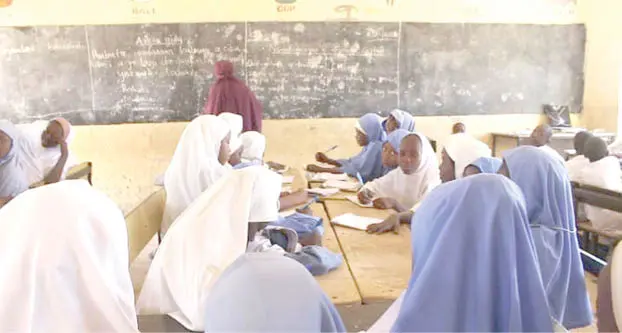
Following the mass abductions of students from schools in Niger and Kebbi states , and other parts of the country, the federal government and some state governments late last year ordered a shutdown of schools. Recently, with relative improvement in the security situation, the government at federal and state levels ordered the reopening of schools. But how secured are the schools as students return to classrooms for this second term? In this report, Weekend Trust examines the situation.
In late November 2025, the federal government ordered a temporary closure of Unity Schools, citing escalating security threats and incidents of student abductions in parts of northern Nigeria.
The directive, conveyed through an official circular issued by the Federal Ministry of Education, instructed principals of the affected schools to immediately suspend academic activities and release students as a precautionary measure against further security breaches.
The decision followed a series of violent incidents, including the kidnapping of schoolgirls and attacks on school communities in Kebbi and Niger states, which heightened nationwide concern over student safety. In all, 47 Unity Schools across multiple regions were affected, leading to widespread disruption of academic schedules and uncertainty for students, parents and educators. The closure occurred within a broader climate of insecurity that also forced some state governments to temporarily shut down public and private schools in vulnerable areas.

Besides the shutdown of Unity Schools by the federal government, a number of state governments also announced partial or full closure of schools, de-boarding students and pupils as a measure to address the rising security challenge at the time.
Among some of the states that announced closure of schools were Niger, Kebbi, Yobe, Adamawa, Bauchi, Taraba, Kwara and Katsina.
Reopening of schools
Following the closures, the Federal Ministry of Education intensified collaboration with security agencies to strengthen security architecture within and around the affected schools. After several weeks of coordination and efforts to restore stability, the federal government announced the reopening of the 47 Unity Schools in mid-December 2025.
Officials said enhanced security measures had created a safer environment for students to return, allowing academic activities to fully resume, with many students completing ongoing programmes and examinations. The government also reassured the public that the safety, welfare and wellbeing of students remained a top priority, reaffirming its commitment to safeguarding educational continuity nationwide.
The reopening was presented as part of the administration’s broader mandate to protect children’s fundamental right to education, even as security challenges persist in some regions.
Authorities stressed that collaboration with security agencies was ongoing, noting that normalcy has largely returned to Unity Schools following the earlier disruptions.
In a statement, the Director of Press at the Ministry of Education, Boriowo Folashade, confirmed that academic activities fully resumed following the strengthening of security measures.
“Students have returned safely to their campuses, with many currently concluding their December academic programmes, while others have successfully completed their examinations.
“The Federal Ministry of Education assures parents, guardians and the general public that the safety, welfare and wellbeing of students remain a top priority. The government continues to work closely with relevant security agencies to sustain stability and restore normalcy within school environments nationwide,” he stated.
According to her, the federal government remains committed to protecting every Nigerian child and upholding their right to education in a safe and secure environment.
“This administration places strong emphasis on human capital development and recognises education as a critical pillar for national growth and development. Accordingly, it remains determined to prevent any disruption to the academic calendar.
“The safe return of students and the successful conduct of examinations in several Unity Colleges underscore government’s resolve to keep learning on track despite prevailing challenges,” she said.
She added that the ministry appreciates the cooperation, patience and support of parents, school administrators and students, and reiterated its commitment to sustaining a secure, stable and uninterrupted education system nationwide.
Following the announcement by the federal government, other states have also announced the resumption of schools. While schools resumed in some states on January 5, others are expected to reopen on Monday, January 12. Ahead of the resumption, some parents, educationists and other stakeholders have expressed mixed feelings over the security arrangements put in place by the government. While some expressed confidence with security arrangement, others said the government needed to do more to guarantee the safety of their children and wards as the schools resume.
Niger to reopen schools in 4 LGAs Jan 12
In Niger State, the government has announced the reopening of schools in only four local government areas – Bida, Suleja, Chanchaga and parts of Bosso – out of the state’s 25 local government areas.
The Commissioner for Basic Education, Dr Hadiza Asabe Mohammed, made this known on Monday during an inter-ministerial stakeholders meeting held ahead of the planned reopening.
She said schools must be cleared by security agencies before reopening, and called for continued support from stakeholders.
The commissioner explained that the decision followed careful security assessments and extensive consultations with relevant security agencies aimed at safeguarding lives, while ensuring uninterrupted access to quality education for children in Niger State.
She said only public and private schools, including boarding schools, located in safe and secure areas of the state, would reopen on Monday, January 12, 2026, while those in areas considered unsafe would, in the interim, remain closed until they are duly assessed and cleared by relevant security authorities.
She further noted that, as a mandatory requirement for reopening, all school authorities were directed to register all returning students immediately upon resumption, and the compiled data must be submitted to the Ministry of Basic and Secondary Education within one week for proper documentation and monitoring.
The commissioner added that all local government chairmen had been directed to provide adequate security in and around school premises, in collaboration with security agencies.
The government disclosed that out of the 45 boarding schools across the state, only 18 located in Bida, Bosso, Suleja and Chanchaga local government areas would reopen on January 12, 2026, citing the absence of security clearance for the others.
“Some schools will reopen on Monday, January 12, 2026. We are starting the reopening of our schools in phases as agreed by the committee. And we will continue in that manner. We cannot reopen all schools at once due to the security challenges facing Niger State,” she said.
“For a start, we are reopening schools in Chanchaga Local Government Area, parts of Bosso, Suleja and Bida. The reopening is restricted to schools located within towns and cities. Schools situated on the outskirts of these local government areas are not included.
“We are, therefore, beginning with these few local government areas on Monday. We have to be very mindful of the security situation in some areas. We cannot just jump on all schools and reopen them. We have to wait for the security confirmation and approval before any school is reopened. We cannot take our own singular decision; we are working with security agencies who will give clearance for reopening,” she added.
She further stated that local government chairmen had been directed to recruit community security personnel to guard and protect schools within their respective local government areas.
She also disclosed that arrangements had been made for online teaching and learning across the state to ensure uninterrupted access to education.
Meanwhile, the Director-General of the Niger State Education and School Reform, Hajiya Maimuna Mohammed, announced that private schools had been banned from operating boarding facilities for nursery and primary school pupils.
The Niger State chairman of the Nigerian Union of Teachers (NUT), Akayago Adamu, said schools in the state had operated for years without guards, except where parents-teacher-associations intervened by recruiting few.
An educationist, Dr Kamar Hamza, Director of Studies, Legend International School, said resumption in phases would create imbalance while prolonged school closures would retard children’s learning progression.
“The challenge of prolonged stay at home by students and pupils is that it will weaken their brains because there would no longer be active learning except they have parents who are always with them. And the challenge in this age is that parents are always busy; and there is diversion from the social media too. So, it is very dangerous in the cities. Also in the villages, there are no serious farming activities going on. Parents are not careful; and some of these children would recruited, especially those in secondary schools who are in their prime ages – very young and agile.
“For resumption in phases, there will be imbalance. In fact, schools are only spending 10 weeks instead of the usual 12 or 13 weeks. Unless schools that will resume later on add extra teaching hours and days, they won’t be able to meet up. They would have to devise a means of keeping children longer in school,” he said.
While parents said adequate security arrangements had not been put in place to ensure the safety of children, communities have sought government’s approval to recruit and equip community security guards to safeguard their schools.
Usman Garba Barde, a parent in Mutun-Daya community of Shiroro Local Government Area, Niger State, said members of some security-affected communities in the area had resolved to provide security to protect their children and enable them to continue learning should the government give approval.
“I have four children in junior secondary school and two others in primary school. We don’t want our schools to remain closed. Our children now indulge in illegal mining and other bad behaviours in the mining sites. We have had meetings and agreed that if the government would give approval, we would recruit security personnel to protect our schools. We are ready to collaborate with the police outpost in our area to safeguard our schools.”
‘School resumption records 98% attendance in Jigawa’
Meanwhile, schools across Jigawa State have recorded an impressive 98 per cent student resumption following the reopening of academic activities on January 5, a development widely attributed to enhanced security measures and sustained government commitment to education.
Ahead of the resumption, the Jigawa State Government introduced a comprehensive school safety initiative through the recruitment and deployment of trained school safety personnel to public schools across the state.
The move was aimed at safeguarding pupils, teachers and school infrastructure, especially in view of security concerns in parts of the country.
Speaking on the development, the chairman of the Jigawa State Universal Basic Education Board (SUBEB), Professor Haruna Musa, said schools in Jigawa remained safe and conducive for learning, noting that parents have confidently returned their children to school without fear.
He emphasised that the state government placed high priority on education and determined to protect the sector at all cost.
He said, “The government has demonstrated serious concern for the safety of schools by putting in place security measures that will ensure uninterrupted learning across the state.”
He further explained that the presence of school safety officers had boosted public confidence and reassured parents that their children are well protected while in school.
Teachers have also confirmed the smooth resumption of academic activities. A teacher in Dutse, Malam Musa Muhammad, said teaching and learning had fully commenced in his school, with almost all students reporting back.
“Classes have resumed normally and attendance is very encouraging. Parents have shown confidence in the safety arrangements put in place by the government despite the security challenges being experienced in some other states,” he said.
Parents in the state equally expressed satisfaction with the measures taken by the government. Ibrahim Rabiu, a parent residing in Dutse metropolis, said he did not hesitate for a single day before sending his children back to school.
“Jigawa is a peaceful state, and by the grace of God, nothing will happen to my children. I trust the government and the security arrangements they have put in place,” Rabiu said.
He commended the Jigawa State Government for its proactive steps in ensuring that students are protected from fear or harm, describing the initiative as timely and reassuring.
The high turnout of students at the resumption of school activities is seen as a strong indication of public confidence in the state’s education system and its commitment to maintaining peace, safety and quality learning for all.
Phased resumption in Kebbi as schools in outskirts remain shut
Following the relative improvement in security situation in Kebbi, the state government last week directed both public and private schools to reopen for academic activities. However, the government said schools located in the outskirts would remain closed until security clearance is issued for them to be reopened. It maintained that the reopening of schools would be executed in phases based on security advice.
Advising parents to take their children and wards to school as directed, the state government assured them of improved security.
The state government said it was already holding meeting with educational stakeholders in the state on how to collaborate with the Schools Protection Squad it created as part of the ongoing efforts to strengthen school safety across the state.
The Commissioner for Basic and Secondary Education, Dr Halima Muhammad Bande, said first term examination would be conducted in the first and second weeks after resumption as the schools were shut when examinations were about to take place.
The schools were shut following growing concerns over safety of students and pupils after the Comprehensive Girls’ Secondary School, Maga abduction.
‘We don’t want a repeat of Maga’
Some parents said the measures government took so far were not enough to guarantee the safety of their children.
Philip Audu from the Zuru area of the state said no parent was happy to see their children sitting at home, adding that there’s need for concrete arrangements to be put in place for their safety.
He said, “We want our children to go back to school, but our fear is that there still exist growing concerns about insecurity here and there around the schools. We still hear cases of abduction in other places outside Kebbi. We do not want a repeat of what happened in Maga to our girls. From what we see on ground now, no one is convinced that proper security measures have been taken for the safety of our children.”
However, the Commissioner for Basic and Secondary Education in the state, Dr Halima Muhammad Bande, assured that government was working towards resolving outstanding security issues in the state.
“The government is seeking the support of traditional institutions in ensuring the safety of students in schools around the state. We are already going round the state and engaging with stakeholders in the four emirates to find a lasting solution to the security issue around our schools,” she said.
Following government’s directive, schools in the metropolis on Monday resumed academic activities, while those in the rural areas are yet to resume.
A teacher in one of the schools, Aminu Sambo, expressed doubt over the safety measures so far put in place in the schools. He said government should have first ensured that adequate security measures were on ground before issuing a directive for the reopening of schools.
“What we see on ground now is not enough to guarantee the safety of students and those of us teaching in the schools. Let them come up with measures that can protect everyone in the school environment. The last time they attacked the girls’ school at Maga, a teacher was killed. No one feels safe in the schools after that incident. We need more measures that would make us feel safe,” he said.
A government official in the Ministry of Higher Education said government was working with security agencies, royal fathers, religious and community leaders to ensure that its schools anywhere in the state is secure.
Plateau: Parents seek more security deployments ahead resumption
The Plateau State Government, through the State Universal Basic Education Board, had on November 21 announced the closure of schools in the state following a surge in kidnapping cases in the country.
On Monday, the Commissioner for Education, Kachalom Pyam Gyang, announced the reopening of schools in the state, effective January 12, 2026.
However, parents said they were not satisfied with the level of arrangements and security of schools as government announced the date for resumption.
Yakubu Ventim, a resident of Jos, said he was yet to see security around school environments. He said, “I am not satisfied that students should resume because even where my children’s school is at Dangi, Kanam Local Government Area, there are still kidnappings. Even the day before yesterday, they kidnapped a young womwn close to a school in the area.
Another Jos resident, Malam Adamu Yaro, said he was not satisfied with the level of security.
“Honestly, I am not satisfied because there is no improvement in security around the schools. The government wants to put us in danger. If I am to advise, government should provide adequate protection before asking students to return. Nothing has changed in terms of security,” he said.
‘Over 1,400 security operatives trained to guard schools’
But the Plateau State Commissioner for Education, in a statement issued on Monday, claimed that they had enough security personnel trained to provide security for schools in the state.
She stated, “The State Government has taken robust measures to ensure the safety and security of students, staff and facilities. Notably, the state government has trained over 1,400 security personnel under the Operation Rainbow to enhance security in communities and schools across the state.
“These officers will be deployed to provide security patrols and collaborate with local authorities and other security outfits to prevent any disruption. In addition, the ministry, in collaboration with the safe school initiatives, is to further beef up security around our schools.
“Furthermore, we will ensure a continuous review of our security measures in collaboration with relevant agencies. We are committed to the safety of our students and staff; and we will not compromise on this,” she added.
Katsina beefs up security, reopens all schools
In Katsina, all public, private and community primary and secondary schools are to resume academic activities across the state on Monday, January 12, amidst security concerns.
The schools were abruptly closed on November 21, 2025 amidst tension following abduction of students in Kebbi and Niger states.
Already, all boarding secondary schools had resumed after the government declared that security measures had been taken to secure schools.
Part of the additional security measures taken, according to the education commissioner, include reinforcing the already existing mobile police with the local Community Security Watch Corps,(C-Watch).
The Katsina State Commissioner for Basic and Secondary Education, Alhaji Yusuf Sulaiman Jibia, who disclosed this in a telephone interview with our correspondent, said all schools had been directed to reopen after due consultations with relevant stakeholders.
He said the government was ready to defend its schools against criminality; hence the decision to reopen all institutions for the continuation of academic activities. He also noted that for the boarding schools, which are of primary concern, a team headed by him was going round to ensure the effectiveness of the security measures taken to ensure that there is no gap.
He said the visit to schools was to strengthen the teachers, students and the security operatives guarding the schools. İt would be recalled that the Katsina State Government ordered the closure of all schools amidst tension and fear arising from rampant abduction of school children in the neighbouring Kebbi State and other parts of the North-West.
But parents and other stakeholders expressed concern over the resurgence of attacks and abductions across some communities in Katsina State despite peace accords signed between local authorities and the bandits. They asked the government to ensure improved security of lives and property ahead of the reopening of the schools.
Malam Bashir Usman Ruwangodiya, who called for the strengthening of security in schools and the neighbouring communities to guarantee the safety of lives and property, emphasising that no responsible government could allow its pupils and students to continue to remain at home.
While calling for coordinated synergy in surveillance, intelligence gathering and sharing among security agencies, Ruwangodiya also noted that the responsibility of securing the lives and property of citizens lay squarely with the federal government.
He said the government at all levels must show commitment in terms of increased security across the region, which is the only way to restore the confidence of residents and ensure uninterrupted school calendars.
Another parent from Kankara Local Government said he had not seen reason for the recent abrupt closure of schools in the state, lamenting that the schools were closed without proper consultation. He said the action did not yield any result other than waste of time and distortion of the state’s education calendar.
İn Malumfashi Local Government, Comrade İsa Ya’u Tashar Fulani commended the decision to reopen schools, believing that the primary target of those behind insecurity was to jeopardise education, especially in northern Nigeria. He called on all stakeholders to resist any attempt or pressure that could lead to the closure of schools in the future.
Bauchi: ‘We have taken deliberate measure to protect our schools’
The Bauchi State Government had on Monday, January 4, 2026, reopened schools after shutting them down last November over what they described as a response to overwhelming security concerns affecting the safety of students, teachers and school communities across the state.
Bauchi has no record of bandits’ attacks on schools or kidnapping of students across all institutions of learning in the state.
The state’s Comissioner for Education, Mohammed Lawal Rimin Zayam, on Tuesday conducted a resumption monitoring exercise across selected public and private schools in the state to assess the level of students’ return after the break.
Zayam expressed satisfaction with the impressive turnout of students, describing the level of resumption as encouraging and a clear indication of growing confidence in the state’s education system.
“The government has taken deliberate measures to protect our schools and create a safe, secure and conducive learning environment for teaching and learning to thrive,” the commissioner said.
A parent of nine students in Bauchi, Alhaji Kabiru Salihu Turwun, however, expressed concern over the security arrangement in public boarding secondary schools, especially those located in remote areas in local government areas.
Kabiru said, “The most disturbing thing is the porous nature of the schools; majority are without parameter fencing. Two of my children are in one of the secondary schools in Toro Local Government Area. And there are over 10 entrances in the school because the fence has collapsed. Government should endeavour to construct a fence and employ more security operatives and ensure their adequate welfare.”
A mother of four in Azare, Katagum Local Government Area, Hajiya Aminu Yusuf, said the government should demonstrate strong commitment on security arrangement and engage parents and guardians to achieve the desired objectives.
The Director of Chalcedony Group of Schools, Abuja, Dr Mary Chinwuba, expressed reservation about the level of security preparedness in schools following resumption. She also proposed practical solutions to address the concerns.
According to her, the return of students has been accompanied by mixed feelings, largely due to uncertainties surrounding safety arrangements in the event of emergencies.
“Resumption of schools comes with a lot of mixed feelings considering our level of preparedness in case of eventualities. Honestly, I am not sure we are fully security ready,” she said.
Chinwuba further called for a multi-layered security approach, combining traditional measures with technology, such as CCTV and alarm systems. She urged community involvement, regular risk assessments, security training for staff and students, identity cards for access control and closer collaboration with security agencies to strengthen school safety.
Security deployed in Yobe
The Yobe State Government has ordered the reopening of both public and private schools following improvement in the security situation and the strengthening of safety measures across the state.
Schools were earlier closed due to security concerns arising from increasing cases of insecurity, including the mass abduction of students from schools in Niger and Kebbi states, as well as a surge in kidnapping nationwide.
According to the state government, schools officially reopened on Monday, January 5, 2026 after comprehensive security arrangements were put in place to guarantee the safety of students and staff.
Speaking on the development, the Commissioner for Basic and Secondary Education, Associate Professor Abba Idris Adam, said the decision followed extensive consultations and the reinforcement of security in and around affected schools.
“We met with the heads of security agencies, traditional rulers and education sector leaders to deliberate on the safe schools policy and the reopening of schools that were temporarily closed to prevent attacks.
“Issues surrounding school security and safe school initiatives were thoroughly discussed and we concluded that the security situation improved and necessary arrangements were put in place to make our schools safe,” he said.
Also speaking, the Special Adviser to the Yobe State Governor on Security Matters, Brigadier-General Dahiru Abdulsalam (retd), said adequate measures had been taken to protect schools, especially those considered vulnerable to attacks.
He said local communities, security agencies and school authorities were actively involved in risk assessments and early warning systems to ensure the safety of students and staff, particularly in boarding schools.
Meanwhile, a parent, Malam Hashimu Muhammad, expressed optimism that the security measures put in place by the government and security agencies would guarantee the safety of his children.
Kwara reopens schools partially, begins radio learning
In Kwara State, government approved partial reopening of schools and announced the commencement of radio learning.
Weekend Trust reports that over 50 schools were closed due to security situation in the state.
The Commissioner for Education and Human Capital Development, Dr Lawal Olohungbebe, however, disclosed that the reopening order did not apply to areas currently under special security surveillance, saying schools would remain shut until safety conditions improve in the areas.
According to him, the decision to exclude such areas from resumption was taken to safeguard pupils, students, teachers and school administrators.
“We welcome our children and teachers back to school across the state. Learning activities are to resume immediately except in areas earlier identified to be under special security surveillance,” the commissioner stated.
He stated that the “phased approach to resumption was deliberately adopted to ensure that children are not exposed to harm while security agencies intensify operations in affected locations.
“This structured school resumption is designed to keep our children from harm’s way amid renewed security operations. Normal school activities will resume in such places very soon,” Olohungbebe added.
He assured parents and guardians that the closure was temporary and strictly based on security assessment.
He said the state governmen introduced a radio-based learning programme to provide alternative access to education to avoid a total shutdown.
According to him, the initiative, supported by the United Nations Children’s Fund (UNICEF) and the Nigeria Learning Passport, is expected to bridge learning gaps for students who are unable to return to classrooms due to insecurity.
But education experts and parents have urged the state government to not only adopt a multi-platform learning approach for students in insecurity prone areas following the suspension of physical resumption in some communities, but further called for adequate security.
A parent, Mr Abdul Oniwa, said the government should improve the security situation in every school by deploying additional security operatives to various schools.
Speaking on the development on Saturday, an educationist and lecturer at the Al-Hikmah University, Ilorin, Prof Akinnubi Olaolu Paul, said the decision to reopen schools in safe areas while keeping those in volatile communities shut was appropriate, but warned that relying solely on radio lessons would not be sufficient for students preparing for external examinations, such as the one conducted by the West African Examination Council (WAEC).
According to him, while radio could be effective for theoretical and essay-based subjects, it would fall short in teaching calculation-based and practical subjects, such as Mathematics, Chemistry and Biology.
Prof Akinnubi explained that subjects requiring calculation and practical demonstration could not be effectively handled through radio lessons alone.
“How do you teach Mathematics, Chemistry, Biology and other practical subjects that require demonstration on radio? Radio alone will not do everything,” he emphasised.
He advised the state government to encourage teachers to record short video lessons and share with students via digital platforms such as WhatsApp and YouTube.
“What the government can do is to encourage teachers to record some of these lessons. A mathematics teacher can use a whiteboard in an empty classroom, teach for five or 10 minutes, record the lesson and send to the students on WhatsApp. The students can watch and see how the calculations are done,” he explained.
He added that teachers should also be supported to build digital platforms for learning.
“There is hardly any community you go to where at least half the people do not use Android phones and WhatsApp. That is a very good platform. Students can watch the lessons anytime, submit assignments and receive feedback from their teachers,” he said.
He also called on the government to motivate teachers by providing data support and logistics.
“The majority of teachers will ask where the money for data will come from. The government should give them a token to buy data. That will motivate them. Even teachers in rural areas can come to the city, use a school environment, record their lessons and send to students,” he said.
The educationist recalled how the COVID 19 pandemic changed global perceptions about education delivery, proving that teaching and learning could take place beyond the four walls of the classroom.
Low turnout as schools resume in Taraba
In Taraba, schools resumed on Monday January 5, with low student turnout.
Schools visited by our correspondent in Jalingo, the state capital, revealed low attendance. Teachers and principals interviewed said it was a tradition in most of the schools that students would not resume fully when the schools open, until a week later.
Our correspondents observed that there were special security deployments in most of the schools visited.
-

 News6 hours ago
Outrage Over Tinubu’s ‘No Light’ Comment, Meeting With Grieving Families At Airport
-
Politics6 hours ago
Lagos APC Throws Governorship Contest Open
-
News6 hours ago
Many Trapped As Three-Storey Building Collapses In Abuja
-
Politics6 hours ago
Why APC Is Yet To Welcome Gov Fubara
-
News6 hours ago
Daily Oil Production Has Hit 1.84m – NUPRC
-
Metro6 hours ago
14-year-old Nigerian shot dead in UK
-
News6 hours ago
Bandits Strike Again In Kaduna, Abduct 7 Family Members
-
Business5 hours ago
Food price surge dampens Easter mood for Nigerians