Opinion
To Obi or not to Obi?

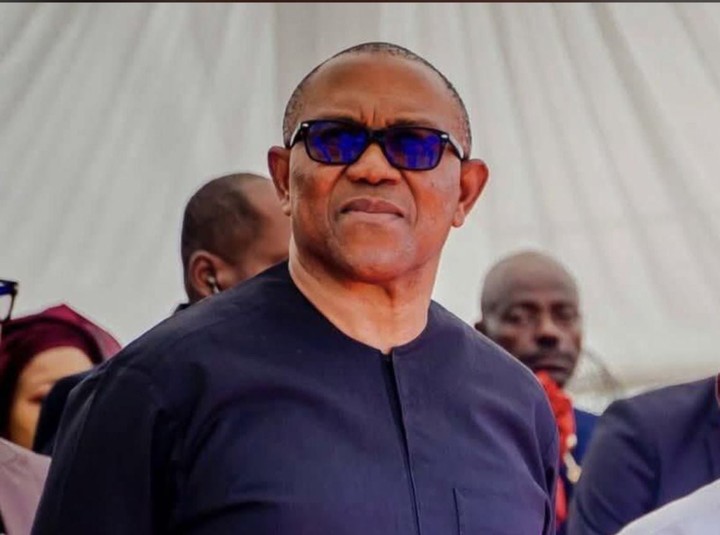
Those of us who love competitive democracy can only take a positive view of the defection of Mr Peter Obi to the African Democratic Congress (ADC), the platform adopted by key opposition figures for the 2027 elections after the cannibalisation and factionalisation of the Peoples Democratic Party (PDP) and the Labour Party by a blend of spoiler politicians and pliant courts. Obi gave a credible account of himself in the 2023 presidential election, surpassing expectations by amassing 6.1 million votes and placing third. Both Atiku and Obi claimed to have won the election. Both cannot be right. Obi’s fans are more vocal in claiming victory — but Atiku still probably thinks Obi made him lose.
A look at the raw figures of the presidential election — at face value, devoid of counterfactual contexts and possible variables — would suggest that if the PDP had not broken into bits, the former ruling party would most likely have won the election. Atiku, the PDP candidate, polled 6.98 million votes, while Dr Rabiu Musa Kwankwaso, who flew the flag of the New Nigeria Peoples Party (NNPP), secured 1.5 million votes. Atiku, Obi and Kwankwaso were all in the PDP before splitting a year before the election. Their combined votes came to 14.6 million. For comparison, Asiwaju Bola Tinubu, the All Progressives Congress (APC) candidate, got 8.8 million. You may wish to do the math.
I admit that the dynamics might have been different even if the PDP had not split, but I remain convinced beyond reasonable and unreasonable doubt that a united opposition would have won the election. With Obi now joining the ADC — which is wrongly called a “coalition” by those who obviously don’t know the meaning of coalition — the party is finally taking shape. Kwankwaso has hinted that he would be willing to join the ADC if he would get the presidential or vice-presidential ticket. That is quite a demand: Atiku has already declared that no candidate is going to step down and that the primary election will be contested. Nonetheless, Kwankwaso will be a worthy addition.
The fate of Obi has been the key question all along. Would the ADC give its presidential ticket to him or not? This question must have delayed his move to the party, leading to speculation at some point that he would remain in the Labour Party or go elsewhere other than the ADC. Like Prince Hamlet’s monologue in William Shakespeare’s Hamlet, the question is: “To be, or not to be.” Hamlet was, in a sense, torn between the vagaries of life and the uncertainties in death — “to die, or not to die”. Obi must have been torn between staying put in the Labour Party, with its vagaries, and moving to the ADC, with its uncertainties. The Labour Party was full of pains but the ADC might be a death knell.

Something is undebatable: Obi wants to be president of Nigeria. He set out to be president, not vice-president. Another thing is undebatable: his support base wants him to be president, not VP. The devoted support for Obi is based on the desire to have him as the chief executive of the federation, not someone’s running mate. That is why sections of his support base did not want him to team up with the ADC — except he was guaranteed the presidential ticket. They are saying it is the presidency or nothing. But some of his supporters are flexible and are saying they just want him on the ticket, either as the presidential or vice-presidential candidate. It is a case of hardliners and moderates.
There is an underlying reason: many see Obi as the most credible presidential material of the whole lot. Many Nigerians believe that the issues militating against the progress of Nigeria are corruption and wasteful spending, and they see in Obi the embodiment of honesty and frugality. His support base is mixed — there are pan-Nigerian idealists who see him as a different kind of politician who can lead Nigeria to the promised land; there are youths who are disenchanted with the system and crave a new leadership; and there are ethnic nationalists pursuing and promoting a very narrow agenda. There is nothing peculiar to Obi in this. It is the nature of politics. We cannot deny that.
Many Obidients are fully persuaded that he can go it alone, that he does not need to join forces with the politicians in the ADC for him to be president of Nigeria. They believe he has a solid brand recognition and the organic voting base to win the vote. Many of those pushing this idea are “purists” who would not want Obi to be “infected” by the diseased political elite. We can draw a direct line between the late President Muhammadu Buhari and Obi on this score. Buhari was branded as the “honest one” (mai gaskiya) who should not allow himself to be stained by the “corrupt politicians”. At a point, Buhari formed his own party in trying to actualise his ambition.
Just as Buhari believed he won the presidential elections in 2003, 2007 and 2011 but was denied his mandate by the Independent National Electoral Commission (INEC) and the judiciary, Obi and his supporters also swear till this day that he won in 2023 but was denied by the electoral umpire. But Buhari knew something was missing in his armoury in those three elections: his support base was not widespread enough to deliver the votes that would take him across the finishing line. He re-strategised and finally got his heart’s desire in 2015. It seems to me that Obi and some of his supporters have recognised that he too needs a broader platform and are now open to a team-up.
Many Obidients are vehemently opposed to the ADC option for ideological reasons. They see Obi as the “light” and others as the “darkness” and insist that light and darkness cannot stay together in the same space. However, in reality, political parties are made up of a mixed multitude. Ideas and ideologies can clash, but pragmatic politicians keep their eyes on the ball. The APC is a perfect example. Its leaders, namely Buhari and Tinubu, had different worldviews. Tinubu was known for preaching restructuring, “true” federalism, “fiscal” federalism and free market economy — unlike Buhari. The south-west and north-west were poles apart. But they, still, allied to secure power.
While many Obidients are unable to imagine a world in which Obi would be at the same table with certain politicians, the more realistic ones are looking at how the same “structure of criminality” (as Obi puts it) can deliver the ticket to him. They are drawing a parallel with Buhari — who had established a vote bank of 12 million across various elections and only needed a final push to breast the tape. Some Obidients are saying the ADC should do what the APC did in 2015: deliver the ticket to the candidate who has street following. There is a significant difference though: Buhari, despite his street credibility, actually contested and won the ticket, beating Kwankwaso and Atiku convincingly.
Moreover, Atiku has always wanted to be president. He does not look like an aspirant who would step down for anybody. He has already put down the marker, insisting that there must be a primary. This was also a veiled message to party leaders who might be contemplating asking him to quit. Nothing is impossible in politics and he might yet change his mind, but I would not bet on that. Obi should, therefore, prepare to contest in the primary, which is also likely to feature Rt Hon Rotimi Amaechi. Many would put their money on Atiku winning the primary, but what are the chances of the delegates turning on him at the last minute and asking him to give younger people a chance?
And here is the tricky bit: If Atiku, as predicted, wins the primary and offers Obi the VP slot, will his supporters, including Prof Pat Utomi, revolt? Given Atiku’s age, the pairing could be a pathway to an Obi presidency in 2031 if an Atiku/Obi ticket upsets Tinubu in 2027. The thinking in Atiku’s camp is that Obi needs Atiku more than Atiku needs him. In fact, a calculation in Atiku’s camp is that Obi should run on his own and prevent a southern sympathy for Tinubu by dividing the votes. I am sure everybody has his own calculations and permutations, but by and large, the general picture is that it would be tough for Obi to get ADC’s ticket. As it is said, though, 24 hours is a long time in politics.
AND FOUR OTHER THINGS…
OIL THEFT
When US President Donald Trump started his Venezuela adventure, he said he was fighting drug gangs and that President Nicolás Maduro was a member of a cocaine-trafficking cartel. After using the American military might to bully and capture the sitting president of a sovereign nation as well as his wife, the Trump administration has charged him to court for firearms possession (in a country that sells guns over the counter) and cocaine trafficking. In totally unrelated news, the country’s oil reserves — the largest in the world — are now being targeted by American companies. Emergency deals have been concluded for the US to commandeer and control Venezuelan oil. Abracadabra.
TRUMP CARD
President Donald Trump has virtually given away why he has been huffing and puffing from Sokoto to Caracas recently — that he wants Republicans to keep hold of the US Congress in the 2026 midterm elections, otherwise he will be impeached by the “radical left” Democrats. His tariff tantrums are hurting the American economy, but if he can seize Venezuelan oil and pump it into the market, crude prices will drop and this will have tremendous benefits to American households and voters. Sadly, this may hurt the Nigerian economy and the stability in the forex market. But will the excited onlookers and Trump’s die-hard fans finally see through the politics and the dramatics? Naïve.
SAD STORIES
Condolences to two of my colleagues who recently lost loved ones. Mr Gabriel Akinadewo, publisher of Freedom Online, lost his son, Washington, who was preparing for his national youth service. He died shortly after falling ill. What a tragedy. Imagine the pain of his parents. The death of Nwamaka Chigbo, Abuja-based lawyer and elder sister of Maureen Chigbo, publisher of RealNews, in the hands of kidnappers is so odious. They abducted her, demanded N3 million ransom and killed her before anyone could reach them. Police are suspecting “one chance”: her body was found by the roadside with her belongings scattered. Whatever, this is barbaric. My condolences to both families. Tragic.
NO COMMENT
That Chief Nyesom Wike, minister of FCT, is in the news far more than President Bola Tinubu who appointed him is something I struggle to live with, but I find it more bewildering that his associates in the Rivers house of assembly have once again launched impeachment proceedings against Governor Simi Fubara, who, for all intents and purposes, is a senior member of the All Progressives Congress (APC) — Tinubu’s party. Wike openly said he would be politically buried if Fubara gets a second term. Tinubu previously declared a state of emergency and suspended Fubara to please Wike. Now that Wike has re-started the hostilities full blast, will Tinubu declare state of emergency again? Hahahaha.
•Written By Simon Kolawole
-

 News23 hours ago
Bauchi Shuts Cattle Markets In 4 LGAs Over Security Concerns
-
 Politics20 hours ago
How My former deputy plotted to take my seat – Gov. Yusuf
-
World News22 hours ago
Trump Accuses Iran Of ‘Dishonorable’ Conduct In Strait Of Hormuz, Warns Against Charging Tankers
-
News22 hours ago
Bandits Storm Ondo Poultry Farm, Kill Owner And Daughter During Kidnap Attempt
-
News19 hours ago
Troops Kill 10 Terrorists, Rescue Kidnap Victims In Plateau Forest
-
 Business18 hours ago
Taiwo Oyedele admits to errors in new tax laws, says corrective measures underway
-
Politics20 hours ago
Governorship aspirant steps down two minutes after declaration
-
Business23 hours ago
BREAKING: Supreme Court Restores Olanipekun, Banire As Counsel In $2bn Nestoil/Neconde Dispute, Faults Appeal Court