Politics
2027: No Appointments For Non-APC Members – Nentawe

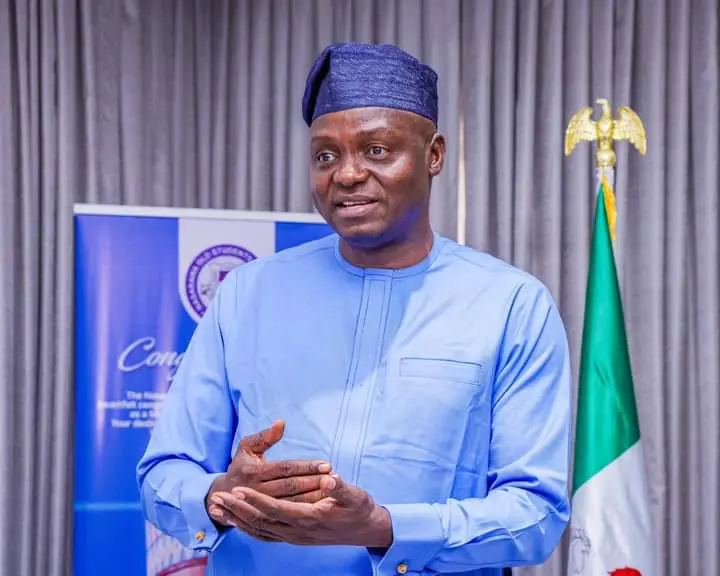
The National Chairman of the All Progressives Congress (APC), Prof. Nentawe Yilwatda, has declared that political appointments following the 2027 general elections will be strictly reserved for party loyalists rather than technocrats or professionals.
Speaking Tuesday night in Abuja at an event tagged “Renewed Hope Promise Kept 2027: Meet and Greet North-West Mobilisation,” organised by the Minister of State for Works, Bello Goronyo, Nentawe emphasised that governance is inherently political and appointees must actively support the party that brought them to power.
A video of his statement went viral on Wednesday, rapidly circulating across social media platforms and generating intense debate among political commentators, party members, and civil society stakeholders nationwide. Reactions have ranged from support among party loyalists to criticism from analysts who fear it could undermine merit-based governance.
According to Nentawe, all government appointees must be visible in grassroots politics and actively participate in party activities, stressing there was “nothing like technocrats” when it comes to political appointments.

“We should always look back and remind ourselves of what brought us here. It is votes. There is no vote called technocrats. Once you are given a political appointment, you are a politician. Simple,” he said.
He insisted that he would defend the position that only individuals willing to actively work for the APC should be considered for appointments.
“As party chairman, I will stand strong to defend the position that if you are not prepared to join us, you shouldn’t be given an appointment. If you are a technocrat, go and be a consultant,” he added, urging appointees to combine governance with politics.
“Government policies are campaign promises that must be defended, explained, and promoted by those implementing them. Appointees cannot divorce themselves from party objectives,” Nentawe said, adding that detachment from political mobilisation could weaken the party’s grip on power.
He described the North-West as the “bedrock” of the APC’s success in the 2023 elections and said the region would remain decisive in 2027, accounting for roughly 20 per cent of the party’s membership nationwide, with youths forming the majority.
“Out of the registered members in the North-West, 48 per cent are between the ages of 18 and 35. This means young people own this party,” he said, noting that members aged 50 and above account for just 17 per cent of the APC’s base in the region.
Nentawe also highlighted that appointees must actively engage with the grassroots, asserting that political visibility is a requirement, not an option. He warned that the APC cannot rely solely on technocrats who do not participate in party mobilisation.
“Once you are given a political appointment, you are a politician. If all appointees decide to become technocrats, the party will never return to power,” he said.
He commended Goronyo for organising the event and pledged to ensure the president is aware of initiatives that reflect party unity and mobilisation, noting that such efforts should serve as a reference for all ministers and appointees.
The chairman stressed the strategic importance of the North-West, describing the region as the party’s “vote bedrock.” He said youth engagement in the region remains central to the APC’s 2027 strategy, citing that nearly half of registered members are between 18 and 35 years old.
Special Adviser on Policy Coordination and Head of the Central Results Delivery Coordination Unit (CRDCU), Hadiza Bala-Usman, added that the North-West delivered the highest number of votes for the APC in 2023 and must remain united to do even better in 2027.
“We are a vote basket and we must retain that. Nobody should work hard to win elections while others stroll in to collect appointments and hide behind being technocrats,” she said.
She warned that political appointees who fail to campaign or mobilise for the party would not be tolerated, stressing that appointments come with political obligations.
“Once you are a political appointee, you must come out, show your face, show your hand, and support the party,” Bala-Usman said.
Implications for key appointees
Analysts say if implemented, Nentawe’s policy could affect senior government officials widely regarded as technocrats with limited partisan affiliation. These include Bosun Tijjani, Minister of Communications; Wada Maida, Executive Vice Chairman of the Nigerian Communications Commission (NCC); and other notable figures whose appointments were based on professional expertise rather than deep APC membership.
Observers also draw parallels with politicians such as Nyesom Wike, the FCT Minister, who is not an APC member, highlighting potential tensions if the party insists on exclusivity for loyalists.
The move has raised concerns that capable professionals may be sidelined in favour of partisan appointees, potentially disrupting continuity in critical ministries and agencies. Some insiders note that these appointees, while not formally party members, have played key roles in implementing government programmes and advancing national development objectives.
Historical context: Technocrats in Nigerian governance
The policy of appointing non-partisan individuals into government offices has been part of Nigeria’s democratic tradition since 1999. Former Presidents Olusegun Obasanjo, Umaru Musa Yar’Adua, Goodluck Jonathan, and Muhammadu Buhari, as well as current President Bola Tinubu, have all relied on technocrats for critical roles.
Notable examples include Ngozi Okonjo-Iweala, former Minister of Finance and current Director-General of the World Trade Organization; Akinwunmi Adesina, former AfDB President and Minister of Agriculture; Obi Ezekwesili, former World Bank executive and minister, and even former Kaduna State Governor, Nasir el-Rufai as Director-General of the Bureau of Public Enterprises (BPE) and later Minister of FCT before he metamorphosed into a partisan politician. These appointments were often intended to ensure expertise-driven policy formulation, and to create balance between political objectives and professional competence.
Analysts warn that removing this tradition risks sidelining institutional knowledge, weakening governance structures, and prioritising political loyalty over national interest.
PDP: We will work with everyone
The Peoples Democratic Party (PDP), however, said it would adopt a different approach if voted into power in 2027, insisting it would work with both technocrats and politicians.
The party’s National Publicity Secretary, Comrade Ini Ememobong, told Daily Trust that competence, not partisan loyalty alone, would determine appointments under a PDP government.
“When our party wins, we will run a system with a fair mix of politicians and technocrats. The key determinant will be what the appointee has to offer, whether he or she is a politician or a technocrat,” he said.
Ememobong cautioned against interpreting the APC chairman’s remarks in isolation but argued that excluding technocrats entirely would amount to hyper-politicisation of governance.
“Governance is too important to be left to politicians alone. Everyone has a role to play,” he added.
Analysts warn of governance risks
Political analysts have raised serious concerns about the APC chairman’s statements. They argue that prioritising loyalty over competence could undermine governance, weaken public institutions, and reinforce patronage politics.
Abubakar Ibrahim, a political scientist at the Federal University of Lafia, said loyalty-based appointments risk sidelining merit and reducing public confidence in government.
“While loyalty-based appointments may help consolidate party unity and discourage defections, they risk deepening factionalism as excluded groups feel marginalised,” he said.
Ibrahim warned that ministries and agencies could be led by individuals lacking technical capacity, resulting in reactive, politically driven governance rather than evidence-based policymaking. He added that this could erode institutional integrity and frustrate long-term development efforts.
Usman Aliyu Hayatu, a political analyst based in Zaria, described the policy as “dangerously alarming,” highlighting the potential for political loyalty to supersede national interest.
“Exclusively party-loyal appointees are more likely to serve political masters at the expense of accountability, due process, and system integrity,” Hayatu said, warning that sidelining technocrats could alienate patriotic citizens and young professionals who value competence.
Dr Aminu Hayatu, senior lecturer at Bayero University, Kano, said the statement reflects internal power dynamics and a calculated strategy ahead of 2027.
“By dismissing technocrats, the chairman is asserting that all appointees must first be party soldiers, aligning every action with APC interests,” he said.
He warned that turning government offices into permanent campaign structures could blur the line between governance and partisan politics, weakening service delivery, institutional capacity, and public trust.
“When loyalty becomes the main criterion, competence declines, patronage thrives, and citizens become cynical about government. Public institutions risk becoming extensions of the ruling party rather than neutral mechanisms for national development,” he added. (Daily trust)
-

 Politics20 hours ago
Oyo 2027: Makinde moves to name successor
-
Politics20 hours ago
Obidients mobilise for #OccupyINEC protest
-
Politics20 hours ago
Talks intensify as Bauchi gov delays ADC defection
-
Business20 hours ago
Bakare announces full repayment of N4bn Wema Bank loan
-
News12 hours ago
Fire Service CG’s Massive Convoy Sparks Reactions
-
News20 hours ago
FG hikes 2026 borrowing plan by N11tn
-
Politics20 hours ago
No secret deals with factional chair – ADC
-
Metro20 hours ago
PHOTOS: Policemen Murdered By Boko Haram Laid To Rest