Politics
Nigeria’s ruling party has attracted many egos. Can Tinubu handle them?

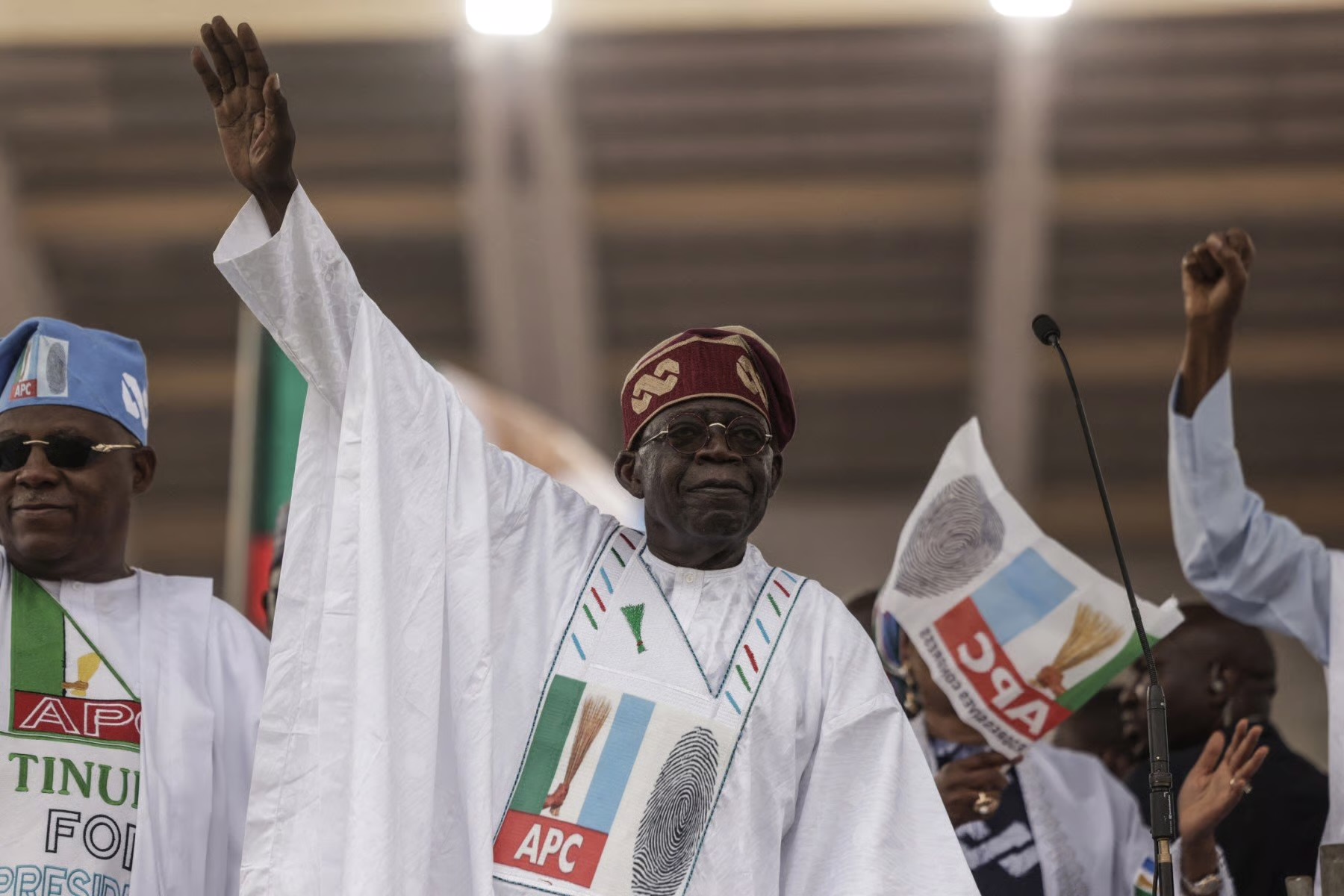
When Nyesom Wike, the former Rivers governor and a key ally of President Bola Tinubu, warned on 28 December that chanting the ruling party’s solidarity anthem would not guarantee political survival, the message was aimed at one man – Governor Siminalayi Fubara.
Fubara’s move from the opposition Peoples Democratic Party into the All Progressives Congress was meant to calm a state that has become a byword for elite feuding. Instead, the defection has exposed an increasingly awkward problem for Tinubu’s party: the more it grows by absorbing powerful newcomers, the harder it becomes to keep old structures intact.
Over the past two years the APC has profited from crises inside Nigeria’s opposition, drawing in governors, lawmakers and powerbrokers. The influx, party strategists argue, strengthens Tinubu’s prospects ahead of the 2027 election by weakening rivals and broadening the APC’s reach. But it also imports unresolved local rivalries – and, in several states, has triggered supremacy battles between established party figures and newly arrived defectors.
From 59 in 2023, the APC seats in the Senate have grown to 79, following the defection of 20 opposition senators to the ruling party. With 79 out of the available 109 seats, the APC has expanded its majority status.

In the 360-member House of Representatives, the APC seats have grown from 175 in 2023 to over 250 now, following the defections of opposition lawmakers into the ruling party.
In the last two years, the states under APC control have grown to 27, following the defection of seven PDP governors into the ruling party. The opposition governors who joined the APC are Duoye Diri (Bayelsa), Peter Mbah (Enugu), Agbu Kefas (Taraba), Umo Eno (Akwa Ibom), Sheriff Oborevwori ( Delta), Siminalayi Fubara (Rivers) and Caleb Mutfwang (Plateau)
In Delta, Governor Sheriff Oborevwori’s defection in April disrupted an APC hierarchy built around figures who had battled – and lost to – him at the polls. Ovie Omo-Agege, a former deputy senate president and the APC’s 2023 governorship candidate, has seen his influence challenged as Oborevwori’s camp asserts itself inside the party.
The tension was visible in October when Delta APC leaders endorsed Tinubu and Oborevwori as consensus candidates for 2027. Omo-Agege’s conspicuous absence fuelled speculation that old rivalries have simply been relocated into the ruling party.
A similar dynamic has played out in Enugu, where Tinubu’s supporters in the state say the centre has prioritised recruitment over internal equity. Uche Nnaji, the minister of innovation, science and technology and an early APC organiser in the state, was sidelined as part of the effort to smooth Governor Peter Mbah’s reported entry into the party. Nnaji’s allies argue that a foundational figure has been displaced to accommodate a long-time rival – a move they fear will hollow out local loyalty when candidate selection begins.
Bayelsa offers another warning sign. Governor Douye Diri’s defection has reopened wounds with Timipre Sylva, a former governor and an established APC powerbroker whom Diri defeated in the 2023 election. Sylva has since faced heightened political pressure, including an investigation by the Economic and Financial Crimes Commission, and a raid on his residence by security forces in October over alleged links to a rumoured coup plot – allegations he denies. His supporters frame the episode as the weaponisation of state power inside an already fractured local contest.
In Plateau, the arrival of Governor Caleb Mutfwang has put the party’s national leadership in an awkward position. Nentawe Yilwatda, the APC national chairman, publicly welcomed the governor’s move – yet party stakeholders accuse him of resisting it privately. The grievance is personal as well as political: Mutfwang thwarted Yilwatda’s own ambition to become governor in 2023, before Tinubu appointed him as a minister.
Succession, tickets and the Abuja factor
Not all the friction comes from defectors. In several APC strongholds, rivalry is being driven by the race to control 2027 succession plans – and by competing lines of loyalty to the president.
In Ogun, Governor Dapo Abiodun and Gbenga Daniel, a former governor who is now a senator, are locked in a cold war that has spilled beyond party meetings into governance. With Abiodun reaching the end of his second term in 2027, party insiders say he is positioning for Daniel’s Ogun East senatorial seat. Daniel’s allies complain that constituency projects have been stalled, that properties linked to him have been marked for demolition, and that his suspension by the state APC reflects the governor’s growing grip on the party machine.
In Benue, the fight is between the state government and Abuja. Governor Hyacinth Alia’s relationship with George Akume, the secretary to the government of the federation and a long-time Benue powerbroker, has deteriorated into open factionalism. Tensions peaked in August during an attempted impeachment of Alia that ended with the removal and suspension of the state assembly speaker, Hyacinth Dajoh, who is seen as close to Akume.
In November, Alia’s administration demolished a Tinubu campaign office erected by Akume’s supporters, citing planning violations – an episode that deepened the impression of a party divided between local authority and federal patronage.
Party officials privately worry that such disputes will become harder to manage as the APC moves from recruitment to distribution – of tickets, appointments and influence. In states such as Osun and Ekiti, disagreements over consensus candidates for off-cycle elections have already alienated heavyweight aspirants, highlighting how quickly unity can fray when ambitions collide.
Rivers as the stress test
Rivers sits at the centre of these anxieties because it combines the two forces most likely to destabilise the APC: a powerful new entrant and an entrenched old guard with presidential access.
Fubara’s defection was framed as reconciliation. Yet it has not repaired his rift with Wike, whose influence in Abuja remains significant. The state’s political crisis – including the imposition of emergency measures and repeated rounds of peace talks between Fubara and pro-Wike lawmakers – has produced only superficial calm.
Wike’s warning at the weekend underscored the point: allegiance to Tinubu’s national project does not settle local power struggles. For party strategists, Rivers has become a test of whether Tinubu can expand the APC without allowing it to become a holding pen for rival factions.
The Rivers State’s political crisis is paralysing government. A six-month spell under emergency rule disrupted policymaking, and federal transfers were frozen after the Supreme Court struck down the 2025 budget Governor Siminalayi Fubara had been using and voided his cabinet.
The court ordered him to return to the state assembly with a fresh 2025 budget and new commissioner nominees for approval – but three months after emergency rule ended he has yet to do so. While other governors have already signed their 2026 budgets, Rivers remains stuck in a fiscal and administrative limbo.
Tinubu’s answer: a conflict-resolution committee
Tinubu has signalled he understands the risk. Last week, he inaugurated a 15-member APC committee on strategy, conflict resolution and mobilisation to address internal disputes. Chaired by Mai Mala Buni, the Yobe State governor, the panel includes governors from several states where tensions have flared.
“We must be accommodating,” Tinubu said at the inauguration at his Bourdillon home in Lagos. “That is the only way we can be resilient. We must be tolerant.”
The warnings from within the party have been unusually blunt. Adamu Garba, a former APC presidential aspirant, said the party risked “internal sabotage” if it failed to integrate newcomers with existing members.
“Some of these old members did a lot of work to put the structures together in states,” Garba told The Africa Report. “If the party does not carry out deep grassroots homework to integrate new entrants, particularly the governors, with existing members, there is a real danger of internal sabotage – people staying within the party but working against it.”
His concerns echo those of Senator Ali Ndume, an APC stalwart, who warned in November that the party was becoming “overloaded”.
“And when you overload a ship – especially with mostly empty cargo – it risks capsizing,” Ndume said.
Garba argued that Buni’s experience could help. As caretaker chairman during the crisis that preceded the removal of Adams Oshiomhole, Buni oversaw a reconciliation process that stabilised the party at a delicate moment.
“President Tinubu appears to be leveraging that experience,” Garba said, pointing to the inclusion of senior figures who were prominent in that earlier effort.
Back to the future?
Whether it will be enough is the question now hanging over the ruling party. Tinubu’s recruitment drive has weakened opponents and widened the APC’s map. But as 2027 approaches, the challenge shifts from winning defectors to managing them – without alienating the people who built the party’s local machinery in the first place.
The moment recalls the 2013–14 cycle, when disgruntled PDP heavyweights defected to the then upstart APC, helping to unseat Goodluck Jonathan in 2015 and usher Muhammadu Buhari into power.
But the APC’s victory quickly exposed its own fault-lines over patronage and power-sharing. Bukola Saraki, one of the most prominent recruits, defied the party’s internal deal to secure the Senate presidency, infuriating Buhari, Bola Tinubu and other party leaders. The rupture never fully healed: Saraki and several allies later quit the APC and returned to the PDP.
(The Africa Report)
-

 News22 hours ago
NBA probes mismanagement claims of ₦100m Imo govt gift to Owerri branch
-
Politics22 hours ago
2027: I can bet my life Obi will humiliate Soludo in Anambra – Momodu
-
Politics20 hours ago
‘No vacancy’ — Senators endorse Akpabio for 11th assembly senate presidency
-
Metro22 hours ago
Finland appeal court cuts Simon Ekpa’s jail term to four years — Report
-
News22 hours ago
Nigeria Police Order Officers To Vacate Lagos Alapere Barracks Within 30 Days For Developer
-
News4 hours ago
State Police Bill: Five Assemblies say yes, 31 yet to decide
-
News5 hours ago
Sanwo-Olu orders immediate repairs of Lagos roads
-
Politics22 hours ago
‘70 People Wasted Their Lives For Dancing Clown, Adeleke, In August Poll’ – Adeyanju Tackles Osun Gov Over Support For Tinubu’s Second Term