Metro
OBITUARY: Ron Kenoly, nightclub singer turned worship leader who adopted Nigerian name ‘Chukwuemeka’

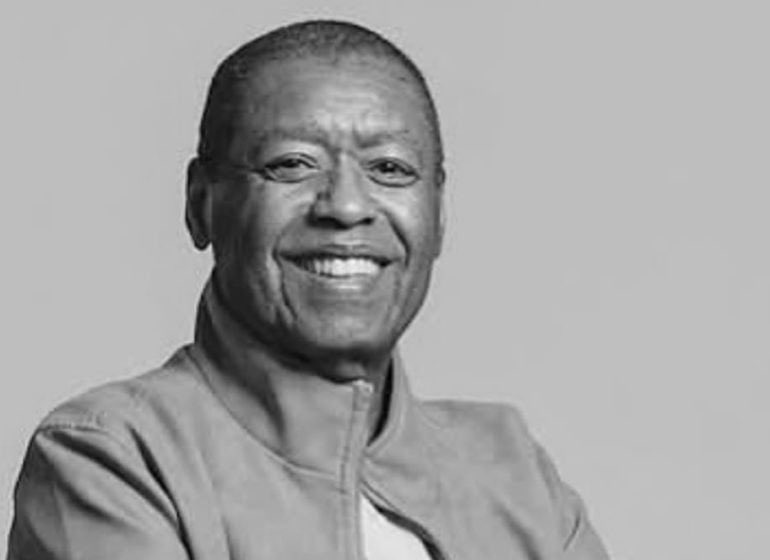
The global church has lost one of its most unifying voices. Ron Kenoly, the celebrated gospel singer and worship leader whose anthems like ‘Ancient of Days’ and ‘Let There Be Praise’ became the soundtrack of faith for millions worldwide, passed away on February 3. He was 81.
The news was shared on Instagram by Bruno Miranda, his longtime music director, who did not specify a cause of death. The announcement prompts a wave of reflection on a life that journeyed from nightclub stages to prison chapels, and finally to packed arenas across the globe — a life wholly dedicated to the power of worship.
Kenoly was born in Coffeyville, Kansas, on December 6, 1944. He was raised there and, after graduating from high school, moved to Hollywood, California. He later served in the United States air force from 1965 to 1968. During his service, he performed with the Mellow Fellows, a cover band which toured military bases.
KENOLY’S JOURNEY INTO MUSIC


Coming from a family of singers, music was always Kenoly’s passion. In an interview, he revealed that watching performances by the late Nat King Cole and Sammy Davis Jr. solidified his resolve to become a singer at the age of eight.
“Growing up in 1952, I was eight years old. We lived in a poor part of town, and there was only one television in our neighbourhood. And on weekends, they would turn the TV towards the window and everybody in the neighbourhood would come and watch TV,” he said.
“I saw Sammy Davis Jr. and Nat King Cole singing on the Red Skelton show and the Ed Sullivan show. At eight years old, I saw them and I was like that is what I am going to do. Music has always been a part of our lives and family.
“All my brothers are singers, my mother was a singer, my father was a singer, so we grew up singing. Music has always been my passion; I have never had any other passion except music. So at eight years old, I decided, I saw them singing, two black men were well dressed, well respected by everybody, and I said that is what I am going to do.”
After his discharge from the air force, he returned to Southern California to pursue his music career. Kenoly spent his first decade singing secular music and performing at nightclubs.
He recorded demo versions of Jimmy Webb’s songs, including ‘Up, Up and Away’, for the Audio Arts label, which also released his debut single, ‘The Glory of Your Love (Mine Eyes Have Seen)’. He later secured a deal with A&M Records, where executives rebranded him as Ron Keith. Under the label, he recorded several R&B tracks such as ‘I Betcha I’ll Get Ya’, ‘Soul Vaccination’, and the 1975 release ‘Can’t Live Without You’.
Kenoly admitted that while he was doing alright, he never had a “blockbuster hit,” though some of his songs charted in the top 100. He also revealed he had been an opening act for major stars. “I was good enough to be an opening act for a lot of the superstars like The Temptations, Etta James, Ike and Tina Turner. It’s a long list,” he said.
In 1972, Kenoly and Candy Rae became the first artistes signed to George Semper’s Inner City label. That same year, they released ‘Lovely Weekend’, recorded at Clark Brown Audio Studio in Crenshaw, Los Angeles. It sold nearly 200,000 copies.
KENOLY AS A GOSPEL MINISTER
On November 19, 1975, Kenoly rededicated his life to Christ. He stopped performing secular music and began writing and singing spiritual songs. He revealed his mother was happy he “got out of the club” and had been praying for him for a long time.

“I started singing and writing spiritual choruses, and my mother was proud. She actually prayed me out of it,” he said. “She gave me a Bible, and as I read it, I started writing scripture choruses. I did that for the best part of eight years.”
During those eight years, he began ministering in prisons. This journey began after one of his brothers was incarcerated. When Kenoly went to visit him, his brother informed the prison chaplain that he could sing, and the chaplain invited him to perform during a service.
“When I got up there, I started singing these songs, and the chaplain let me sing. And it was about 40 to 50 guys in this chapel service. And when I began to sing, I saw these professional hardcore criminals break down and cry and pray, and when I saw that, I had no idea what the Father was doing; I just knew that he was doing something,” he said.
“It was on that day I said ‘God, I do not know what doors you are opening for me, but you have opened this door and you have validated what you are doing in my life, and so I do not care. Whatever door opens, I am going through it. If you open a door, I will go through it’. So that chaplain told another chaplain, I went to another prison, same thing happened.
“So it went on and on, from 1978 to 1985. For seven and a half years, I sang for most of the prisons up and down the West Coast of America: Washington, Oregon, Nevada, California. I was singing in prisons, halfway houses, storefront churches, full gospel businessmen, women’s aglow, all those little parent church organisations that would have me come sing.”
His trajectory changed in 1985 when a pastor who heard him at a meeting invited him to perform at his church of about 500 worshippers — the largest crowd he had ever faced. That pastor — Dick Bernal — eventually hired him as the church’s music pastor. Kenoly earned a music degree and a teaching credential from the University of California, Berkeley, before returning to Bernal’s church, where he remained for 15 years.
Kenoly’s ministry expanded significantly after he joined Jubilee Christian Center in San Jose, California, where he became worship leader in 1985 and music pastor two years later. Ordained in 1987, he focused on teaching worship theology. In 1993, he was named the church’s Ambassador of Music and began consulting churches nationwide on developing worship ministries.
The late singer disclosed that in 1980, Don Moen found out about him and signed him to Integrity Music, his record label. Kelony added that he later got together with musicians Abraham Labroriel, Chester Thompson, Harlan Rogers, and they “all decided that they wanted to contribute something to the kingdom of God”.
He said they gathered to record the 1992 album ‘Lift Him Up,’ which became a global phenomenon and marked a turning point in Kenoly’s career. It also became the fastest-selling worship album at that point.
“And so we all got together, and we recorded in Norfolk, Virginia. We recorded an album called ‘Lift Him Up’. I had done one previously called ‘Jesus Is Alive’. But we did ‘Lift Him Up’ and that went all over the planet literally. I am not exaggerating; it went all over the planet. It was marketed in 144 nations in every continent except Antarctica. That was the beginning and it has not ended,” he said.
Another album by Kenoly, titled ‘Welcome Home’ and produced by Tom Brooks, was later named Billboard’s top contemporary worship music album and won the Gospel Music Association’s Dove Award for praise and worship album in 1997.
He earned multiple academic degrees, including a music degree from Alameda College, a master of Divinity from Faith Bible College, and a doctorate of Ministry in sacred music from Friends International Christian University.
During his career, he was nominated for nine GMA Dove Awards and won the ‘Praise & Worship Album of the Year’ for ‘Welcome Home’ in 1997. Kenoly also released more timeless anthems such as ‘Ancient of Days’, ‘Let There Be Praise’, ‘Whose Report Shall We Believe’, and ‘Jesus Is Alive’. His songs became staples of congregational worship at churches around the world.
Kenoly also revealed that he once tried counting his catalogue and realised that he had written over 1,500 songs. He, however, did not record all of them.
KENOLY’S MARRIAGE TO TAVITA AND LOVE FOR AFRICA
In another interview, Kenoly spoke about meeting Tavita, his wife, who is from Puerto Rico. He revealed that they had met through mutual friends and were initially in the air force together. He added that he knew he was going to marry her from the first day they met.
“I met Tavita through some mutual friends. We were both in the Force at the time. It was the kind of thing where the first night I met her, I knew I wanted her to be my girl, and I told her I was going to marry her. She didn’t like me at first; she had a lot of preconceived ideas about me. I was in a nightclub band called the Mellow Fellows and was pretty popular around the base. She just thought I was another Playboy, or something. But then she found I was nicer.”
They were married for 42 years and had three sons.
Kenoly had a profound connection with Africa, where his music found a massive audience. Songs like ‘God Is Able’ gained popularity in Nigeria before reaching the United Kingdom. His live performances drew thousands, and his impact was so broad that pirated copies of his videos circulated widely.
He was a frequent visitor to Nigeria and chose the name “Chukwuemeka” during one visit.
In Nigerian churches at the dawn of a new millennium, Kenoly’s songs did not just play —they happened. Tracks like ‘Ancient of Days’ and ‘Lift Him Up’ transcended the cassette and CD.
They became living anthems of praise, dynamic bridges where deep theology met unrestrained emotion, and sacred doctrine ignited joyous dance. In a nation where worship is a full-bodied expression of faith — hands lifted, feet stomping, voices raised — Kenoly’s music didn’t just fit the culture; it gave it a soundtrack.
He often spoke of his strong connection to Africa, rooted in his African American heritage, the deep influence of West African rhythms on gospel music, and Africans’ intense passion for praise and worship. He admired how readily congregations embraced worship, often taking over songs with overwhelming enthusiasm.
While acknowledging the political and developmental challenges facing many African nations, he viewed them as young societies with strong spiritual foundations. To him, Africa was a continent alive with revival and faith, and being there meant witnessing God at work — an experience he deeply cherished.
“I have quite a passion for Africa, for a lot of different reasons. First of all, being an African American, I have a desire to know more about the homeland of my ancestors. Then of course, there’s the music. So much of the music that we do is born out of West African rhythms, so I feel I can grow more if I learn more about them. Thirdly, Africans have a passion for praise and worship, which I haven’t seen in many other parts of the world,” he said.
“Over there, it’s not difficult to lead praise and worship. All I do is start a song, and they take over. It’s always a joy to go there. Sometimes it’s a struggle, because most of the countries I go to are either underdeveloped or going through some kind of political turmoil, but then you have to realise that none of the countries south of the Sahara are over 40 years old.

“They’re young nations trying to find an identity politically, socially and economically. The good thing is that spiritually, they don’t have a lot of problems, because they’ve always had a belief system. Just like the Greeks in Paul’s day, they knew that a God was ruling over everything and wanted to establish a relationship with him.”
KENOLY’S LEGACY
Kenoly’s legacy is one of unwavering devotion that transcended borders. Rising from humble beginnings, he transformed personal faith into anthems that reshaped contemporary gospel music. For over three decades, his songs served as vessels of hope and spiritual renewal.
More than a celebrated worship leader, he embodied the unifying power of praise. His voice and ministry, preserved in timeless songs, will continue to resonate as a lasting source of strength and inspiration for generations to come. (The Cable)
-

 News20 hours ago
Nigerian Population Commission Faces Scrutiny Over N129.5billion Funds Released For Census That Never Held
-
News21 hours ago
Court dismisses cyberbullying charge against Sowore, releases passport
-
World News20 hours ago
Middle-East War: US Is Negotiating With Itself, Says Iranian Military Spokesperson
-
Metro21 hours ago
Your selective outrage is troubling — Sowore fires back at NBA
-
Metro20 hours ago
Supreme Court Ends 20-Year Legal Battle For 96 Teachers Unlawfully Redeployed By Benue Over ‘Non-Indigene’ Status
-
Politics21 hours ago
2023 Election: Obi shouldn’t have been allowed to contest – Justice Ayo Salami
-
News20 hours ago
Operating Without Clearance Risks Jail, Equipment Seizure – NCAA Warns Drone Operators
-
Metro20 hours ago
Soun Of Ogbomoso Suspends Senator Adeseun As Mayegun Over ‘Insubordination, Persistent Disrespect’