Business
There Was Pressure To Keep Refineries Running Despite Monumental Losses – Ojulari

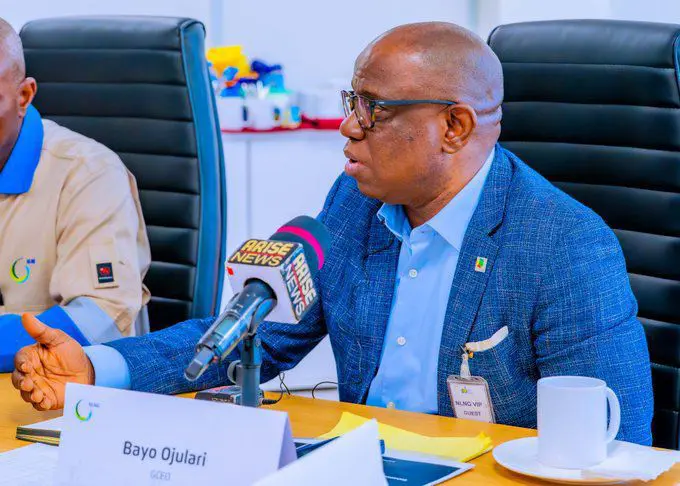
The Group Chief Executive Officer of the Nigerian National Petroleum Company Limited, Bayo Ojulari, has disclosed that intense political pressure was mounted to keep Nigeria’s state-owned refineries running even though the facilities were operating at monumental losses.
Ojulari said this pressure persisted despite internal findings that refinery operations were steadily eroding national value and running in monumental losses.
He acknowledged that the decision attracted strong political resistance.
He spoke on Wednesday in Abuja during a fireside chat titled Securing Nigeria’s Energy Future at the Nigeria International Energy Summit 2026.

According to him, public anger over the refineries was understandable, given the scale of investment committed to their rehabilitation over the years.
“On the refineries, Nigerians were angry. A lot of money has been spent, and expectations were very high. So we were under extreme pressure, extreme pressure.
“There were political pressures to keep the refinery product, lots of pressure. But when you have been trained for over 35 years to focus on commerciality and profitability, you can’t sleep with that,” he said.
Ojulari explained that upon assuming office, his management team carried out a diagnostic review of refinery operations to establish their true commercial status.
The review, he said, revealed a deeply unsustainable business model.
“The first thing that became clear, and I want to say this very clearly, is that we were running at a monumental loss to Nigeria. We were just wasting money.”
He said NNPC was routinely allocating crude cargoes to the refineries every month, yet utilisation levels hovered around 50 to 55 per cent. At the same time, operating and contracting costs remained high, leading to continuous value leakage.
“We were spending a lot of money on operations, a lot of money on contractors. But when you look at the net, we were just leaking away value.”
Ojulari said management could not identify any clear pathway to reverse the losses.
“Sometimes you make a loss during investment, but you have a line of sight to recovery. That line of sight was not clear here.”
He said the first major decision taken by his administration was to halt refinery operations and subject the assets to rapid technical and commercial reassessment.
“We decided to stop the refinery and do a quick check. We planned that if things were lined up, we would reopen and work on them”, he noted.
He also pointed to product quality challenges, citing the Port Harcourt Refinery as an example.
“The crude we were taking into Port Harcourt was producing mid grade products. When you aggregate their value compared to what you put in, it was a waste”, he added. (Daily trust)
-

 News23 hours ago
Amid FCT Issues, Wike Flies Sons To London On Condolence Visit
-
News15 hours ago
No Power Can Stop Muslims From Practising Shariah – Shariah Council
-
Sports6 hours ago
UCL Round of 16: Osimhen to face Liverpool as Real Madrid, Man City renew rivalry
-
Business12 hours ago
FG deepens CREDICORP, targets wider coverage, disbursements
-
News12 hours ago
Over 100 terrorists storm Benue villages, kill 150 – Witness tells court
-
Business11 hours ago
Bag Of Cement Climbs To N11,000
-
News12 hours ago
EFCC detains Ozekhome over ‘Tali Shani’ UK property affair
-
News12 hours ago
Northern Christian leaders drop ‘CAN’ title, adopt old identity