Business
Power outages persist as 58% of hydro projects stay frozen

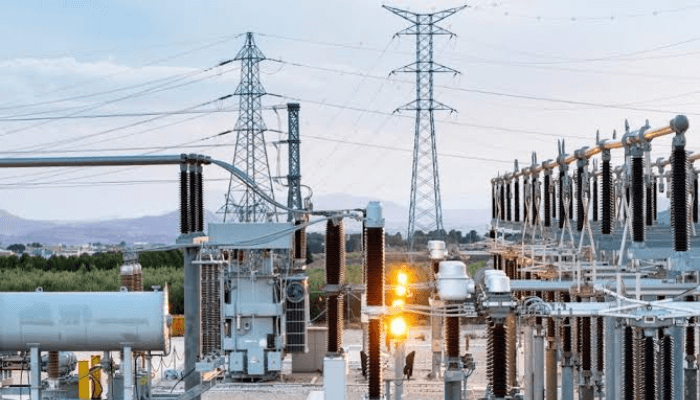
Power outages have continued to plague Nigeria’s electricity system after fresh evidence showed that 58 percent of publicly funded dam projects meant to support power generation remain stalled or abandoned, despite hundreds of millions of naira already disbursed.
Hydropower contributes 30.1 per cent of Nigeria’s electricity supply, making it the country’s second-largest power source after thermal generation, yet the sector remains plagued by incomplete projects and inadequate maintenance.
Tracka, a civic monitoring platform run by the advocacy group BudgIT, found that more than half of the dam projects it tracked nationwide have failed to progress, reinforcing concerns that deep-rooted execution failures, not just capacity constraints, continue to undermine Africa’s biggest oil-producing country.
In the report examining capital projects under the 2024 budget, Tracka said it monitored 16 dam projects across 13 states, with total disbursements of N432m. Of these, 25 per cent were abandoned outright, while 37.5 per cent had not commenced at all, despite receiving funding. Only a small fraction showed meaningful progress.

“Seemingly minor delays, unchecked inefficiencies, and the absence of accountability in ‘minor’ projects ultimately compound into major national setbacks,” the Tracka team led by Joshua Osiyemi said.
Among the most egregious cases documented by Tracka is the Dam in Gwarangah, Bauchi State, which was allocated N5 million but has somehow recorded disbursements of N109.9 million despite being officially abandoned.
The Earth Dam in Benue State, allocated N100 million, has disbursed N43.5 million but remains abandoned. In Taraba State, the Monkin Earth Dam project, now also abandoned, received N49.8 million in disbursements from an allocation of N89.3 million.
The Tracka report identified ongoing dam projects, including the rehabilitation of Ibiono Ibom Dam in Akwa Ibom, which has received N5.3 million of its N50 million allocation, and the construction of a dam in Amagu Onicha, Ndiuruku Amagu in Abakaliki, Ebonyi State, with a N50 million allocation and ongoing status.
However, four rehabilitation projects have been abandoned, with disbursement records dating back to 2021 but showing no observable progress on the ground.
Six dams were at various stages of execution, though most were advancing at an unacceptably slow pace, according to field officers. Another six projects had not commenced at all, despite having approved budgetary allocations.
The dam project failures come against the backdrop of Nigeria’s collapsing national grid, which has become a grim symbol of the country’s infrastructure crisis. In 2024 alone, the grid collapsed 12 times, plunging Africa’s largest economy into darkness and triggering losses estimated by the World Bank at $29 billion annually, roughly 10 per cent of Nigeria’s projected 2025 GDP.
The grid’s fragility has only intensified into 2026. It crumbled twice in four days as of January 27, plunging millions into darkness and exposing the deep rot that defines the power sector.
Multiple distribution companies across major cities, including Lagos, Port Harcourt, Kano, and Enugu, recorded zero-megawatt allocations, leaving households and businesses without power.
Industry experts point to Nigeria’s chronic underinvestment in both thermal and hydroelectric power infrastructure as a root cause of the crisis.
The economic toll of unreliable electricity extends far beyond inconvenience. Nigerian manufacturers spent N238.31 billion on alternative energy sources in the first half of 2024 alone, a 7.69 per cent increase from the previous period, according to the Manufacturers Association of Nigeria.
Small and medium enterprises in Lagos alone spend an estimated N5.3 trillion annually powering diesel generators, according to Sustainable Energy for All.
For businesses, energy now consumes up to 40 per cent of operating costs. With diesel prices ranging from N1,500 to N1,800 per litre as of mid-2025, and Nigerian firms running generators an estimated 59 per cent of the time, the effective cost of electricity for businesses reaches approximately N0.24 per kilowatt-hour, almost double what the average American business pays and more than double Nigeria’s official grid tariff.
The ripple effects have proven devastating. In 2023 alone, 767 manufacturing firms shut down, costing 18,000 jobs, with 335 others becoming financially distressed, according to the Manufacturers Association of Nigeria. Many more followed in 2024 as relentless power failures and soaring generator costs eroded competitiveness.
Regional economic hubs have been particularly hard hit. Lagos, Nigeria’s commercial capital and home to Africa’s largest concentration of tech startups and multinational corporations, has seen companies increasingly invest in expensive off-grid solutions or relocate operations entirely. In 2025 alone, more than 20 firms exited the national grid, adding 1,045 megawatts of off-grid capacity, including BUA Cement’s 161-megawatt plant.
“We thought that we had gone past this,” said Muda Yusuf, chief executive of the Centre for the Promotion of Private Enterprise, following the December 2025 grid collapse. “Businesses may experience huge losses if it is not fixed within 24 hours.”
The power crisis has also emerged as a major constraint on Nigeria’s economic ambitions. President Bola Tinubu’s administration has set a target of achieving a $1 trillion economy by 2030, yet analysts warn this remains illusory without reliable electricity. By comparison, Egypt powers its $400 billion economy with a stable grid maintained through sustained upgrades.
The federal government owes power generation companies approximately N4 trillion as of 2024, with an additional N762 billion outstanding by mid-2025, according to generation company executives. Although the government raised N501 billion in bonds to offset part of the debt, liabilities continue to mount, starving generators of funds for maintenance and gas purchases. (BusinessDay)
-

 Politics23 hours ago
2027 Election: Why Tinubu’s second term is not Sure– Primate Ayodele
-
News23 hours ago
Trump Links CNN’s Ceasefire Report To Unknown Nigerian Outlet
-
Business23 hours ago
JUST IN: Dangote refinery reverses petrol price to N1,200 as crude dips
-
Business23 hours ago
What You Must Know As CBN Tightens BVN Rules From May 1
-
World News23 hours ago
North Korea Fires Two Rounds Of Ballistic Missiles
-
News19 hours ago
Pipeline vandals deploy CCTV, advanced tactics to evade arrest – Expert
-
News6 hours ago
Why Tinubu missed commissioning of Lagos bridge despite being in Lagos — Presidential Aide
-
Politics23 hours ago
Sanwo-Olu’s transport adviser resigns to pursue Reps seat