Politics
E-Transmission Of Results: Connectivity Or Political Will?

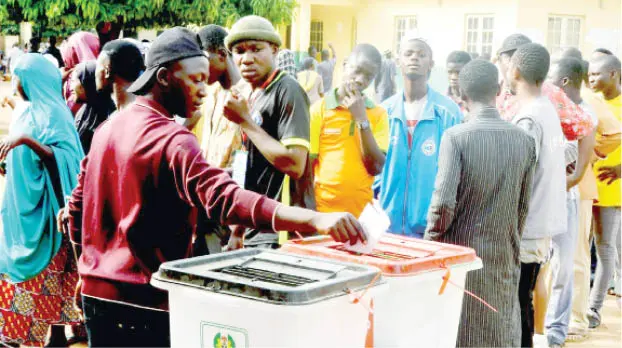
The move to boost public trust in Nigeria’s electoral process may have suffered a setback following the Senate’s recent resolution on the proposed amendment to the Electoral Act, hinged on poor connectivity in parts of the country. But insights from other developing countries such as Kenya, India and Brazil show that the network problem can be fixed ahead of the next general elections, Weekend Trust reports.
The Senate had rejected Clause 60, Subsection 3 of the Electoral Amendment Bill, 2026 which seeks mandatory real-time electronic transmission of election results from polling units to the Independent National Electoral Commission Results Viewing (IReV) portal.
The upper legislative arm, however, rescinded its decision following widespread protests from the opposition, civil society organisations and labour unions. It convened an emergency sitting on Tuesday, during which it approved e-transmission of the result contained in form EC8A with a caveat: manual collation will suffice in the event of network failure.
The amended clause, which also jettisons compulsory real-time transmission, is widely seen as a “double substandard” and casts a shadow on the forthcoming general elections. Several stakeholders say real-time e-transmission will be a game-changer in enhancing transparency and applaud the House of Representatives for backing the provision.

The House’s version of Section 60(3) states that: “The Presiding Officer shall electronically transmit the results from each polling unit to the IREV portal in real time and such transmission shall be done after the prescribed Form EC8A have been signed and stamped by the Presiding Officer and/or counter-signed by the candidates or polling unit agents where available at the polling unit.”
Meanwhile, a conference committee comprising members from both chambers has been constituted to harmonise the resolutions of the two legislative bodies, after which a final draft will be presented to the President for assent.
Kenya’s experience of e-transmission
Instant e-transmission of election results is regarded as a technologically-driven measure to entrench credibility and foster public trust, particularly in countries where electoral frauds are rampant. Kenya’s Independent Electoral and Boundaries Commission (IEBC) has been adopting real-time e-transmission of ballot results since 2009, while constantly innovating to address emerging challenges and ensure an improved electoral process. The East African country adopts the Results Transmission and Presentation System (RTS) to electronically transmit provisional results from polling booths to election collation centres.
After votes are counted and summed, the presiding officers enter the figures on the signed Form 35 (the results sheet) into specially configured GPRS-enabled mobile phones and transmit the results to the election collation centres at the constituency, county and national levels simultaneously. This process provides access to provisional elections results to stakeholders, including the media, in real time. It also enables the public to watch live streams of results on the big screens set up by the IEBC at observation centres or on national television.
General Packet Radio Service (GPRS), also known as 2.5G, offers seamless data transmission on GSM networks by breaking messages into smaller, independent units routed individually across shared network channels. It provides improved internet access for web, email, Wireless Application Protocol (WAP) services, Short Message Service (SMS), Multimedia Messaging Service (MMS) and others. In other words, the mobile phones used for transmitting election results from the polling stations function optimally under limited internet access.
The RTS has been deployed in all by-elections since 2009 and in the 2022 general elections, with remarkable successes recorded, according to ACE, the world’s largest online community and repository of electoral knowledge. Although the electronically-transmitted results are “provisional” because they lack legal recognition, they usually correspond with the outcomes of manual results. Reports indicate that there were instances candidates had conceded defeat based on electronic results, even before the IEBC declared the winners via manually collated results.
Navigating RTS challenges
Despite requiring limited connectivity, the RTS has failed on a few occasions. For instance, the system encountered major technical hitches during the March 4, 2013 election when only 17,000 of the 33,000 polling stations across Kenya could transmit results. And by the time the problem was fixed, a number of officials had abandoned the GPRS-enabled mobile phones and submitted manual results at collation centres.
Subsequently, where the telecoms service provider signal is weak or absent, presiding officers use satellite phones or travel to where there is adequate signal presence. ACE’s report disclosed that in some cases, the IEBC works with mobile phone service providers to enhance the signals at the polling centres.
“The Commission is working towards strengthening the RTS system by setting up faster connectivity and better servers. This is demonstrated by the efficient way results for by-elections conducted thereafter have been successfully transmitted. Provisional results have always tallied with the final results,” it added.
In the dry runs conducted about two months to the August 2022 election, RTS recorded about 50% failure at polling stations due to connectivity issues and device malfunctions, but the hitches were largely resolved before the election. Though some rural areas still faced a network crisis on election day, it was mitigated with satellite backups.
Ghana to adopt e-transmission
Ghana’s Electoral Commission (EC) has announced its intention to adopt e-transmission to boost transparency and speed and would pilot it in a by-election slated for March 3. The system was introduced in response to delays and controversies over damaged pink sheets (result sheets) in the 2024 elections.
Rising from a recent meeting the commission had with the Inter-Party Advisory Committee (IPAC), Director of Research for the New Patriotic Party, Evans Nimako, told journalists that e-transmission would be given a legal backing through a new constitutional instrument.
“The EC intends introducing what we call results taking electronically at voting centres and they are going to pilot this exercise at the Ayawaso East By-election. The New Patriotic Party is in full support [of the e-transmission], a situation where results get destroyed by hoodlums will be a thing of the past. We will support the EC to file a new CI to give a legal backing to an arrangement where results will be collected electronically to collaborate with the manual transmission of election results,” Nimako said.
Senate’s decision stirs criticism
Political leaders, opposition parties and civil society groups have raised concerns that the Senate’s resolution whittled the proposed amendment on e-transmission of election results. Former Vice President Atiku Abubakar said a mixture of electronic and manual transmission approved by the red chamber could compromise the integrity of elections and create unnecessary confusion in the collation of results, insisting that real-time e-transmission remained the best option for credible elections in the country.
The African Democratic Congress (ADC) urged the Senate to remove any controversial provision that introduces discretionary clauses capable of “weakening the guarantee of real-time electronic transmission of election results.”
The ADC National Publicity Secretary, Malam Bolaji Abdullahi, expressed the party’s insistence on real-time mandatory transmission of results, noting that any other clauses would open the door to “the intentional manipulation of election results.”
The Peoples Democratic Party (PDP) spokesman, Ini Ememobong, also knocked the clause passed by the Senate and asked Nigerians to insist on mandatory transmission. He described the addendum as “nothing more than a backdoor attempt” to reject the proposed amendment for the second time, “while pretending to align with the wishes of the Nigerian people.”
Speaking on Trust TV’s 30 Minutes, former Kaduna State governor and ADC stalwart, Malam Nasir El-Rufai, accused Senate President Godswill Akpabio of deliberately frustrating the electoral amendment, mandating real-time e-transmission of election results. He attributed the resistance to the leadership of the Senate, and not lawmakers, alleging that “Akpabio is the problem.”
The former FCT minister also argued that opposition to real-time transmission was designed to preserve manipulation at collation centres, which he saw as “the real hub of election rigging”.
“Rigging does not take place at the polling unit. It takes place at the collation centres. That is where results are changed,” El-Rufai said, adding, “They [referring to the ruling party] know they cannot win elections fairly. The only way they have a fighting chance is to manipulate results after people have voted.”
Civil society organisations are, however, divided. While some perceived the Senate’s recognition of both manual and e-transmission as a “double standard,” others applauded the decision because of unresolved concerns about the country’s unreliable telecommunications network.
Poor connectivity worries commission
Despite growing internet uptake in Nigeria which saw the number of subscribers hit 109 million in November 2025, the current 50.58% of broadband penetration falls short of the unmet 70% national target set under the National Broadband Plan (NBP) 2020–2025 by the Nigerian Communications Commission (NCC).
The NBP was aimed at widening digital inclusion and extending effective broadband coverage to at least 90% of the population. Earlier, Nigeria had failed to meet its 2023 target of 50% penetration and could only reach 44.43% in 2024, highlighting structural and regulatory challenges such as fibre optic vandalism and high Right-of-Way (RoW) fees which have hampered expansion and reliability.
Experts say the shortfall largely stems from high deployment costs, infrastructure gaps and coverage limitations as operators face expensive RoW charges, multiple levies and high energy costs to maintain base stations, particularly in rural communities. Fibre and last-mile networks are still concentrated in major cities, leaving significant populations in underserved areas unconnected.
Meanwhile, INEC has repeatedly expressed worry over how erratic connectivity undermines the smooth conduct of elections. In his remarks at the 2025 Digital Nigeria International Conference and Exhibitions in Abuja, organised by the National Information Technology Development Agency, the commission’s Chairman, Prof. Joash Amupitan (SAN) noted that despite major gains recorded through the deployment of the Bimodal Voter Accreditation System (BIVAS), poor telecommunications connectivity remained the commission’s biggest obstacle to real-time result uploads.
Prof Amupitan, represented by National Commissioner May Agbamuche-Mbu, lamented that the uneven quality of network coverage across the country continued to hinder seamless transmission of results from polling units to the IReV.
“With 176,846 polling units tucked into swamps, perched on mountains, and hidden in far-flung communities, achieving real-time upload of Polling Unit results to the INEC Result Viewing Portal remains one of the toughest battles for transparency on Election Day,” the chairman said in a statement by his Chief Press Secretary, Dayo Oketola.
“A tool like the BVAS is only as good as the network it runs on. INEC will continue to engage the Nigerian Communications Commission and network providers to find ways of addressing the challenge, while actively exploring alternative technologies to bridge the gaps,” it added.
The INEC chairman, however, said the use of BVAS had remarkably resolved identity theft in Nigeria’s elections, noting that 6,879 BVAS devices deployed for the November 2025 Anambra governorship election delivered “highly commendable performance,” with more than 99 per cent of polling-unit results uploaded to IReV on election day.
“These outcomes confirm that the deployment of BVAS and IReV is no longer experimental but an entrenched part of Nigeria’s electoral architecture. The figure announced at the polling units is the same figure visible to the public. Technology has safeguarded the vote,” he said.
Prof Amupitan restated the connectivity nightmare for the commission at the Nigeria Civil Society Situation Room’s Stakeholders’ Forum on Elections last December in Abuja, lamenting that weak network coverage continued to limit effective real-time transmission, especially in remote areas.
“The deployment of the Bimodal Voter Accreditation System (BVAS) has fundamentally redefined the process. It ensured that only genuinely accredited voters could cast their ballot, closing the door on over-voting and manual manipulation. Also, the INEC Result Viewing (IReV) Portal has opened the electoral process to the world, making results available for public scrutiny on election day. This transparency is the new baseline for trust in our process. However, technology is not a panacea.
“The nation’s telecommunications network remains a formidable obstacle. With over 176,000 Polling Units, some of which are in remote areas, achieving real-time upload of all results to the IReV remains one of our toughest operational battles. As I have stated before, a tool like the BVAS is only as good as the network it runs on,” he stated.
But the electoral umpire chair said the commission had intensified engagement with the NCC and major network providers to improve connectivity, while exploring alternative transmission technologies and redundancy systems to reduce delays experienced in the last general elections.
When asked about steps the commission is taking to address network hitches ahead of the 2027 elections, Oketola promised to get back to our correspondent, but he had yet to do so as of press time.
Beyond poor connectivity
Information technology and cybersecurity experts acknowledged that telecoms infrastructural deficit is a constraint on seamless e-transmission of ballot results, but believe the infrastructure could be scaled and strengthened with alternative network systems before the next elections if there is political will.
A Professor of Computer Science and Artificial Intelligence at Babcock University in Ogun State, Prof Oludele Awodele, said if the government had been working on infrastructure, it would have laid a strong foundation for efficient e-transmission.
“If we are serious about it, technology can seriously mitigate electoral malpractices. It will surely enhance transparency, which is what people are clamouring for, and increase public confidence in the electoral process. It has a lot of impact on the outcome of future elections in Nigeria. The government should invest in infrastructure to ensure wider coverage.
“Between now and 2027, a lot of things can be done. INEC needs to ensure the security and integrity of electronically-transmitted results. There is a need to address network coverage, especially in rural areas. Even in cities, the network could go bad. A lot of people, especially politicians, wouldn’t want the real-time electronic transmission to work,” he said.
Prof Awodele urged the government to partner private companies to deploy satellite internet and mobile networks to transmit results, in addition to the traditional broadband network provided by the telecoms network operators.
“There is also what we call a hybrid approach, whereby we combine both online and offline systems where the network doesn’t cover. There are portable satellite terminals that can be deployed in areas with weak networks to boost connectivity. We can also cite Digital Command Centres in designated areas such as schools. These are some of the alternative ways to address the use of network coverage,” he added.
Prof. Suraj Adekunle Olunifesi, a specialist in media and information literacy, expressed mixed feelings about the live transmission of election results. While admitting that it will ensure transparency, avert manipulation, boost electoral credibility and enrich democratic institutions, he said Nigeria does not have the requisite infrastructure and expertise to make it work effectively.
He said, “In a country where the network is bad, real-time transmission depends on a very strong network and high broadband. INEC will be dealing with a lot of data coming from different states at the same time. There is the issue of storage because when you send data, it will stop temporarily in the virtual world before it moves, even though the timing is less than a nanosecond. Does Nigeria have big servers to cater to such volumes of data? Nigeria is ranked 85th globally in Internet speed, meaning that what we are operating is far behind what most countries have. We haven’t solved that problem.
“Another problem is encrypting data for safety between one transmission point to another. The truth is that data can be hijacked during transmission. It can be tampered with even in live transmission. Have we resolved all these cybersecurity issues? Some people can intercept data while it is being transmitted and change the content. Do we have enough competence to handle the live transmission and protect it? Have we also engaged network providers to know their capacity?”
The ICT expert maintained that even if INEC and other relevant stakeholders come together to work things out ahead of the next general elections, politicians, who are desperate to win elections, would frustrate the efforts. The don predicted a situation whereby politicians would employ tech gurus or bring in foreign mercenaries to tamper with live results once they notice the results are not going in their favour.
“They can reprogramme it in such a way that results meant for Candidate A will go to Candidate B. I see them investing so much in that. They can also invest so much in corrupting the data if the result is not going their way. Rome was not built in a day. It will take a lot of infrastructure development and capacity training to achieve effective real-time transmission.
“Even if the stakeholders have the mind to work together, there are many factors that can inhibit it. However, real-time transmission is a step to transparency. It’s a way forward and we can try it. Let’s see the problems that will come out of it and how we can improve,” he added.
How INEC can surmount connectivity issues –Cybersecurity specialist
As far as the electoral process is concerned, Nigeria does not suffer from a technology deficit; rather, it suffers from a deficit in implementation and accountability, said Dr. Oludare Ogunlana, a cybersecurity expert. Ogunlana, Principal Consultant of OGUN Security Research and Strategic Consulting LLC, explained that rural communities across Nigeria process mobile banking transactions daily, with millions of naira moving across networks through Point of Sale terminals, USSD, and mobile apps.
He asserted that if encrypted financial transactions can travel instantly across these networks, transmitting a compressed, digitally-signed election result sheet is technically feasible, insisting that the debate should, therefore, move from “Can Nigeria transmit results?” to “Will Nigeria enforce transparent transmission?”
Ogunlana said INEC can address connectivity challenges through deliberate structural reform by deploying what he described as ‘Redundant Transmission Architecture.’ He warned that no polling unit should depend on a single telecom pathway and INEC must implement dual-carrier SIM redundancy, satellite backup for remote areas, secure offline capture with automatic synchronization and secure election-day bandwidth prioritisation agreements.
“Banks design systems to survive network failure. Elections should do the same. INEC should adopt an Offline-First Integrity Model. India offers an instructive structural example. India’s elections rely on standalone Electronic Voting Machines (EVMs) not connected to the internet, Voter-Verified Paper Audit Trail (VVPAT), secured physical custody of voting devices and centralised counting under observation.
“Nigeria can apply the same principle: secure the integrity of results at the polling unit through digital signatures, timestamping, and verifiable audit trails. Transmission then becomes a transparency layer, not a vulnerability,” he stated.
The national security scholar pushed for mandatory real-time upload of election results before manual collation, arguing that where transmission is optional, as the Senate’s resolution implied, it becomes discretionary.
“Where it is discretionary, it becomes susceptible to interference. The law should require polling-unit upload before collation begins, immediate public visibility of uploaded results, independent audit logs and enforceable penalties for non-compliance.
“Selective transmission breakdowns during high-stakes elections erode trust. Technology functions consistently. Institutional behavior does not. We need to treat election infrastructure as critical national infrastructure. INEC must coordinate with the Nigerian Communications Commission, telecom operators, satellite providers, and cybersecurity professionals. Temporary towers, cell-on-wheels deployment, and portable satellite kits can eliminate coverage excuses,” Ogunlana added.
If Nigeria can sustain nationwide financial systems, he reiterates, it can sustain election transmission systems, adding that the difference lies in enforcement. He advised the commission to optimise several non-traditional approaches such as low Earth Orbit satellite systems for remote coverage, mesh networking clusters for rural relay, temporary mobile base stations and cryptographically secured offline-first result capture.
Ogunlana warned that transparency should not collapse because of signal fluctuation and that integrity must be engineered into the system itself.
“Connectivity challenges exist in parts of Nigeria. That is factual. However, when mobile money succeeds in the same communities where election transmission fails, the explanation cannot be purely technical. Real-time transmission reduces discretionary manipulation. It narrows the window for alteration. It strengthens public confidence. The decisive variable is political will.
“Nigeria has the infrastructure. It has technical expertise. It has the capacity. The real question is whether democratic credibility will be prioritised over tactical advantage. Machines do not sabotage elections. Systems do. And systems fail only when the people entrusted with them choose to compromise. People get compromised before machines do,” he concluded.
Nigeria needs Brazil-style Voting Revolution –ISP expert
In an interview with Weekend Trust, Diseye Isoun, Chief Executive Officer, Content Oasis Ltd, an Internet Service Provider (ISP) based in Abuja, said Nigeria needs a radical voting revolution, and not just better connectivity.
He said he had watched the recent legislative drama regarding the electronic transmission of election results with a mix of professional frustration and patriotic concern, noting that the Senate’s amendment to the Electoral Act, which controversially removed the “real-time” requirement, “misses the forest for the trees.”
“We are currently obsessed with how to move the result, when we should be focused on how we generate it,” Isoun said. “The hard truth is that Nigeria’s obsession with ‘real-time transmission’ is a technological bandage on a structural wound. We are trying to use 21st-century connectivity to fix a19th-century manual voting process, and it isn’t working.”
If Nigeria wants credible elections in 2027 and beyond, Isoun said there is a need to stop fixing the pipe and start fixing the source.
“The immediate crisis, the 50% coverage gap, let’s look at the logistics for the upcoming general elections. The reality on the ground—which I see daily in my network operations—is that credible 4G LTE coverage exists in barely 50% of our polling unit locations. In vast swathes of the North and the rural South, the ‘network’ is a ghost.
“INEC cannot expect to transmit results electronically from these locations using terrestrial masts that do not exist. Building new towers takes years and millions of dollars. We do not have that time. For the upcoming election, INEC must urgently pivot to a Lease-Don’t-Buy satellite strategy. We do not need to burden the national budget by purchasing thousands of Starlink or VSAT terminals that will sit rotting in warehouses for four years.
“Instead, INEC should lease these terminals strictly for the election period, with data subscriptions active only for that month. This approach minimises capital expenditure and creates an instant ‘connectivity bridge’ for the rural areas where the BVAS currently fails,” he said.
As a long-term fix, Isoun canvassed the Brazil model as an ultimate destination, saying Nigeria must adopt electronic voting, and not just electronic transmission.
“We should be looking to Brazil, a fellow developing nation that has solved this problem. The Brazilian Urna Eletrônica does not require a 4G signal. It works completely offline. It is an “air-gapped” fortress. In Brazil, the trust isn’t in the internet connection; it is in the machine and the paper trail. The ‘Printed Receipt’ (or VVPAT) is the firewall we are missing.
“In a proper electronic voting system, the voter taps a screen, and a printer behind a glass window shows them a paper slip confirming their vote before dropping it into a sealed box. This system kills two birds with one stone: it eliminates the “invalid votes” and bad handwriting of manual ballots, and it creates a physical paper trail that can be audited if the digital count is challenged,” the ISP expert observed.
By the 2031 general elections, Isoun said the conversation about connectivity would have changed again as the world has started witnessing the birth of “Direct-to-Cell” satellite technology, where standard smartphones will connect directly to satellites without needing a dish.
“If INEC adopts a lease model now, we avoid being stuck with obsolete hardware when this new technology matures. By 2031, we won’t need clunky terminals; the voting devices themselves will simply beam results to the cloud from anywhere on Earth. But technology is only as good as the process it serves.
“If we continue to vote manually and only use tech to take pictures of handwritten sheets, we will continue to have disputes. It is time to be bold. Let’s use the next election to patch our connectivity holes with leased satellite connectivity where necessary, but let’s set our sights on the real prize: a fully-electronic, offline-capable, paper-verified voting system that restores the one thing our elections lack most—trust,” he said.
(Daily trust)
-

 News17 hours ago
Fire Service CG’s Massive Convoy Sparks Reactions
-
Opinion24 hours ago
Terrorists As Prodigal Sons
-
News24 hours ago
Broadcasters Demand Apology From Wike, Threaten Boycott
-
Metro17 hours ago
Rivers: One Killed As Rival Cult Factions Clash Over Girlfriend
-
News17 hours ago
‘No Worshipper Was Rescued’, Kaduna Community Counters Army
-
News32 minutes ago
Fresh Killings: Suspend Rhetoric, Get To Work – Atiku Tells Tinubu
-
 News30 minutes ago
Tinubu To Commission Six Projects In Lagos
-
News44 minutes ago
EXPLAINER: What You Need To Know About N3.3tn Power Sector Plan