Opinion
El-Rufai: Anatomy of a failed arrest

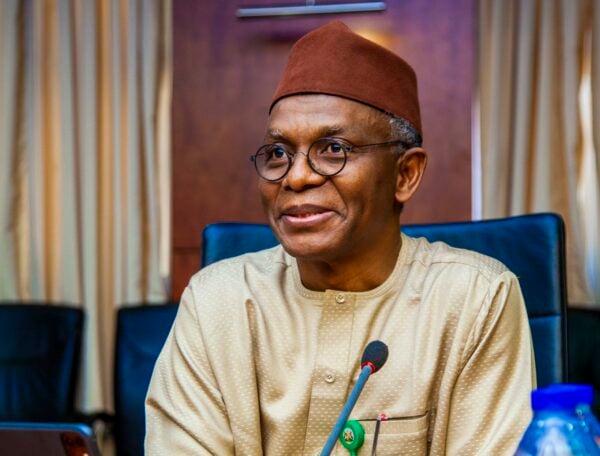
Since leaving office as Governor of Kaduna State, Mallam Nasir El-Rufai has remained a central figure in Nigeria’s political conversation. Controversy has trailed him consistently, and publicity—whether favourable or hostile—has never been in short supply. For editors seeking good copies, El-Rufai is irresistible.
From the moment he exited office, his name has rarely been absent from the headlines. When the Senate stalled over his ministerial nomination, reportedly citing an adverse security report from the Department of State Services (DSS), it sparked intense debate. Not long after, his successor, Governor Uba Sani, signaled the possibility of probing his administration over alleged corruption, and newsrooms roiled with hyper activity.
His political choices and strong rhetoric in national conversations have also fueled speculation. Whether contemplating a departure from the All Progressives Congress (APC), a party that made him governor twice, to align with the African Democratic Congress (ADC), or openly criticizing the Bola Tinubu administration—an administration he helped bring to power—El-Rufai has continued to command attention. To his supporters, he is principled and outspoken; to critics, he is combative and controversial.
Beyond formal politics, on social media, he is hot cake. Those who love him could put their necks on the guillotine for his sake. Those who couldn’t stand his guts could be ruthless and relentless in their attacks against him. And the fact that the former Kaduna governor is right at the centre of a national conversation is proof that even out of office, he remains one of the country’s most controversial political figures.

This week, the former governor—famous for his exploits as FCT Minister under President Olusegun Obasanjo and renowned for his memoir, The Accidental Public Servant—returned to the front pages for a more dramatic reason.
El-Rufai travelled abroad on November 30, 2025, for what aides described as mandatory medical treatment and recuperation. While he was away, the Economic and Financial Crimes Commission (EFCC) reportedly delivered a letter of invitation to his residence, requesting his immediate appearance.
In December, El-Rufai’s counsel, Barrister Ubong Esop Akpan, acknowledged receipt of the invitation, informing the commission that his client was out of the country for medical reasons but would comply on his return. The legal team reiterated this position on Wednesday, February 11, 2026—one day before El-Rufai’s scheduled return—stating explicitly that he would appear voluntarily at the commission’s office by 10:00 a.m. on Monday, February 16, 2026.
Despite these assurances, events unfolded differently. But the whole drama appears not to have taken El-Rufai by surprise. Before leaving Cairo for Nigeria, he granted an interview to the BBC Hausa Service in which he suggested he might soon become a target of federal authorities. He obviously depended on some reliable intel to make that declaration, referencing the arrest of four of his former aides, a situation he described as a broader pattern of “intimidation of opposition figures” by the Tinubu administration.
“Four people we worked together in Kaduna have been arrested,” he told his interviewers. “So, it’s only a matter of time before they come for me too.”
On the eve of his return, he posted on his verified Xaccount that he was “looking forward to a safe return home after a period of rest and recuperation.” The message, in retrospect, carried an undertone of apprehension. But it was prophetic.
On Thursday, February 12, El-Rufai arrived at Nnamdi Azikiwe International Airport in Abuja from Cairo. According to his media adviser, Muyiwa Adekeye, security operatives approached him as he disembarked and attempted to place him under arrest. He reportedly declined to accompany the officers, insisting that he would not submit to arrest without a formal invitation or proper procedure. What followed quickly drew public attention.
Barrister Akpan later stated that bystanders-airport users and “ordinary Nigerians”, intervened by forming a human shield around the former governor, effectively aborting the arrest. The crowd, according to the lawyer, insisted that for any arrest to take place, it must follow due process and relevant constitutional provisions.
In a strongly worded statement, Akpan criticized the conduct of the security operatives, describing their actions as oppressive and unlawful. He further alleged that officers seized El-Rufai’s passport during the confrontation, an action he condemned as improper. Adekeye similarly claimed that the passport was taken from one of El-Rufai’s aides during the standoff.
Describing the passport-snatching episode as “stealing”, the lawyer demanded an unqualified apology from the DSS for allegedly breaching his client’s rights to freedom of movement, personal liberty, human dignity, and right to own property, etc. as guaranteed by Sections 34, 35, 36, 41, 44, and 46 of the 1999 Constitution as amended.
Beyond that, the incident has also reignited the debate about law enforcement procedures, political accountability, and the intersection of power and due process in Nigeria’s democratic space.
While it is not clear who did it, EFCC or DSS, it is unlikely the anti-graft commission did because according to Akpan, El-Rufai responded appropriately to the invitation, through him, explaining why it wasn’t feasible to report to the EFCC ‘with immediate effect’. So, the issue of whether the man would run or not does not arise. However, the same may not be true of the DSS. Even if they are cocksure that the former governor would not run, the secret police could still swoop on him under the guise of national security and related matters. Still, they should have suppressed the eagerness to bypass the law.
Stripped of the legal jargons, and considering what we know about El-Rufai’s past confrontations and the broader course of Nigeria’s anti-corruption drive, this saga appears far from over. Thursday’s airport episode may well be the opening act in a much longer drama. As you read this, social media is awash with commentaries on the failed arrest. The reactions vary. Some are purely emotional; others are grounded in fact. Only a few anchor in solid legal reasoning.
Still, there is a broad agreement on one point: Nigeria’s anti-graft agencies and security agencies are creations of the constitution. They cannot, and should not be above the vessel that midwifed their birth, and governs their existence. They must adhere strictly to established procedures and rules while conducting investigations and making arrests.
Until the DSS adduces reasons to contradict what we have been told, the airport ambush was unnecessary. The service should not have deployed such heavy-handed tactics against El-Rufai who has not historically ignored official invitations. Unlike Mr. Yahaya Bello, the immediate past Governor of Kogi State, who openly defied EFCC’s summons in the case involving alleged diversion of over N110.4 billion from the state’s coffers during his tenure as Chief Executive. The former Kogi Governor dribbled the EFCC till he was satisfied without facing similar consequence.
No doubt, the EFCC, ICPC, and our security agencies are playing critical roles in the fight against corruption. Their efforts deserve recognition and support from Nigerians who would naturally not tolerate kleptocratic leaders. However, diligence and due process are essential. At the risk of sounding like a broken record, investigators must build airtight cases backed by compelling evidence to hold public officials accountable, particularly when reputations and futures are at stake.
In the El-Rufai matter, as in other corruption cases, Nigerians are watching closely—hopeful, cautious, and waiting to see how it unfolds.
May God bless Nigeria.
•Written By Shola Oshunkeye
-

 Metro19 hours ago
EFCC moves to seize 57 Malami-linked properties
-
Politics19 hours ago
You Have Over 30 Governors In APC, What Are You Afraid Of? – David Mark To Tinubu
-
News19 hours ago
Makinde insists on Alli’s crowning despite Ibadan Obas’ boycott
-
News19 hours ago
Plateau Killings: Tinubu Meets Victims’ Families At Airport
-
Politics19 hours ago
2027 battle: INEC under fire as ADC crisis worsens
-
African News19 hours ago
Burkina junta chief says country must ‘forget’ democracy
-
News19 hours ago
Gunmen Abduct 9 In Sokoto Community
-
Politics19 hours ago
We helped make Abiodun Ogun gov – Daniel