Opinion
A vote for electronic transmission

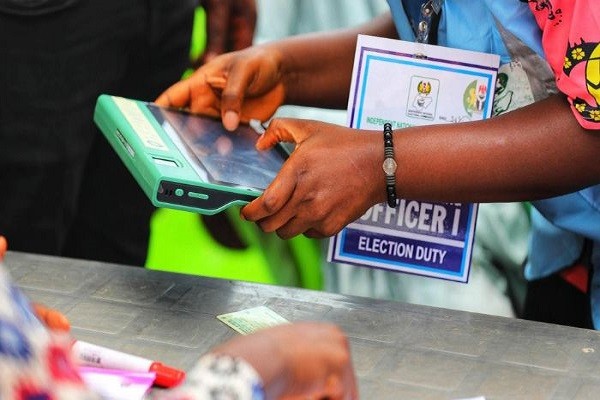
Let me say it upfront: I am 100 percent in support of anything that will improve the quality and credibility of elections in Nigeria. Therefore, I am in support of electronic transmission of election results. It can be of great help in the evolution of our democracy, particularly in the quest for credible elections. For whatever it is worth, voters should leave the polling unit assured that their votes will count. I am of the opinion that e-transmission of election results will not hurt our desire to get better. As soon as voting is concluded and scores are recorded in the world-famous Form EC8A (the result sheet), the document should be scanned and transmitted to a server, viewable by the public.
Now you may not believe it: that is exactly what the Independent National Electoral Commission (INEC) has been doing since the 2022 Ekiti governorship election. Save for the 2023 presidential election, result sheets are always uploaded to the INEC result viewing (IReV) portal after voting closes. It is something I have been monitoring since it was introduced. In the evening of an election, virtually all the results are viewable on IReV. The only exception, as I have already pointed out, was the 2023 presidential election when INEC failed to upload the results to IReV until a week later. The results were eventually uploaded but controversy had completely engulfed the outcome by then.
If INEC had been e-transmitting election results since 2022, why then is there this almighty uproar? Well, it is alleged that the senate has removed “electronic transmission of results” from the Electoral Act. The media space has become very hot in the last two weeks over the issue. For days, I have been listening to commentator after commentator and reading press statement after press statement condemning the “removal of electronic transmission of results” and how this is a “coup against democracy” that will “destroy the future of Nigeria”. If not that I have some understanding of the nature and politics of public debate in Nigeria, I too would have fallen victim to the hysteria.
What happened, apparently, is that some campaigners want an amendment to the 2022 Electoral Act to make e-transmission mandatory. Put simply, it should no longer be optional for INEC to upload completed Form EC8A to IReV. Henceforth, it should be compulsory. The senate makes it optional in its own version while the house of reps makes it mandatory. Normally, when there is a divergence, the two chambers set up a conference committee where things will be ironed out. There is nothing mandating the two houses to pass the same version of a bill. That is why a conference committee is there to sort out the differences and harmonise the bill. It happens all the time. But this is Nigeria.

INEC has been doing the same thing — that is, electronically transmitting results — since 2022 without any legal backing, without any amendment to the Electoral Act. I want to believe that the campaign to make it mandatory is to avoid a repeat of what happened in 2023 when INEC said its servers failed and the presidential results were not uploaded same day. The campaigners want e-transmission written in black and white so that there will be no escape for INEC. There are people, plenty of them, who insist that their candidate won the presidential election in 2023. They still point to INEC’s failure to upload to IReV “real time” as the reason someone else was declared winner.
I totally support the proposed mandatory e-transmission, but are we prepared for eventualities, such as tech failures? If the system breaks down, what is the contingency plan? Anyone who is familiar with technology knows that outages are predictable. Why do we have more than one mobile phone? Mighty tech companies such as Amazon, Meta and X suffer glitches on occasion, and big companies like Yahoo and Facebook have been successfully hacked in recent years. It is one thing to campaign for what we think provides a “perfect solution” to our problems, but it is another not to suggest back-up or fail-safe options. This dogma of “my way or the highway” may come back to bite us.
For the record, there is nothing strange in introducing innovations to the electoral system. For decades, I have seen our electoral process evolve. If those who died after the 1979 elections were to rise from the dead, they would not recognise what we are doing today. Voter registration was manual in those days — your details were captured with pen and paper and your voter card was written in long hand. The ballot box was made of metal. Before voting commenced, the presiding officer would lift the box up and turn it upside down for everybody to confirm that there were no previously thumb-printed ballots inside. Ballot boxes were hidden inside a booth for total secrecy.
When Prof Humphrey Nwosu, now of blessed memory, was appointed chairman of the National Electoral Commission (NEC) by Gen Ibrahim Babangida in 1989, he did a number of experiments, including returning to the open ballot system where voters queued behind the posters of their candidates. Many Nigerians celebrated this as the “ultimate solution” to rigging. They did not reckon that it could undermine freedom of choice — or that it could tear families apart. They did not even reckon with the fact that the major problem with our elections is not usually at the polling unit but at the collation centre. Somehow, we always want super solutions. We are simply in love with Utopia.
The 1992 presidential primaries were conducted using the open ballot system. We watched in horror as candidates stuffed the bellies of loaves of bread with N50 notes (the highest denomination at the time) and distributed to voters. In the Social Democratic Party (SDP) primary, Alhaji Lateef Jakande, former governor of Lagos state, lost his state to Maj Gen Shehu Musa Yar’Adua. He alleged that Yar’Adua paid his way through and challenged the country’s former No 2 citizen to a popularity walk on the streets of Lagos state. In short, the open ballot system did not end the campaign for credible elections. After much complaints, the electoral commission ditched the archaic voting system.
NEC came up with another format: this time, the ballot box would be placed in the open and the voter would thumb-print secretly in a booth before dropping ballot into the box in the presence of everybody. It was called the modified open ballot system (MOBS, what an acronym!) You would be accredited and given the ballot paper, and you would vote immediately. You could decide to go home and return to witness the counting after voting had closed. There were no serious objections to MOBS and it was considered safer than open ballot, but people still complained that elections were rigged, that voters were induced, that thugs intimidated voters, and that figures were manipulated.
In 1994, Gen Sani Abacha appointed Chief Sumner Karibi Dagogo-Jack as the chairman of the National Electoral Commission (NECON), and he did away with the metal ballot box, introducing in its stead the transparent ballot box, which was built with glass, similar to the showcase used to sell buns and akara. I recall cynically saying that what we needed was “transparent honesty” not transparent ballot boxes. Interestingly, they are still in use, but they are now made of rigid plastic. We also still use the MOBS voting format, even though we have further modified the process in some other ways, such as finishing with accrediting all voters before the commencement of voting. Evolution, that is.
In the fourth republic, we have introduced more methods and procedures to make the process more transparent and credible. We digitised voter registration and captured biometrics between 2003 and 2007, thereby doing away with the long hand. In 2015, we introduced the permanent voter cards (PVCs) and the card reader (partly to curtail multiple voting) by authenticating biometrics. In 2023, we upgraded to the bimodal voter accreditation system (BVAS) which can authenticate the biometrics and scan the EC8A result sheets — and then transfer them to the server, viewable on the IReV portal. Whether we know it or not, we have done a lot to clean up the system since 1999.
And there are results. Since the introduction of biometrics and card readers in 2015, voting figures have been dropping. I would think this means, among other things, that multiple voting is being curtailed. Valid votes plunged from 38.2 million in 2011 to 28.6 million in 2015. Read that again. The figure for 2023 was 24 million. States that used to churn out millions of votes are now returning just hundreds of thousands. In 2003, for instance, 17 states returned one million and above. In 2011, 16 states repeated the feat. This dropped to nine in 2015 and seven in 2019. Only five states returned more than one million votes in 2023. I think we are now getting closer to the real voter turnout data.
What then? It means we are gradually overcoming certain aspects of rigging with the help of technology. That is some progress. However, as you solve one problem, others surface. That is why the notion that e-transmission is the ultimate solution is, at best, hyperbolic. For one, governorship and legislative results that were uploaded to IReV in 2023 were still challenged in court. Therefore, e-transmission is not an almighty formula. In the end, e-transmission cannot stop politicians from buying votes or suppressing voters. Winning will only become more expensive. Meanwhile, is it not what is imputed into Form EC8A that will be e-transmitted? So why the deafening brouhaha?
In sum, I support e-transmission. I believe we should take advantage of technology. But let it be on record that I am not one of those who say it is the magic bullet for perfect elections. Let it also be on record that I support having a contingency plan if technology fails. Finally, let it be on record too that even if we adopt mandatory e-transmission, those who lose elections will still complain. Meanwhile, we keep reforming the electoral system without reforming ourselves. Elections don’t rig themselves; people rig elections. In UK elections, there are no PVCs, no e-transmission, no IReV. You can even vote with a pencil. Still, you leave the polling unit confident that your vote will count. Credibility.
AND FOUR OTHER THINGS…
EL NO!
Mallam Nasir el-Rufai, former governor of Kaduna state and member of the African Democratic Congress (ADC), said on Thursday that security agents tried to arrest him at the Nnamdi Azikiwe International Airport, Abuja, upon his arrival from Cairo, Egypt. Many of his former aides have been arrested and questioned over alleged infractions while he was in office. While I do not think any law-abiding Nigerian will say el-Rufai is above the law and should not be arrested if there is cause, things have to be done properly. Was there a valid warrant of arrest? More so, in this politically charged season, I believe these agencies should tread careful to avoid allegations of persecution. Process.
MISSED MISHAP
Nigeria averted what would have been a major air disaster on Wednesday when an Arik Air flight experienced a mechanical fault. The Lagos-Port Harcourt flight was diverted to the Benin airport midway after the crew heard a loud bang from the left engine. On seeing the images of the damage, I valued the miracle more. Experts said if the debris from the engine had damaged one of the wings (the tail was slightly impacted), the aircraft would have come down. You know what that means. The pilot obviously did a good job and passengers thanked God for their lives. We have not recorded any commercial airline crash since Dana in June 2012 and I am happy for it to remain that way. Mercies.
ROTATION QUESTION
Rt Hon Rotimi Amaechi, former minister of transportation, has reminded the African Democratic Congress (ADC) of the unwritten rule of power rotation in Nigeria. Amaechi, who is eyeing the presidential ticket, is of the opinion that since a president from the north has done eight years between 2015 and 2023, the 2023-2031 slot must remain in the south — meaning a southerner should be the party’s candidate. He reiterated his promise to do only one term if elected, after which power will return to the north. Sweet argument, but I don’t think Alhaji Atiku Abubakar, who has been eyeing the presidency since 1993 and is the brain behind ADC, will sign off on that. BID.
NO COMMENT
On February 3, terrorists attacked Woro village in Kwara state and killed no fewer than 75 hapless Nigerians. All of the victims were Muslims. On February 10, some US Republicans, led by Riley Moore and Chris Smith, submitted a bill to the American congress for a law to address “mass atrocities against Christians in Nigeria”. Although Muslims and Christians are being massacred, it seems to me that the promoters of the bill are okay with mass atrocities against Muslims — like the Woro villagers who were attacked by the jihadists for refusing to accept their extremist teachings. As long as Christians are not the victims, Moore and Smith seem to have no issues with the carnage. Wonderful.
•Written By Simon Kolawole
-

 Metro9 hours ago
Fear in Ondo communities as kidnappers tighten grip on Akure North
-
News9 hours ago
Demolition: Lagos Assembly proposes new settlement for displaced waterfront communities
-
News21 hours ago
Senate confirms Taiwo Oyedele as Minister
-
Politics11 hours ago
Ajose Declares For Lagos APC Guber Ticket
-
Sports9 hours ago
Joshua’s uncle confirms boxer’s move to Dubai
-
Business9 hours ago
Monopoly fears rise as Dangote controls N14.4tn petrol market
-
 News11 hours ago
Tinubu Appoints Yuguda As CBN Deputy Governor
-
News21 hours ago
Nigerians Growing Poorer Under You – Ex-CAN Chairman Tells Tinubu