Uncategorized
Makoko demolition is not new: The ghosts of Maroko still lingers

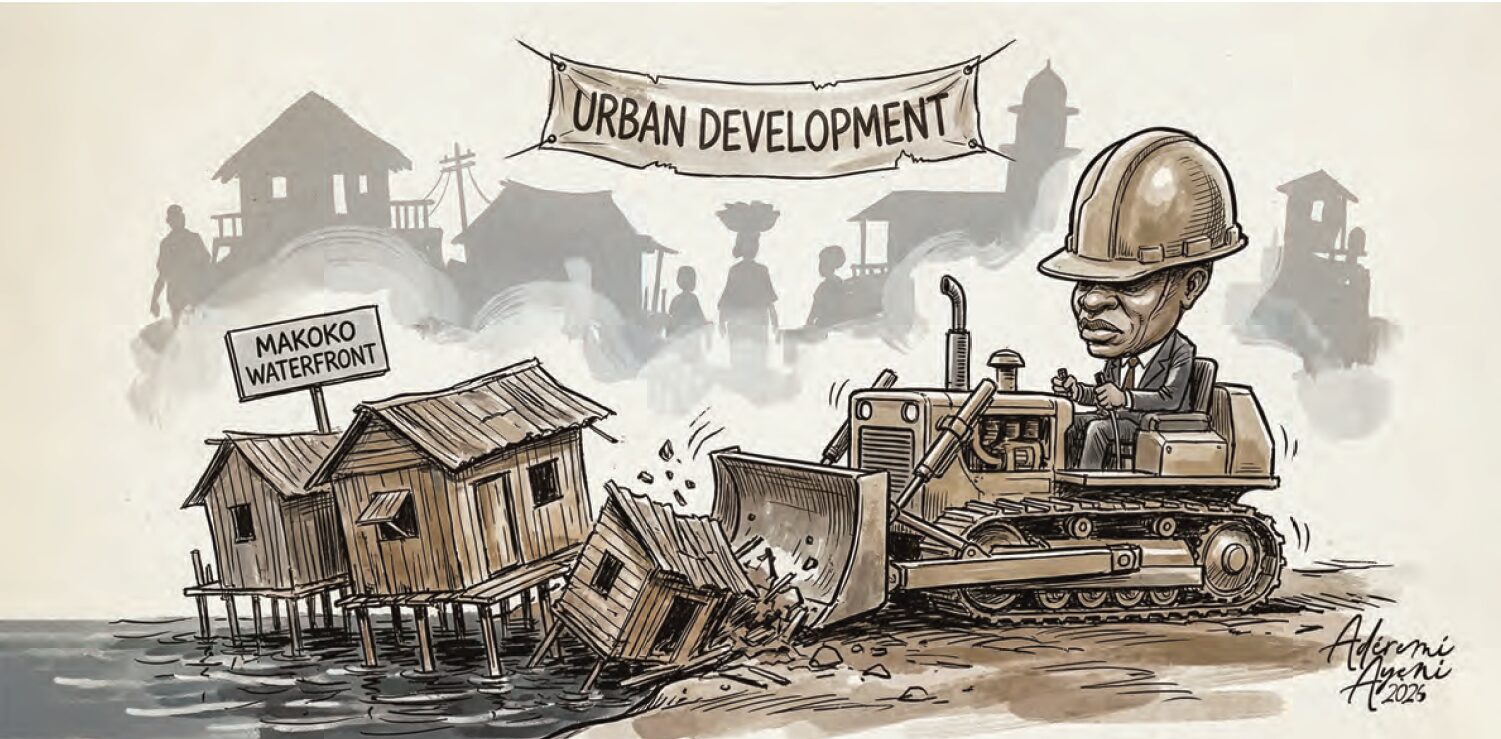
The demolition of parts of Makoko is not just a story about “illegal structures” or “public safety.” It is a familiar Lagos story, one that has unfolded repeatedly over decades: a city that modernises by erasing the poor, then calls the rubble progress. The recent demolitions are not a beginning. They are the latest chapter in a long history of threat, clearance, and insecurity that Makoko’s residents have lived with for generations.
For decades, Makoko has existed under the shadow of removal. The community has consistently been framed in policy conversations as temporary, illegal, or expendable. Partial demolitions, eviction threats, and repeated announcements of “clearance” plans have created a condition of permanent uncertainty. What happened in 2025–2026 did not emerge suddenly. It followed a pattern residents know all too well and have learned to anticipate with fear rather than surprise.
In the latest round of demolitions, waterfront clearances displaced thousands. Residents received little warning, had no meaningful opportunity for consultation, and were offered no comprehensive resettlement plan. Homes, livelihoods, schools, and community spaces built over generations were lost. What was destroyed was not only housing but social infrastructure – fishing economies, informal schools, childcare networks, and systems of mutual care developed in the absence of sustained state support.
It is important to say this plainly: demolitions can, in some circumstances, be necessary. A responsible government must act when buildings are dangerously sited, when critical infrastructure requires clearance, or when lives are genuinely at risk. But necessity is not a blank cheque. Demolition does not nullify the right to habitation. When the bulldozer becomes the primary policy instrument, what is being demolished is not just wood and zinc, but citizenship itself.

Officials have emphasised safety concerns, including structures located near high-voltage power lines and the risks associated with dense waterfront housing. These concerns should not be dismissed. Yet safety does not absolve the state of its obligations. Adequate notice, genuine consultation, and most critically, alternative accommodation or resettlement are not optional gestures. They are minimum requirements under international human rights standards.
Forced evictions carried out without these safeguards are widely recognised as violations of the right to adequate housing. Nigerian housing advocates have made this case repeatedly in relation to Lagos’ waterfront communities. The persistence of demolition-led “urban renewal” reflects not legal ambiguity, but political choice. What makes Makoko especially painful is that this is not an isolated incident. There is a long record of demolitions across Lagos that remove communities first and address consequences later. Many Makoko residents have parents or grandparents who lived through earlier clearances elsewhere in the city. This brings to memory the Maroko demolition.
For many Lagosians, Maroko is remembered as the “demolition of 1990.” That year, the community was razed and residents uprooted on a massive scale. Studies of the aftermath revealed a pattern that should have served as a warning: displacement did not lead to improved living conditions, but to overcrowding, higher living costs, and deeper insecurity for families already on the margins.
Maroko is not merely history. It is a template. When governments frame communities as “eyesores,” “illegal,” “below sea level,” or “unplanned,” residents are rendered temporary in their own city. Land becomes “available for development,” often for wealthier interests, while poor residents are recast as obstacles to progress. This logic did not end with Maroko. It has been repeatedly applied to communities like Makoko.
For decades, Lagos has often treated informal settlements as problems to erase rather than communities to improve. The familiar pattern involves labelling a settlement unsafe, issuing brief or disputed notices, demolishing under heavy security, and providing little or no resettlement, only to see displaced residents reform elsewhere under harsher conditions. Makoko has endured versions of this cycle before. Human rights organisations documented forced evictions long before 2025, with residents left sleeping in canoes or improvised spaces. Legal critiques consistently note that evictions without adequate notice and alternative housing violate dignity and constitute cruel, inhuman treatment.
If Lagos genuinely considers demolition in Makoko necessary for safety or infrastructure, a responsible approach requires transparent risk assessments and early engagement with community leaders. Phased relocation should be prioritised over blanket clearance, ensuring all affected households are resettled into safe, habitable housing. Displacement without housing not only causes hardship but deepens insecurity and raises risks of criminality. Resettlement must safeguard livelihoods, providing temporary access to fishing areas, relocated markets, and time-bound financial support. Continuity in education, transport, and basic social services is essential to prevent long-term disruption to children’s lives, securing stability while addressing infrastructure and safety concerns responsibly.
Compensation must be real, timely, and sufficient, not symbolic payments that disappear quickly. Independent monitoring is essential to prevent cleared land from being repurposed for private gain at public expense. Political pauses in demolitions prompted by protests should not serve as PR gestures but as genuine opportunities to correct policy and protect residents’ rights.
Makoko is often described as a symbol of poverty. But the deeper symbol is governance. A city’s moral quality is revealed by how it treats those who are most spatially exposed and politically powerless. Homelessness is never a development strategy. Makoko is not new. The ghosts of Maroko remain restless because the lesson was never learned. And any government that forgets the right to habitation eventually discovers that what it is truly demolishing is trust. (BusinessDay)
-

 News9 hours ago
Makinde, Ladoja fault Fayose over alleged dethronement plot
-
Sports23 hours ago
Fan sues Arsenal for emotional distress, professional negligence
-
World News21 hours ago
Putin calls Iran president, offers support after US talks fail
-
Metro21 hours ago
Police probe fatal shooting of man in Lagos
-
News9 hours ago
Military defends Borno strike as death toll rises
-
Politics21 hours ago
ADC crisis: Supreme Court hears David Mark’s appeal Tuesday
-
News21 hours ago
Tax Reform: Oyedele’s Repeated Denials After Public Remarks Raise Questions
-
Politics21 hours ago
Kwankwaso Opens Up On ADC Sharing Formula