Politics
CSOs fault Electoral Act 2026, say law leaves ‘dangerous loopholes’ ahead of 2027 polls

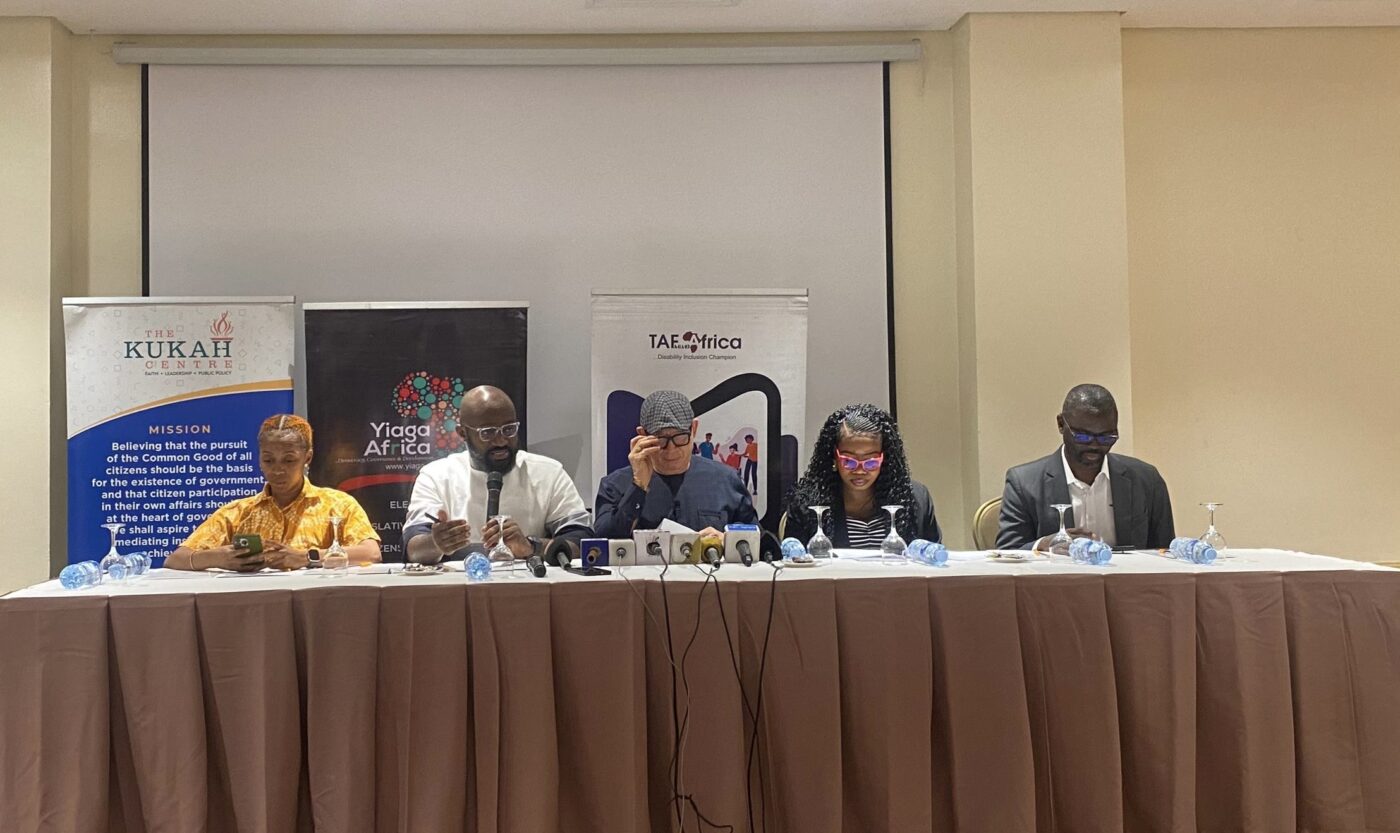
A coalition of civil society organisations (CSOs) have faulted the Electoral Act 2026, warning that the new law contains “dangerous loopholes” that could undermine the 2027 polls.
The groups, including Yiaga Africa, International Press Centre, ElectHer, Nigerian Women Trust Fund, TAF Africa, Centre for Media and Society, and The Kukah Centre, made the remarks on Thursday at a press briefing in Abuja following the presidential assent to the Electoral Act 2026.
The CSOs described the law as “a missed opportunity for the transformative electoral reform that Nigeria requires and that Nigerian citizens deserve”.
“At a time when public confidence in elections remains fragile, this law should have decisively strengthened transparency, eliminated ambiguities, and deepened safeguards against manipulation,” the groups said.

“Instead, it creates more vulnerabilities in the electoral process.”
The organisations also criticised the process leading to the passage of the law, citing concerns over transparency and legislative accountability.
“The speed, and opacity, raise serious concerns about legislative transparency and the commitment of lawmakers to genuine electoral reform,” they said.
They alleged that last-minute amendments were introduced without adequate scrutiny or public access, adding that “the final version of the Bill voted upon reportedly contained last-minute amendments that were neither published nor made available to civil society or the broader public prior to adoption”.
According to the CSOs, such actions undermine confidence in the electoral reform process.
“When reforms are rushed, consolidated without scrutiny, and adopted without full disclosure, public confidence inevitably erodes,” the CSOs said.
The groups identified key weaknesses in the act, particularly provisions relating to electronic transmission of results.
They said although section 60(3) mandates electronic transmission, it allows manual collation where transmission fails due to “communication failure,” which they said is undefined and vulnerable to abuse.
“There is no independent verification mechanism. There are no consequences for deliberate sabotage disguised as technical failure,” the CAOs said.
“This loophole will be tested again in 2027 and the Act provides no protection.”
The CSOs also criticised a provision requiring that only officials of the Independent National Electoral Commission (INEC) can trigger a review of election results, warning that this excludes political parties, candidates, and observers.
“Restricting the power of review to reports filed by INEC officials is against the spirit behind the power of review vested in INEC,” they said.
The groups further condemned the imposition of a N50 million administrative fee for registering new political parties, describing it as exclusionary.
“This is not administrative cost recovery; it is a financial moat designed to exclude grassroots movements, youth-led parties, and non-elite political formations from formal competition,” the CSOs said.
Despite their concerns, the CSOs acknowledged positive provisions such as downloadable voter cards, disability-inclusive voter registration, and stricter penalties for electoral offences.
However, they warned that the law remains flawed.
“The Electoral Act 2026 is now law. It is imperfect. It is incomplete. It leaves dangerous loopholes open and erects new barriers to participation,” they said.
The CSOs urged INEC to urgently publish a revised timetable for the 2027 general election and issue clear regulations to address ambiguities in the law.
They also called for a nationwide simulation of electronic transmission of results to identify technical gaps ahead of the elections.
The coalition urged political parties to publicly commit to defending electronic transmission and called on the national assembly to publish the final version of the law.
“The national assembly must promptly publish the final version of the Electoral Act 2026 as signed into law to ensure public awareness, legal clarity, and stakeholder engagement,” the groups said. (The Cable)
-

 Politics15 hours ago
No coalition can defeat Tinubu in 2027 – Cleric
-
News15 hours ago
BREAKING: Boko Haram hits another military location in Borno
-
News15 hours ago
UK visit: FG alleges plot to embarrass Tinubu
-
Business11 hours ago
Again, Emirates Announces Suspension of All Flights to Dubai
-
News15 hours ago
Villagers Gun Down 3 Bandits In Sokoto Community
-
News15 hours ago
Residents Flee As Bandits Threaten Attacks On FCT Communities
-
Metro15 hours ago
Why I Didn’t Panic After Losing Power – Sanusi
-
Opinion15 hours ago
Aiyedatiwa and the ostrich game