Opinion
Deepfakes, the liar’s dividend and the battle for truth ahead of 2027

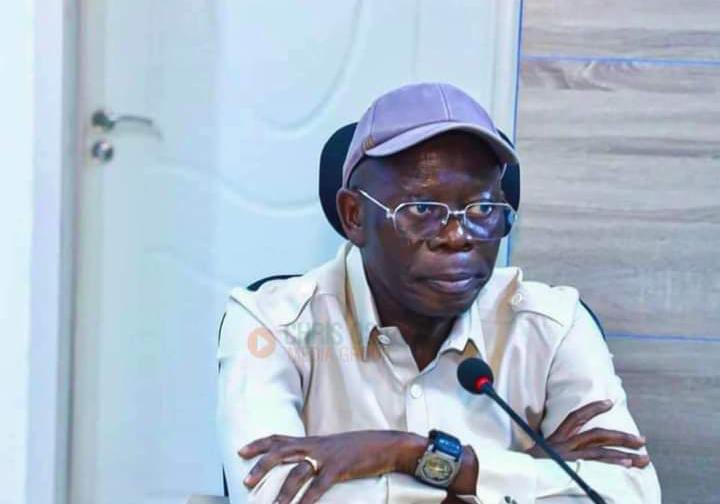
That recent widely circulated video involving Senator Adams Oshiomhole aboard a private jet presents more than a mere momentary scandal. It exposes another layer to the insidious consequences of generative artificial intelligence and synthetic media, whose ramifications we do not yet fully understand.
Over the years, scholarly and policy discussions around digital threats and information disorder often focused on misinformation and disinformation. Although Wardle and Derakhshan, in their 2017 research published by the Council of Europe, identified three types of information disorder, conversations around the world, including in Nigeria, have mostly focused on only the aforementioned duo, with Malinformation being the three layer that truth contends with.
According to them, disinformation refers to information that is false and deliberately created to harm; Misinformation represents false information created without the intention to cause harm, while malinformation is based on reality but used to inflict harm, such as leaked private communications or the weaponisation of genuine information for malicious reasons.
In Nigeria and elsewhere, these layers have been taken as the ultimate threats to citizens’ right to know the truth and to make free democratic choices. They, however, no longer capture the complexity of today’s information disorder. Emerging alongside them is the concept of the Liar’s Dividend, a reality to with which many global citizens haven’t woken up.

Scholars Chesney and Citron (2019) describe this as a situation where the existence of deepfakes and synthetic media allows real wrongdoers to dismiss authentic but damaging evidence as fake. What this means is that society would no longer only battle with fake content being passed off as real, but the increased chance that real information can be branded as fake! This creates a likelihood for the perpetuation of doubts amongst the citizenry. There are two main dynamics here: plausible deniability and general erosion of trust.
Transposed into politics and governance, uncertainty becomes a tool in the hands of political actors. This means that authentic content will be dismissed by those affected by it as deepfakes, to the confusion of the populace. And as people become unsure about what is real, authentic evidence may lose persuasive power in courts, journalism and politics.
Take the Oshiomhole instance: his media office dismissed the video in which someone looking like him massaged the foot of a lady as a “poorly crafted and edited fake AI video.” They went ahead to attribute the creation and circulation of the damaging content to some unnamed “unguarded power seekers.” This is even though Leshaan Dagama, the South African lady believed to be in the video, has insisted otherwise. With these contending positions, a battle for establishing the truth ensued.
In such circumstances, citizens are left with one of two options: to totally disengage from the democratic process or cling to partisan sentiments. Either way, they get conditioned to treating both correction and falsehood with the same level of suspicion. This ultimately puts truth on trial and creates a crisis of accountability, wherein politicians who owe citizens explanations for their conduct and misconduct find convenient escapes in denials. Subsequently, public debates get cynical and democratic trust suffers persistent erosion.
However, the most debilitating effect of turning the knowledge of deepfakes into a ready tool for denial is that it undermines institutions that rely on incontrovertible evidence to function effectively. The foundation for the operation of courts of law, media organisations and electoral bodies is that truth can be established and trusted, but the liar’s dividend erodes this foundation, making truth a matter of perception rather than evidence. When this happens, citizens second-guess and distrust the fundamental democratic institutions to the utter disadvantage of society.
As a matter of fact, Nigeria is already at a juncture where citizens do not repose absolute confidence in the judiciary and media. Media organisations intent on retaining legitimacy are now compelled to adopt expensive forensic checks, as citizens hardly just take their word for it anymore! In a country where trust in governance is already fragile, this dynamic imposes a condition of “truth decay,” where facts gradually lose their impact in public life.
Elections are a most important democratic ingredient, and contrary to perception, they do not only depend on ballots but on shared realities. When politicians can plausibly deny documented actions, campaign discourse shifts from issues to insinuations. They wave allegations away as deepfakes, brand investigative journalism as propaganda, and bury electoral malpractices under competing claims of fabrication. In effect, the greatest danger of the liar’s dividend is not that Nigerians will believe lies; it is that they will stop believing anything. This dynamic risks normalising the dangerous communication norm where denial is easier than explanation and doubt becomes more effective than truth.
Now, this is easy in Nigeria because the media environment is social, deeply polarised and technologically agile, but with widespread digital illiteracy. This makes the country a fertile ground for the liar’s dividend.
As the 2027 elections draw closer, all Nigerians, including communications professionals, have the responsibility to watch out for strategic denial masquerading as scepticism. Communication practitioners must apply the same standards of truth to allies and opponents. Government and civil society organisations must pay attention to increasing digital literacy and the capacity for verifying claims and counterclaims. The future of credible governance depends on it.
Niran Adedokun, a communications professional and book strategist, writes in from Lagos.
-

 Politics13 hours ago
I’ll Back Whoever Emerges ADC Presidential Candidate – Atiku
-
News23 minutes ago
Vehicles Destroyed As CNG Bus Explodes At Kaduna Park
-
 World News13 hours ago
Trump renews Strait of Hormuz threats, gives Iran 48 hours before ‘all hell reigns down’
-
Politics13 hours ago
Power crisis: Tinubu has confirmed ‘don’t vote for me’ prediction — Obi
-
Politics13 hours ago
REWIND: In July 2025, Nafiu Bala attended ADC unveiling of David Mark-led leadership
-
 Business14 hours ago
Dealers, agents back ban on accidented cars
-
Opinion13 hours ago
The killing fields on the Plateau
-
News13 hours ago
Resident Doctors Declare Indefinite Nationwide Strike