Opinion
Wale Edun: Architect of Nigeria’s fiscal and monetary stability honoured abroad, unsung at home

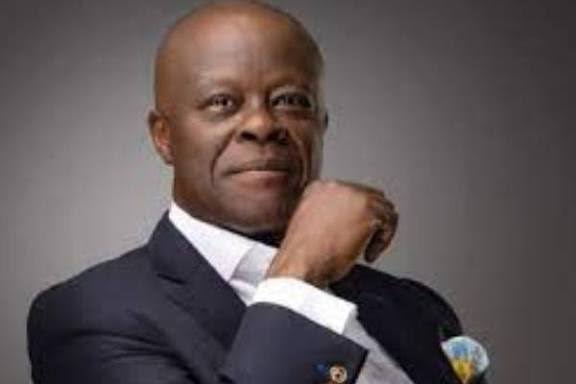
Nigeria’s Minister of Finance and Coordinating Minister of the Economy, Wale Edun, has been appointed a Commander of the Royal Victorian Order — a rare honour personally conferred by King Charles III — at an investiture ceremony hosted by Catherine, Princess of Wales.
The distinction recognises Edun’s longstanding contribution to global youth development through his service with The Duke of Edinburgh’s International Award Foundation. Beyond the international recognition, however, it also underscores a broader reality: he has quietly emerged as a central stabilising force in Nigeria’s economic reset.
At a time of global volatility, Nigeria’s reform trajectory has begun to regain credibility among investors and development partners. Fiscal coordination has tightened, exchange-rate management has become more predictable, and foreign reserves have strengthened. Following an initial inflation surge triggered by structural reforms, price pressures have begun to moderate. The Naira’s improving resilience, particularly its recent unapologetic resurgence against the dollar, reflects growing confidence in policy direction rather than short-term intervention.
From global policy forums to domestic reform implementation, Edun’s approach has been marked by discipline, continuity, and a deliberate shift from crisis management to structural correction. Hosting the G-24 technical meeting in Abuja and articulating Nigeria’s reform path at major international platforms has once again positioned the country as a serious voice among emerging economies.

Energy expansion, revenue modernisation, and investment-driven growth remain pillars of the reform architecture. These measures, pursued in coordination with President Bola Ahmed Tinubu’s economic management framework, aim to anchor long-term stability rather than offer temporary relief.
Yet within Nigeria, recognition of this stewardship has lagged behind international acknowledgement—owing either to political mischief, public ignorance, or a combination of both. Political contestation and public fatigue from short-term hardship have obscured the structural gains now shaping macroeconomic recovery. The paradox is striking: while global institutions increasingly cite Nigeria’s reform consistency, the principal technocratic driver of that shift remains largely uncelebrated at home.
Royal recognition does not create credibility—it reflects it. Edun’s honour signals that steady governance, often quiet and technical, can carry global weight. As Nigeria’s economic direction stabilises, acknowledging the architects of that stability is not merely ceremonial; it is a recognition of institutional continuity and policy discipline.
Still, the reform process has not been without criticism. Analysts note that the speed of major policy shifts, particularly subsidy removal and exchange-rate unification, outpaced the rollout of social cushioning measures, intensifying short-term hardship for households and small businesses. While macroeconomic indicators have strengthened, the transmission of stability to real sector productivity remains uneven, with manufacturers continuing to face elevated input costs and constrained access to affordable credit. Others argue that fiscal consolidation has leaned more heavily on revenue mobilisation than on deep expenditure reform, raising questions about how quickly macro-stability can translate into broad-based economic relief.
In an era that rewards spectacle, Edun’s impact has been procedural, measured, and consequential—the work of a reformer whose influence is most visible not in rhetoric, but in results. Nigeria’s recovery narrative is not the story of one man, but without his steady hand, the rhythm of reform would be markedly different.
Those reforms are increasingly reflected in the numbers. Nigeria has recorded a steady rise in foreign direct investment (FDI) inflows as investors respond to clearer exchange-rate management, improved fiscal coordination, and renewed confidence in macroeconomic governance. Foreign reserves have also strengthened, reaching $48.5 billion—the highest level since 2013, providing a buffer against external shocks and supporting currency stability. Following the initial inflationary pressures triggered by subsidy removal and exchange-rate unification, inflation has begun to moderate, reinforcing confidence among households, businesses, and international partners.
Speaking at the Al Ula Conference for Emerging Market Economies in Riyadh, Edun was unequivocal: “Nigeria’s macroeconomic and fiscal reforms are working. Momentum must be maintained, and the benefits channeled towards long-term growth and resilience.” Under his leadership, the government has deepened coordination between fiscal and monetary authorities, embraced digital tools to improve revenue assurance, and promoted realistic budgeting to entrench durable fiscal discipline.
Global institutions are taking notice. Anna Bjerde, Managing Director of Operations at the World Bank Group, recently described Nigeria as “a global reference for steady, credible reform leadership,” citing the government’s resolve to stay the course despite short-term difficulties. That consistency, she said, has built strong confidence among investors and policymakers, with Nigeria now firmly transitioning “from reform to results.”
Energy sits at the heart of Edun’s growth strategy. Through Nigeria’s leadership under Mission 300, he has worked with global finance and energy partners to accelerate electricity access—a prerequisite for industrial expansion, digital inclusion, and job creation. Bjerde has described Nigeria as a potential “game changer” for the initiative, noting that ongoing programmes are already expanding power supply and unlocking private capital.
Edun has also used global platforms to articulate Nigeria’s broader vision. In interviews with CGTN at the African Union Summit in Addis Ababa and at the World Economic Forum in Davos, he outlined a strategy for inclusive, job-rich growth driven by digital work for youth, stronger manufacturing value chains, MSME support, and expanded energy access.
Backed by President Bola Ahmed Tinubu’s insistence that “there will be no turning back” on reform, Edun’s approach has combined clarity of purpose with steady execution and the tenacity of a go getter. The result is a growing sense, at home and abroad, that Africa’s largest economy is once again finding its balance.
In an era defined by uncertainty, Wale Edun has emerged as the engine room of Nigeria’s economic reset: consolidating reforms, restoring stability, and rebuilding trust. For investors and partners watching closely, the message from Abuja is increasingly clear: Nigeria is not just reforming; it is regaining confidence and positioning itself for sustainable growth.
It is, therefore, high time Nigeria celebrated this unsung hero, Wale Edun, for the relative fiscal and monetary stability that has come to define the Nigerian economy of late.
Adebayo Abubakar writes from Ilorin, Kwara State. He can be reached via 0805 138 8285 or marxbayour@gmail.com.
-

 Politics13 hours ago
I’ll Back Whoever Emerges ADC Presidential Candidate – Atiku
-
Politics13 hours ago
REWIND: In July 2025, Nafiu Bala attended ADC unveiling of David Mark-led leadership
-
News24 minutes ago
Vehicles Destroyed As CNG Bus Explodes At Kaduna Park
-
 World News13 hours ago
Trump renews Strait of Hormuz threats, gives Iran 48 hours before ‘all hell reigns down’
-
Politics13 hours ago
Power crisis: Tinubu has confirmed ‘don’t vote for me’ prediction — Obi
-
 Business14 hours ago
Dealers, agents back ban on accidented cars
-
Opinion13 hours ago
The killing fields on the Plateau
-
News13 hours ago
Resident Doctors Declare Indefinite Nationwide Strike