Business
Tinubu’s petrodollar order faces legal, fiscal brickwall

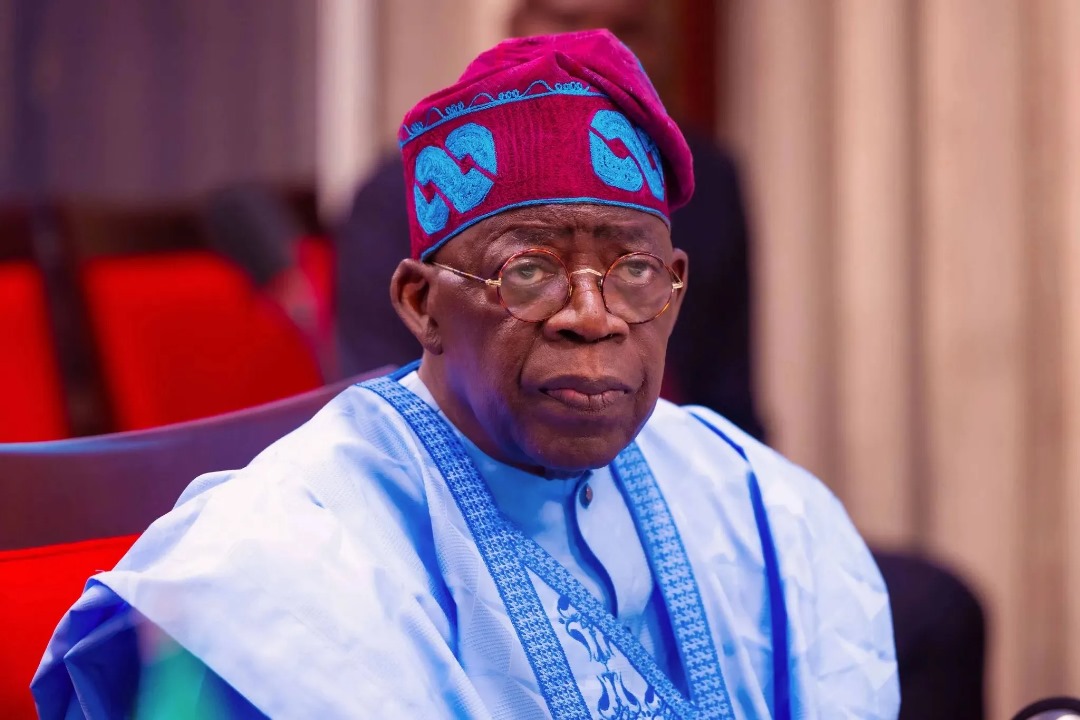
When President Bola Tinubu signed Executive Order 9 directing that oil and gas revenues flow directly into the Federation Account, bypassing layers of deductions by the Nigerian National Petroleum Company Limited (NNPC), the announcement landed with the force of a long-overdue reckoning.
Nigeria, Africa’s largest crude producer, had watched billions of petrodollars disappear into a web of management fees, frontier funds, and opaque expense lines for years. The order, on its face, promised to end that.
But analysts and legal experts at the African Energy Council, an independent think tank of experts who work across the African Energy Landscape, warned that the order is “fiscally bold but legally fragile”, a formulation that captures both its ambition and its vulnerability.
Here are the five minefields that could yet derail the most sweeping presidential intervention in Nigeria’s petroleum fiscal system since the Petroleum Industry Act was passed in 2021.

The constitutional fault line
The most immediate threat to the executive order is not political opposition; it is the Nigerian constitution itself.
The Petroleum Industry Act, passed by the National Assembly in 2021 after nearly two decades of legislative effort, created the Frontier Exploration Fund, set the 30 percent NNPCL management fee, and established the framework for profit retention. These are not administrative guidelines. They are acts of parliament.
“The Petroleum Industry Act is a law passed by the National Assembly. An Executive Order is a subsidiary instrument; it implements law; it does not amend it,” African Energy Council said.
By redirecting funds that the PIA explicitly allocated to NNPCL and the Frontier Exploration Fund into the Federation Account, the order may be doing precisely what a presidential directive cannot legally do, amending statute by fiat.
“The Petroleum Industry Act (PIA) is a law passed by the National Assembly; An Executive Order (EO) is a subsidiary instrument, it implements the law; it does not amend it,” African Energy Council said.
The African Energy Council warned that the courts may declare the executive order ultra vires, meaning beyond the bounds of presidential power.
Plugging leakages, starving growth
Even if the order survives judicial scrutiny, its fiscal logic presents a painful trade-off that Nigeria may not be ready to confront honestly.
Under the existing PIA framework, NNPC was entitled to a 30 percent management fee and 20 percent profit retention, with a further 30 percent directed to the Frontier Exploration Fund.
The African Energy Council calculated that this meant NNPC “could retain up to nearly 60 percent of oil revenues.” The executive order redirects this flow entirely to the Federation Account, delivering what the Council describes as an “immediate multi-trillion-naira liquidity boost for federal and state budgets.”
The short-term gain is real. States and local governments will see fatter monthly allocations from the Federation Account and Allocation Committee. That is politically significant in a country where subnational governments have struggled to meet salary obligations.
But the long-term cost is equally real. The Frontier Exploration Fund existed to finance exploration in inland basins, Kolmani, and the Chad Basin, which hold Nigeria’s best hope for growing its reserves as mature offshore fields decline.
Scrapping the FEF, the African Energy Council argued, sends a damaging signal of “cash today over discoveries tomorrow.”
NNPC’s identity crisis
The PIA was drafted with a specific commercial vision to transform NNPC into a globally competitive national oil company along the lines of Saudi Aramco or Brazil’s Petrobras, an entity that keeps profits, reinvests aggressively, and operates independently of political instruction.
The African Energy Council said the Executive Order 9 reverses that trajectory.
According to the council, by mandating direct remittance from Production Sharing Contract contractors to the Federation’s account, bypassing the Nigeria Upstream Investment Management Services, the order strips NNPC of its role in cash flow management and, with it, much of its commercial rationale.
The executive order “reduces retained earnings, limits JV and PSC funding capacity, and reverts NNPC closer to the ‘Old NNPC’ model, a revenue collector,” African Energy Council said.
The gas infrastructure blind spot
In suspending gas flare penalties from flowing into the Midstream and Downstream Gas Infrastructure Fund, the African Energy Council said Executive Order 9 has quietly undermined one of the PIA’s most strategically important environmental and commercial mechanisms.
Flare penalties existed to enforce the “polluter pays” principle, they imposed a financial cost on operators who burned gas into the atmosphere rather than monetising it, while simultaneously funding infrastructure needed for Nigeria’s gas economy to mature.
The African Energy Council identifies this as a direct contradiction of national energy strategy: the suspension “weakens the ‘polluter pays’ incentive” and “undermines the Decade of Gas ambitions.”
The investor confidence problem
Perhaps the most durable damage from Executive Order 9 may not show up in a courtroom or an NNPC balance sheet. It may show up in how international oil companies and independent investors price Nigerian risk going forward.
The international energy companies and independent producers who signed contracts under the PIA in 2021 did so on the basis of a specific legal framework. That framework has now been materially altered by presidential directive, without legislative process, in under five years.
“If the rules of the game can be changed by a single signature in 2026,” the African Energy Council warned, “the country risk premium for Nigeria rises.” Long-term investors, the Council notes, are offering a “mixed/cautious” response, applauding the transparency gains, but fearing what it calls “policy somersaults” and legal instability.(BusinessDay)
-

 News11 hours ago
GOC Survives Ambush As Troops Gun Down Lakurawa Terrorists In Kebbi
-
Politics12 hours ago
ADC vows court action over Enugu N150m campaign fee
-
 News23 hours ago
Wike Nullifies Over 400 Land Titles In Abuja
-
News12 hours ago
Fresh loans: FG domestic debt jumps to N77tn
-
Business7 hours ago
Tinubu’s NNPC ‘cash grab’ raises concerns amid oil reform gains
-
News11 hours ago
Lagos approves 13% fare hike for BRT
-
News5 hours ago
El-Rufai’s Nose Bled In Detention, Wife Prevented From Delivering His Meal – Aide
-
Politics7 hours ago
2027: Tinubu, governors in crucial meeting with NLC leaders in Aso Villa