World News
Iran Confirms Supreme Leader’s Death As Attacks Continue

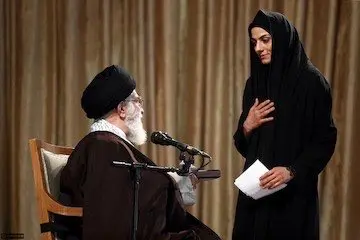
Iran has confirmed the death of its Supreme Leader, Ayatollah Ali Khamenei, who was killed after a massive US-Israeli attack on Saturday.
Confirming the tragic incident, which was initially denied, the Iranian state media said the 86-year-old leader had attained martyrdom alongside his daughter, son-in-law, and grandson.
“The Supreme Leader of Iran Has Reached Martyrdom,” state broadcaster IRIB reported Sunday morning.
“This great scholar and mujahid (fighter) sacrificed his life to lift Iran… and he is in the grand presence of martyrs above,” said the state affiliated Mehr news outlet.

Iran also announced 40 days of national mourning following the Supreme Leader’s death.
The 86-year-old Islamic scholar has been Iran’s Supreme Leader since 1989, succeeding the Islamic Republic’s late founder, the charismatic Ayatollah Ruhollah Khomeini, who returned from exile and drove Iran’s 1979 revolution that overthrew US ally and shah, Mohammad Reza Pahlavi. He holds ultimate authority over all branches of government, the military and the judiciary, while also acting as the country’s spiritual leader.
During his rule, Khamenei withstood an adversarial relationship with the West, including intense sanctions, and several rounds of protests at home over the economy and rights issues. He has called the US Iran’s “number one enemy”, with Israel trailing close behind.
Critical to Khamenei’s power is the loyalty of two of Iran’s premier security institutions – the Islamic Revolutionary Guard Corps (IRGC) and the Basij paramilitary forces, which have hundreds of thousands of volunteers.
Khamenei has long said Iran would never build a nuclear weapon and that its nuclear programme is for civilian purposes only. Neither US intelligence nor the UN nuclear watchdog have found any evidence that Iran was pursuing an atomic weapon, a narrative Israel and some in the Trump administration have nevertheless pushed.
US and Israel have previously issued threats against Khamenei.
In June, after the 12-day war of US-Israeli attacks on Iran, and Tehran’s retaliation against Israel, Israel’s Defence Minister Israel Katz said Khamenei “cannot continue to exist”.
The same month, Israel’s Prime Minister Benjamin Netanyahu suggested Israel had not ruled out attempting to assassinate Khamenei, an act he said would “end” the long-running conflict between the US and Iran.
In the US, President Donald Trump has also made remarks appearing to threaten Khamenei.
In an interview with ABC News earlier this month, Trump said the Iranian leader should be “very worried”, as the US amassed military assets in the region.
In separate remarks, he said regime change in Iran would be “the best thing that could happen” and that “there are people” who could assume leadership, without elaborating.
As he ordered attacks on Iran last year, Trump then claimed Khamenei would be an “easy target” if the US decided to go after him.
“We know exactly where the so-called ‘Supreme Leader’ is hiding,” said Trump. “He is an easy target, but is safe there – We are not going to take him out (kill!), at least not for now.”
In remarks following the attacks, Trump pledged to “annihilate” Iran’s navy and missile sites, and urged Iranians to overthrow their government.
“When we are finished, take over your government. It will be yours to take,” said Trump. “This will be probably your only chance for generations.
-

 Politics21 hours ago
2027: You can’t beat the master at his game – Keyamo tells opposition
-
News12 hours ago
Makinde, Ladoja fault Fayose over alleged dethronement plot
-
News12 hours ago
Military defends Borno strike as death toll rises
-
World News24 hours ago
Putin calls Iran president, offers support after US talks fail
-
Metro23 hours ago
Police probe fatal shooting of man in Lagos
-
News2 hours ago
I’ll Attend ADC Convention In Spirit – El-rufai
-
News2 hours ago
How Colonel, 7 Soldiers Died In Fresh Boko Haram Attack
-
Politics23 hours ago
ADC crisis: Supreme Court hears David Mark’s appeal Tuesday