Politics
INEC Can’t Guarantee Perfect Election In 2027 – Amupitan

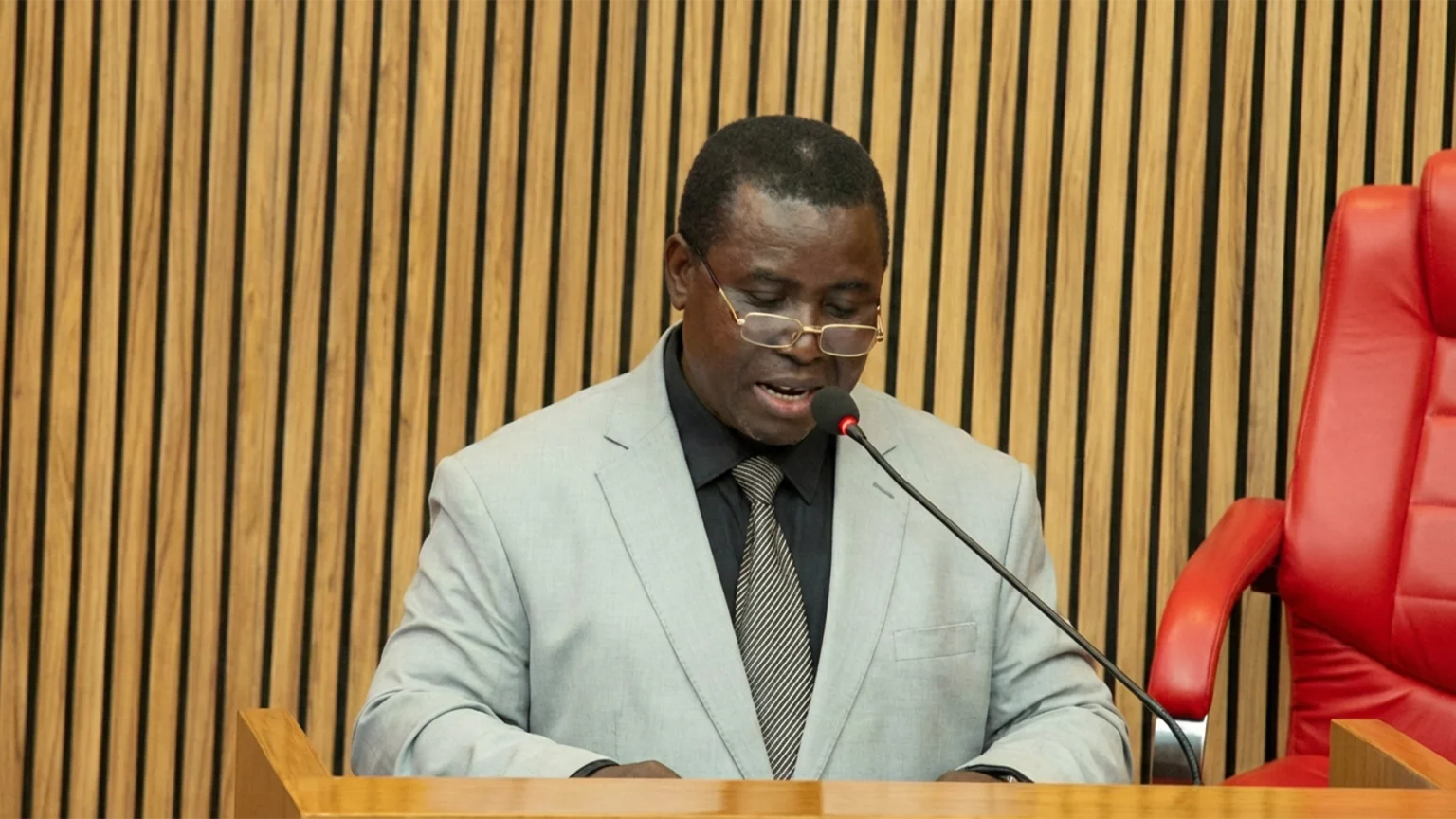
The Chairman of the Independent National Electoral Commission, Prof. Joash Amupitan, has assured Nigerians that the commission has the capacity to electronically transmit election results in 2027, but cautioned that it may not be able to guarantee a “100 per cent perfect election.”
Amupitan spoke on Sunday at the Citizens’ Town Hall programme aired live on major television networks and tagged, ‘Electoral Act 2026: What it means for your votes and the 2027 elections.’
The live electoral debate was anchored by popular presenter Seun Okinbaloye and the Executive Director of Yiaga Africa, Samson Itodo.
In attendance were the All Progressives Congress National Chairman, Nentawe Yilwatda, and Labour Party’s Interim National Chairman, Nenadi Usman, former Minister od Education, Oby Ezekwesili, Senator Ireti Kingibe, among others.

Amupitan appealed to Nigerians to manage expectations, saying the commission would strive for excellence but could not promise perfection.
“Let me just appeal to Nigerians, because I have noticed now that what Nigerians desire is a perfect election. And INEC will strive as much as possible to give this country the best election.
“However, we may not be able to achieve a 100 per cent perfect election for now. But as far as electronic transmission of results is concerned, I said it before the FCT Area Council that we have the capacity to transmit the results, and that we’re going to transmit the results. The only concern was real-time,” he stated.
The INEC chairman described elections as central to democratic governance, emphasising the importance of voter education and institutional transparency.
“Election, for that matter, is the lifeblood of democracy. According to Abraham Lincoln, the ballot is more powerful than the bullets. Also, the ignorance of a voter is very inimical to the security of a nation.
“So, that is why we cannot underscore the role of INEC, as well as the civil society, in guaranteeing a transparent and credible election,” he stated.
Amupitan noted that INEC was actively involved in the process that produced the Electoral Act 2026, which he said began about three years ago through a joint committee comprising members of the National Assembly, civil society organisations and the commission.
“As of the time I was taking over, the work was almost concluded. But nonetheless, we still made some important provisions and recommendations in the new acts,” he said.
On the contentious issue of electronic transmission of results — a subject that dominated debates after the 2023 general elections — Amupitan disclosed that the commission pushed for mandatory transmission during legislative deliberations.
“Now, even talking about the transmission of the results, you will notice that the original provision that came out of the retreat from the National Assembly was not exactly what you have today.
“But when INEC came in, we talked of transmission being mandatory. But let us be sincere and honest. The only problem that we had was how to define what we call real time,” he stated.
He cited the recent Federal Capital Territory Area Council elections as a practical example of the challenges confronting real-time transmission, particularly in hard-to-reach areas.
“Let’s look at the FCT area council election that just took place. Now, there are six area councils in the FCT. The results came out on time in five area councils. But in the Kuje area council, we have 10 wards. And the results in one ward, Kabi, did not come until the following day, Sunday.
“Now, on Saturday, when we mobilised and sent people to that ward from Kuje town, Kabi ward is about three-and-a-half hours’ drive. And the terrain is very bad. So I was worried.
“When we sent our polling officials and security agencies to that ward, the moment they entered that place, we could not reach them. They were not accessible by phone. And nobody could speak to them until we had to send somebody on Saturday morning, just to be sure that they were safe, before we now got the results.
“They brought the results to Kuje town. And then it was collated along with the remaining nine wards before the result could be declared,” he explained.
Despite the delay, the INEC boss insisted that transmission itself was not the core problem.
“I don’t see the issue of transmission as really a problem. I don’t see it as an issue because, from my little experience, over four months now in INEC, the problem is not even the network.
“The problem I have seen is the adequacy of the network we have. For instance, you expect that in a place like FCT, you should be able to transmit your results without any encumbrance. But we had a situation where it was impossible for us to have a real-time transmission of results, especially from the Kabi ward, until the following day. And in some of the wards, some results were transmitted,” he said.
Amupitan linked election credibility closely to logistics, warning that operational lapses could undermine public confidence.
“So, talking about logistics, I’ve said it often that your election can be as good as your logistics. So, where there is logistics failure, you know that you are beginning to fail.”
While admitting that the FCT poll experienced “some logistic issues,” including human errors, he said the commission was already addressing them.
“As a regulatory body, we’re determined to achieve all this. But nonetheless, we have to admit that there were some logistical issues. Some were purely human, which we are trying to address,” he added.
He, however, expressed optimism that the 2027 general elections would mark a significant improvement over previous polls, citing increased voter awareness and growing public demand for accountability.
“But I want to assure you that the election of 2027 will be the best election that Nigerians will have because Nigerians of 2023 are different from what you have in 2027. People are much more aware. And you know the correlation between elections and development.
“Nobody is happy about the classification of Nigeria as an underdeveloped country. So we want a situation where our process will be able to guarantee the confidence and the transparency that people want to see in their system.
“So, by the time you have a transparent election, and people begin to trust INEC and trust their leaders, then the country will move forward,” he stated.
INEC reviews regulations
Meanwhile, INEC has commenced a comprehensive review of its regulations and guidelines for political parties, as part of efforts to strengthen electoral integrity ahead of the 2027 general election.
According to a statement issued on Sunday by the Chief Press Secretary to the INEC chairman, Adedayo Oketola, the exercise, convened in Abuja under the leadership of Amupitan, represented a critical phase in the commission’s ongoing reform agenda.
He added that the initiative was aimed at strengthening political party oversight, improving compliance culture, reducing pre-election disputes, and enhancing public confidence in Nigeria’s democratic process by aligning existing party regulations with the recently assented Electoral Act 2026 and addressing emerging electoral realities.
The statement noted that the technical workshop on the revision of INEC regulations would involve national commissioners, directors across operational departments, legal experts, election administrators, and institutional stakeholders.
Participants are expected to “undertake a detailed clause-by-clause review of the 2022 regulatory framework governing political parties,” the statement said.
INEC explained that the Electoral Act 2026 introduces significant legal and operational changes affecting political party administration, candidate nomination processes, compliance obligations, dispute resolution mechanisms, and the commission’s regulatory mandate.
As a result, the commission is updating its subsidiary regulations to ensure full legal alignment and operational clarity well ahead of the next electoral cycle.
Beyond legal compliance, INEC is drawing lessons from previous elections to strengthen preventive regulation. The commission identified persistent challenges such as opaque party primaries, membership disputes, weak financial disclosure practices, and exclusionary participation patterns as factors that have contributed to avoidable litigation and electoral uncertainty.
To support evidence-based reforms, INEC is integrating findings from the Political Party Performance Index, a diagnostic tool designed to identify systemic weaknesses in party governance and compliance practices nationwide.
The commission stated that the objective was to shift regulatory oversight from reactive enforcement to proactive supervision anchored on measurable standards.
Speaking on the reform process, Amupitan emphasised, “For elections to inspire public confidence, the institutions that produce candidates must themselves operate transparently and within the law.
‘’The workshop is also expected to develop strengthened compliance mechanisms, clearer reporting obligations, and operational guidance for monitoring political party activities nationwide.
‘’Particular attention is being given to financial accountability, dispute prevention, accurate membership documentation, and measurable benchmarks for the participation of women, youth, and Persons with Disabilities within party structures.’’
INEC disclosed that technical facilitation support was being provided by the Westminster Foundation for Democracy, alongside Nigerian legal and electoral experts, offering comparative technical insights in support of the Commission’s institutional reform objectives.
Commenting on the initiative, WFD Nigeria Country Director, Adebowale Olorunmola, described the review as a significant step towards strengthening political party regulation ahead of 2027.
“This isn’t just a review of a document; it is a reconstruction of the democratic foundation.
“We are moving toward an era where political parties are held to the same high standards of integrity as the electoral commission itself,” he said.
Olorunmola added that anchoring regulatory reforms on empirical evidence, including insights from the PPPI, would help deepen compliance, reduce avoidable electoral disputes, and promote greater transparency, inclusivity, and internal democracy within political parties.
The commission further stated that early alignment of party regulations with the Electoral Act 2026 would significantly reduce pre-election litigation and administrative disputes that often divert attention from election preparation and delivery.
At the conclusion of the exercise, a consolidated draft of the Revised Regulations and Guidelines (2026 Edition) will undergo internal validation before engagement with the Inter-Party Advisory Council and all registered political parties as part of implementation consultations.
INEC reaffirmed its commitment to continuous electoral reform and to ensuring that political parties remain strong democratic institutions capable of producing credible leadership choices for Nigerians.
As part of moves to comply with the requirements of the Electoral Act ahead of the 2027 general elections, the Peoples Democratic Party and African Democratic Congress have commenced nationwide digital membership registration exercises.
The Tanimu Turaki-led National Working Committee of the PDP, in a statement issued on Saturday by its National Publicity Secretary, Ini Ememobong, announced that the party would commence its electronic membership registration nationwide on Monday (today).
Similarly, the ADC in a statement on Sunday by its National Publicity Secretary, Bolaji Abdullahi, disclosed that the party had begun free nationwide online membership registration and directed existing members to update and revalidate their information in accordance with the Electoral Act 2026 and the guidelines of INEC.
Also, the ruling All Progressives Congress e-registration exercise, which started in January and was extended to February 8, may resume this week to enable more Nigerians to register as members of the party.
On February 13, the electoral umpire fixed the 2027 Presidential and National Assembly elections for Saturday, February 20, 2027, and the Governorship and State Houses of Assembly elections for Saturday, March 6, 2027.
However, the timetable faced criticism from some Muslim stakeholders who pointed out that the dates coincided with the 2027 Ramadan period.
In response, the Senate amended Clause 28 of the Electoral Act Amendment Bill, shortening the mandatory election notice period from 360 days to 300 days, thereby enabling INEC to revise the schedule.
INEC subsequently issued an updated timetable on Thursday, rescheduling the Presidential and National Assembly elections to January 16, 2027, and the Governorship and State Houses of Assembly elections to February 6, 2027.
According to the revised timetable, political parties must submit a comprehensive digital membership register by April 2, 2026—a condition some stakeholders contend could potentially disadvantage opposition parties.
The National Working Committee of the PDP, led by Tanimu Turaki announced that it has authorised the launch of digital membership registration in all wards across the 36 states of the federation and the Federal Capital Territory.
The PDP stated, “This exercise will begin on Monday, March 2, 2026, and will last for three weeks.
“The essence of this exercise is to compile the digital membership register in compliance with the Electoral Act 2026, which requires all political parties to submit the digital register of their members to the Independent National Electoral Commission.
“Registration will be held every day (except Sundays) at all ward, chapter, and state offices of the party (special cases will be handled at the National Secretariat) throughout the registration period. A special committee headed by the National Organising Secretary, Theophilus Shan, has been set up to oversee the exercise and handle any complaints that may emanate therefrom.
“Members and the general public are encouraged to visit the nearest PDP office within their ward to register. For more information and enquiries, please call 08035555800 or send a mail to info@iampdp.org.”
The ADC, which began its membership registration exercise last month, stated that manual registration would continue concurrently nationwide.
The party stated, “The African Democratic Congress has officially commenced free online membership registration across Nigeria, following the successful kick-off of its nationwide registration and revalidation exercise in Abuja last month.
“The new digital registration platform, accessible via www.adcregistration.ng, is designed to enable the party to meet the requirements of the new Electoral Act 2026 regarding the digital membership register. Accordingly, only individuals whose membership details are fully captured and verified in the Party’s official digital register will be eligible to vote or be voted for in the Party’s primaries.
“Since the launch of the physical and grassroots membership exercise in February, we have recorded strong interest from Nigerians across states and the diaspora. Apart from meeting legal requirements, the introduction of the free online option is designed to remove barriers to entry, simplify enrolment, and ensure that every eligible Nigerian who wishes to identify with the ADC can do so seamlessly and securely.
“Members who have registered on the party’s previous platform are also required to revalidate their membership on the new digital portal, as additional mandatory information is now required to ensure full compliance with the Electoral Act and INEC guidelines.”
ADC further urged support groups and associations to utilise this opportunity by signing up at www.adcregistration.ng and completing the straightforward onboarding process.
It added, “ADC would like to emphasise that this exercise is without prejudice to our firm objections to the provisions of the Electoral Act 2026 that give undue advantage to the ruling party, as well as the consequential INEC timetable.
“The African Democratic Congress remains committed to building a modern, inclusive, and citizen-driven political movement capable of delivering credible leadership and a better Nigeria that works for all.”
A source within the APC disclosed that, following consultations among key stakeholders, the ruling party may reopen its e-registration portal to allow more members to sign up.
He stated, “With the new Electoral Act requirements, political parties are making efforts to adjust and fine-tune their schedules. As it stands, APC leaders, after consultations, discussions, and deliberations among key stakeholders, may resume the e-registration exercise this week to accommodate more members, especially as they still have sufficient time.” (Punch)
-

 Metro17 hours ago
FULL LIST: Ex-Oyo gov Alao-Akala’s properties in Nigeria, UK, US subject of family dispute
-
Metro17 hours ago
I’m heartbroken my husband was killed over plantain – Widow
-
News18 hours ago
DHQ allays fear as US deploys drones to Nigeria
-
Business12 hours ago
Nigeria’s petrol price surges 39.5%, second highest globally
-
News18 hours ago
Police arrest 11 more suspects over ‘sexual assault’ during festival in Delta
-
News18 hours ago
Tinubu Could Have Stopped In Borno Before Going To London – Akande
-
News18 hours ago
IED ‘planted for troops’ kills eight bandits in Niger state
-
News18 hours ago
Demand surges for anti-HIV injection