
Business
Net reserves jump 772% to $34.8bn in two years

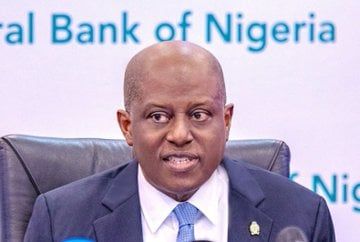
The Governor of the Central Bank of Nigeria, Olayemi Cardoso, has said Nigeria’s net foreign exchange reserves rose sharply to $34.80bn at the end of 2025, representing a 772 per cent increase from $3.99bn recorded at the end of 2023, and signalling what he described as a significant strengthening in the country’s external buffers.
In a press statement issued by the CBN on Monday, the apex bank said the improvement in both gross and net reserves reflected “stronger external sector fundamentals and sustained policy reforms.”
Gross reserves refer to the total stock of foreign assets held by the Central Bank of Nigeria, including foreign currencies, gold, and other external assets. Net reserves, however, strip out short-term liabilities and obligations, providing a clearer picture of the portion of reserves that is readily available to defend the naira and meet external commitments.
Cardoso had earlier disclosed at the post-Monetary Policy Committee briefing on February 24, 2026, that Nigeria’s gross external reserves stood at $50.45bn as of February 16, 2026. Providing further clarity over the weekend, he said the net foreign exchange reserves as of the end of December 2025 rose to $34.80bn.

The press statement read, “The Governor of the Central Bank of Nigeria, Mr Olayemi Cardoso, has stated that Nigeria’s gross and net foreign reserves showed significant improvement at the end of 2025, reflecting stronger external sector fundamentals and sustained policy reforms.
“Following his disclosure at the post-Monetary Policy Committee press briefing on Tuesday, February 24, 2026, where he said the country’s gross external reserves stood at $50.45bn as of February 16, 2026, Mr Cardoso, at the weekend, said the net foreign exchange reserves, as of the end of December 2025, rose to $34.80bn.”
According to the CBN governor, the figures “emphasised the benefits of increased transparency and credibility in foreign exchange management, boosting investor confidence, attracting stronger FX inflows, and improving reserve management practices aimed at preserving capital, ensuring liquidity, and supporting long-term sustainability.”
He noted in the statement that the improvement represents “a substantial strengthening in both the level and quality of Nigeria’s external buffers over the past three years.”
The statement disclosed that net reserves increased sharply from $3.99bn at the end of 2023 to $34.80bn at the close of 2025, which the governor described as a fundamental improvement in reserve quality. He added that the 2025 net reserve position alone exceeded the total gross reserves recorded at the end of 2023, which stood at $33.22bn.
Cardoso further stated that net reserves rose from $23.11bn at the end of 2024 to $34.80bn at the end of 2025. Over the same period, gross external reserves increased to $45.71bn from $40.19bn, representing a rise of $5.52bn.
He said the expansion highlighted Nigeria’s enhanced capacity “to meet external obligations, support exchange rate stability and reinforce overall macroeconomic resilience.”
Describing the end-2025 reserve position as a strong validation of the bank’s ongoing reforms and external sector adjustments, Cardoso reaffirmed the commitment of the Central Bank of Nigeria to maintaining adequate reserve buffers.
He stated that the apex bank would continue “supporting orderly foreign exchange market operations, enhancing confidence in Nigeria’s external position and sustaining macroeconomic stability in line with its statutory mandate.”
The PUNCH earlier reported that the CBN governor disclosed that Nigeria’s gross external reserves hit the highest level in 13 years by mid-February 2026.
Speaking during the Monetary Policy Committee briefing in Abuja last week, Cardoso said the reserve build-up was supported by favourable trade developments, a healthy current account surplus, rising non-oil exports, and increased diaspora remittances.
He attributed the gains to improved market confidence. “Underpinning all this, quite frankly, is market confidence. Without market confidence, no matter what you do, you’ll find you will significantly sub-optimise,” Cardoso said.
He added that the CBN had engaged widely with international investors, made commitments, and ensured policy consistency to engender positive market sentiment.(Punch)
-

 News12 hours ago
Ebola: Don’t panic – FG tells Nigerians
-
News12 hours ago
Italy rejects 2,220 Nigerians seeking asylum
-
News12 hours ago
Gas leak: Ogun schools shut, over 100 pupils hospitalised
-
 Politics13 hours ago
Imam Removed After Campaigning For Tinubu At Bauchi Mosque
-
News12 hours ago
State Police: Ekiti, Kebbi endorse bill, tally hits 15
-
Business12 hours ago
Guinness Nigeria profit jumps 53% to N40.69bn
-
Sports12 hours ago
Como Humiliates Manchester United 4-1, Osimhen Scores In Galatasaray UCL Win
-
Business12 hours ago
Nigerian billionaire Aliko Dangote eyes Egypt oil refining in $15 billion plan