African News
The women running Ghana’s economy

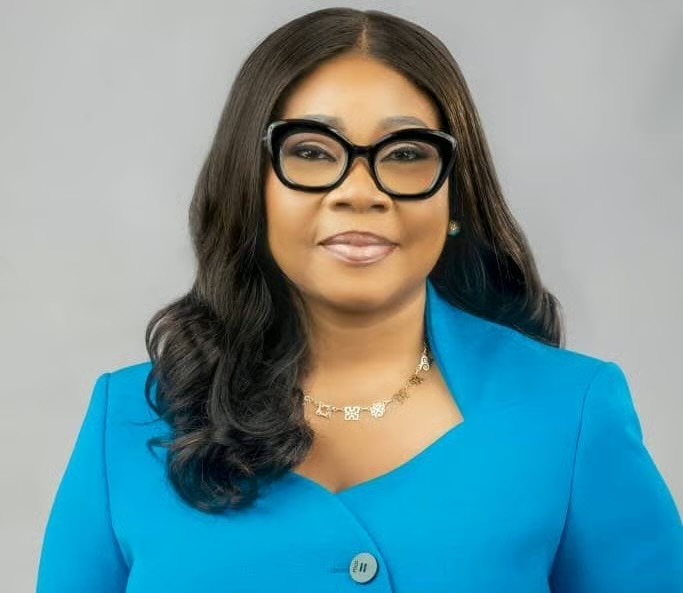
In Accra’s boardrooms and regulatory offices, something is changing. Women are being appointed to some of the most powerful jobs in the economy, shaping monetary policy, overseeing oil and mining contracts, running energy infrastructure and steering the capital markets.
Ghana’s political economy is in flux. After a banking sector clean-up, sovereign debt restructuring and years of macroeconomic turbulence, the country is rebuilding its economic credibility.
At the same time, women now occupy posts that shape liquidity, supervise systemic banks, police oil contracts, approve mining assets and govern the national exchange.
They control levers and influence pricing, capital allocation, regulatory enforcement and the terms under which foreign investors engage the economy.

Here are the women who now sit at the economic nerve centres.
1. Matilda Asante-Asiedu – 2nd Deputy Governor, Bank of Ghana

As second deputy governor of the Bank of Ghana, Matilda Asante-Asiedu sits at the core of the monetary authority.
She serves on the Monetary Policy Committee and supervises banking supervision, financial stability, resolution and restructuring – the architecture that underpins Ghana’s post-crisis financial system.
Her oversight spans the banking supervision, financial stability, resolution and restructuring departments, as well as the collateral registry and branch coordination office.
She also serves as a non-executive director on the boards of the Securities and Exchange Commission, the Cocoa Marketing Company, Ghana EXIM Bank and the Data Protection Agency, and is a member of the Financial Stability Council.
Before moving into central banking, she built her career in commercial banking, pioneering women-focused financial products through Access Bank’s W Initiative.
2. Judith Adjobah Blay – CEO of Ghana Gas

If monetary stability is one pillar of Ghana’s economic recovery, energy security is another.
As CEO of Ghana Gas, Judith Adjobah Blay controls a strategic asset in the country’s gas processing and distribution chain – essential for power generation and industrial expansion.
With more than two decades in the energy sector, she previously served as deputy director of contracts administration at the Petroleum Commission and managed community relations, local content and compliance frameworks.
She also established and led procurement at the Bui Power Authority and coordinated the MCC Compact II at the Ministry of Energy.
Her technical training – including procurement and supply chain management – places her at the intersection of contracts, compliance and state capacity.
3. Abena Osei-Poku – Managing Director of Ecobank Ghana

Few executives wield cross-border banking influence like Abena Osei-Poku.
As managing director of Ecobank Ghana and regional executive for Anglophone West Africa, she oversees markets spanning Ghana, Guinea, Liberia, Sierra Leone and The Gambia.
Her career tracks the evolution of pan-African banking: Standard Chartered, Barclays (now Absa) and now Ecobank.
Her experience in corporate and investment banking, risk management and special assets gives her a vantage over credit cycles and capital flows.
She previously chaired the Council of the Ghana Stock Exchange and sits on the Advisory Board of the College of Health Sciences at the University of Ghana.
Her board-level engagements across sectors signal an executive who operates beyond a single institution.
4. Angela List – CEO of Nguvu Mining

Angela List’s authority is measured in ounces. Through Nguvu Mining – where she serves as the CEO – she oversees operations producing roughly 150,000 ounces of gold annually across West Africa, a figure expected to rise when Northern Ashanti Mines reaches full production.
Gold is Ghana’s economic anchor. Mining revenues underpin foreign exchange stability and fiscal space.
As founder and CEO of a mining group with assets in Mali, Liberia and Burkina Faso, List sits inside the extractive engine that feeds the state.
Her earlier tenure as executive director of BCM Group and professional experience at KPMG grounded her in finance and compliance before she moved into operational leadership.
Beyond profitability, she has promoted environmental and community standards, but her significance lies in production scale and regional footprint.
5. Abena Amoah – Managing Director of Ghana Stock Exchange

Capital formation runs through the Ghana Stock Exchange. As its first female managing director, Abena Amoah defines strategy, listings growth and regulatory compliance for the country’s equities and fixed-income markets.
She oversees the Main Market, the Ghana Alternative Market and the Ghana Fixed Income Market, platforms that channel capital into corporate and sovereign balance sheets.
Her background in investment banking, mergers and acquisitions and infrastructure advisory –spanning Renaissance Capital, BlackIvy Group and Absa – positions her as both market builder and gatekeeper.
Under her leadership, the GSE has tightened listing standards and market surveillance.
In a post-restructuring economy, exchange governance shapes investor confidence.
Amoah’s influence is subtle but systemic: who lists, who raises capital and under what standards.
6. Emeafa Hardcastle – Acting CEO, Petroleum Commission

The Petroleum Commission regulates Ghana’s upstream oil and gas sector.
As Acting CEO, Emeafa Hardcastle oversees compliance, licensing and local content enforcement in a capital-intensive industry that anchors state revenues.
A former partner at Lithur Brew & Company, she brings deep expertise in corporate, commercial and banking law.
She has advised GNPC, COCOBOD and Goldman Sachs, and previously served on the Commission’s board.
Her remit includes promoting local participation while maintaining investor confidence – a delicate balancing act in a sector sensitive to global price cycles and political risk.
With degrees from the University of Ghana and the London School of Economics, Hardcastle represents regulatory authority backed by legal precision.
In extractive governance, enforcement power is the ultimate currency.
7. Yvonne Nana Afriyie Opare – Managing Director, Ghana Airports

As the managing director of Ghana Airports Company Limited, Yvonne Opare oversees aviation infrastructure critical to tourism, cargo and foreign investment flows.
Her background spans operations management, US-based corporate experience and large-scale project oversight.
She has built international partnerships and brokered public-private deals across sectors.
In a country positioning itself as a regional hub, airport governance intersects with trade policy and diaspora connectivity.
Infrastructure efficiency influences investor perception. (The Africa Report)
-

 Opinion17 hours ago
Gun-blazing Wike ń f’ikú ṣeré
-
Sports17 hours ago
AFCON final ref dropped as FIFA picks World Cup officials
-
News17 hours ago
FG inserts N487bn rail, highway projects into 2026 budget
-
News17 hours ago
US Cancels All Visa Appointments After Ordering Staff To Leave Abuja
-
News16 hours ago
Southern, middle belt leaders criticise FG’s handling of insecurity, call for regulated self-defence
-
News17 hours ago
US Advisory: Nigeria Remains Stable, Says FG
-
News16 hours ago
Sokoto Residents Abandon Home, Sleep In Bush Over Banditry
-
News16 hours ago
‘Unforgettable and irreplaceable’ — Tinubu mourns soldiers killed in Borno terrorist attack