Business
Fuel queues resurface in Lagos as price hits over N1,000 per litre

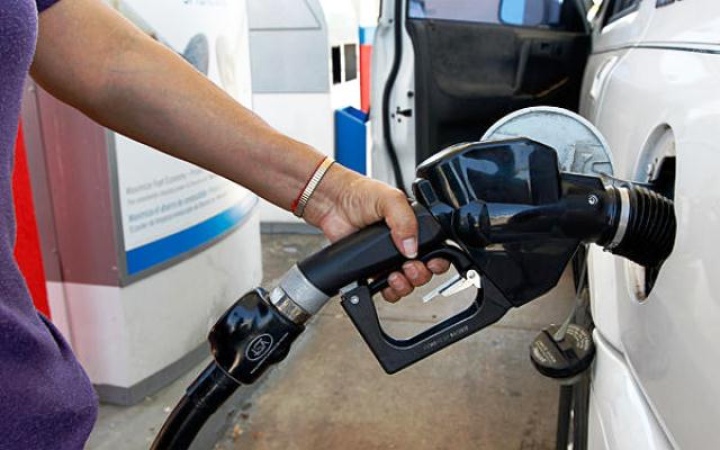
Long queues are beginning to build up at MRS filling stations where Premium Motor Spirit (PMS) or petrol is sold below ₦1,000 per litre, as consumers hurry in search of cheaper products.
Market survey as of Saturday morning revealed that private car owners and commercial bus drivers are starting to form long lines at MRS stations, especially along the Ibadan/Lagos Expressway, for petrol currently sold at ₦937 per litre.
Other stations along the same axis, however, do not have as many queues as the MRS station at Alapere, as most have increased pump prices above ₦1,000.
While Eterna Plc has hiked price to ₦1,040, North West Capital Oil, and Fatgbems also adjusted their prices to ₦1,030 per litre, with Mobil Station’s a bit lower at ₦1,025 per litre.

Despite the rush for petrol, few stations, including the Nigerian National Petroleum Company (NNPC) Limited, have shut their gates against buyers.
The state oil company’s station at OPIC Estate remains shut as of 7:00 AM Saturday. It could not be ascertained whether the move was due to product shortages or otherwise.
Also, some of TotalEnergies stations along the Expressway were not selling product as of the time of filing this report, while others recorded just a few buyers lurking at their gates.
International Influence
The development followed a sharp surge in global crude oil prices above the $80 per barrel threshold earlier in the week.
Reports surfaced on Tuesday that Dangote Petroleum Refinery & Petrochemicals had increased the ex-depot price of petrol from ₦774 to ₦874 per litre, representing a ₦100 hike.
Dangote’s price hike was after an economist, Paul Alaje, on Monday, warned that petrol prices in Nigeria could climb to about ₦1,000 per litre if the ongoing conflict involving the United States, Israel, and Iran was not effectively managed.
Alaje, who is the Chief Economist at SPM Professionals, appeared on Channels Television’s Politics Today, against the backdrop of escalating geopolitical tensions in the Middle East.
According to him, increases in crude oil prices typically translate into higher costs for refined petroleum products such as petrol, diesel, and aviation fuel, with broad implications for businesses and households.
“While crude oil goes up, we all need to check the impact on our economy. The first thing you see is high inflation, because as crude oil goes up, the cost of PMS, diesel, and Jet-A1 will also follow.
“As that is going on, about nine per cent has already attracted more cost for PMS in Nigeria, and by the end of April, we project that if the war is not properly managed, it might get to ₦1,000 plus for PMS in Nigeria.
“If PMS is ₦1,000, you can imagine what diesel will be; you can imagine what flight tickets will be. It will affect the poor, the middle class, and, of course, the rich,” the economist said.
Oil Extends Gains As Iran Conflict Spreads
Oil prices shot up during the week as investors kept tabs on the Middle East as the United States and Israel continued to bombard Iran, while Tehran launched further strikes on neighbours.
The attacks on the Islamic state have upended regional energy flows, with the crucial Strait of Hormuz — through which about a fifth of global oil transits — effectively closed off. The conflicts have also fuelled fears of a fresh energy crisis that could ramp up inflation.
Market moves have been comparatively mild amid hopes that the crisis will be short-lived and not cause a major problem for the global economy.
But analysts warned that the longer it goes on, the more painful it would be on the global economy as supply chains are hit and prices surge.
Iran has responded by unleashing missiles and drones across the Middle East, including Lebanon, Saudi Arabia, Qatar, and Dubai, while explicitly threatening to drive up global energy costs.
That sent oil prices soaring nearly 14 per cent Monday before slightly easing, while European natural gas prices spiked almost 40 per cent after Qatar’s state-run energy firm said it had halted liquefied natural gas production.
Meanwhile, a general in Iran’s Revolutionary Guards threatened to “burn any ship” seeking to navigate the Strait of Hormuz.
“We will also attack oil pipelines and will not allow a single drop of oil to leave the region. Oil price will reach $200 in the coming days,” he warned.
Crude rose at least two percent on Tuesday, as analysts say the rise in energy costs could give most central bankers a headache as they look to bring down inflation while also cutting interest rates to support their economies. (Channels)
-

 News12 hours ago
‘I never said that’ — Bwala denies past claims on Tinubu during Al Jazeera grilling
-
News10 hours ago
Bodies litter streets of Borno village, as terrorists vow to stay in Ngoshe till Eid-el-Fitr
-
World News11 hours ago
Trump says only Iran’s ‘unconditional surrender’ can end war
-
News12 hours ago
‘$4.5b fraud’: EFCC pressured me to implicate Emefiele – Co-defendant tells court
-
 Metro12 hours ago
I expected twins, shocked four babies came out — Mother detained over N3m bill
-
Business10 hours ago
Kuwait shutting oil production as storage fills up
-
World News10 hours ago
Why we targeted US base in UAE – Iran Guards
-
News10 hours ago
Forgery NYSC certificate allegation against Interior Minister unfounded – Force Headquarters