News
Fashola, Banire lead Lagos pushback against federal bid to control coastlines

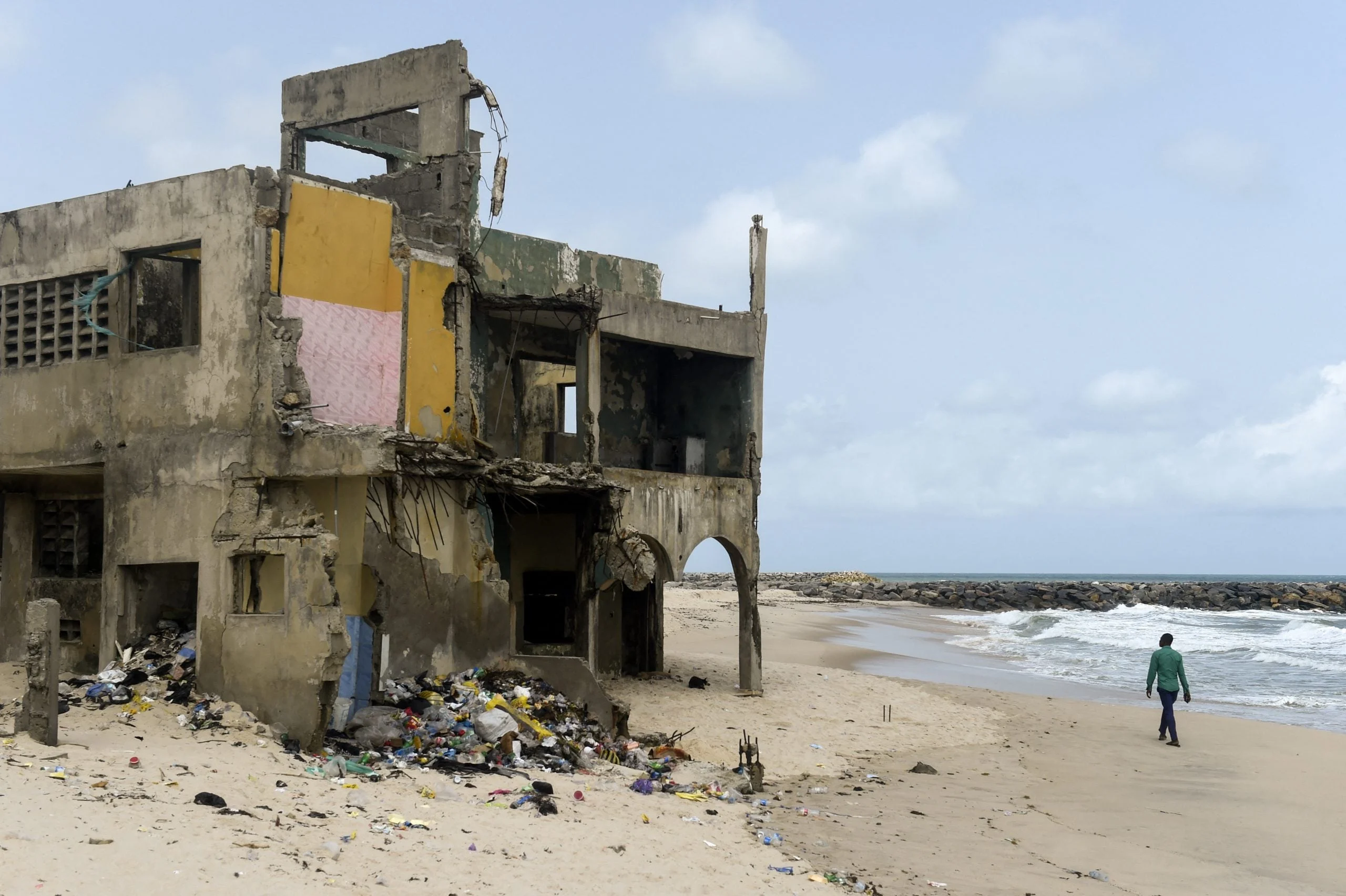
On the surface, it is a fight for both political and economic control of one of Nigeria’s most valuable coastal zones.
However, the political angle is nuanced, appearing like a battle by Lagos against Lagos, or a battle between President Bola Tinubu and ‘his boys’.
Surveyor General of the Federation Abuduganiyu Adebomehin made the public announcement that triggered the constitutional dispute. It was published in The Nation, a newspaper owned by the president.
Adebomehin, with ties to Lagos State, is a Tinubu crony. Appointed by the late president Muhammadu Buhari in January 2022, his four-year tenure was due to end in January 2026, but a two-year extension was announced last October.

“National land administration, highway and adjoining land infrastructure coordination, reclamation and erosion control programmes, and other related matters of strategic national importance” is part of his remit, says Bayo Onanuga, Tinubu’s special adviser on information and strategy.
What the directive means
In the public statement in July, Adebomehin said the government would be enforcing the “approved setback on all federal highways, all shorelines, coastal roads, as well as on and along the lagoon”, meaning the distance that structures must be built from the road to ensure safety.
The surveyor general said the measures became necessary for “effective management of coastal roads and the shorelines for maximum economic yield”.
Adebomehin said the federal government would no longer tolerate “indiscriminate creation of islands”, a common practice, and that all existing unauthorised sand-filling activities must stop.
Property owners and developers with existing approvals along the shorelines were asked to submit their permits for “verification, harmonisation and compilation”.
Sanwo-Olu pushes back
The directive carries far-reaching implications for Lagos, Nigeria’s commercial hub and a state whose coastal land has become a key driver of real-estate development and government revenue.
Governor Babajide Sanwo-Olu has pushed back, approaching the Supreme Court to challenge the president’s directive.
In its suit, Lagos argues that the policy amounts to constitutional overreach and unlawful land expropriation.
The state contends that the policy will undermine its revenue base, governance framework and economic autonomy.
It further describes the directive as “a blatant and unconstitutional distortion of the Town Planning Laws of Lagos State”.
The Lagos legal team is led by Babatunde Fashola –Tinubu’s annointed successor as Lagos governor in 2007.
Muiz Banire, a commissioner under both the Tinubu gubernatorial government and former minister of works, is another team member.
Olasupo Shasore, whom Fashola backed as his preferred successor in 2015, carried out this move that directly challenged Tinubu’s preference for Akinwunmi Ambode, who is also part of this group.
The Fashola, Banire and Shasore trio, who are Senior Advocates of Nigeria, carry formidable courtroom reputations.
Once central figures in Tinubu’s political machinery, Fashola and Banire have, over the years, drifted away from the Lagos establishment firmly controlled by the president.
Fashola’s ministerial appointment by Buhari in 2015 was widely believed to have been secured without Tinubu’s blessing, following his attempt to influence the choice of his successor in Alausa, the seat of Lagos power.
It was Fashola, as minister of works and housing in 2022, who signed the letter conveying Buhari’s appointment of Adebomehin as surveyor general.
Banire, for his part, was in the news in 2019 when he publicly sought advice from Nasir El-Rufai – who once declared himself “not a friend of Asiwaju,” referring to Tinubu’s nickname of ‘leader’ in Yoruba – on how to dismantle godfatherism in Lagos politics.
The economic stakes
At the Supreme Court, the Lagos team faces Lateef Fagbemi, the attorney general of the federation, who, alongside Wole Olanipekun, senior advocate of Nigeria, successfully defended Tinubu’s 2023 presidential victory.
Lagos listed the 35 other states as defendants in the suit – effectively inviting them to weigh in on a matter that could redefine the balance of power over land administration in Nigeria’s federal system.
Central to the struggle over coastline control is the ongoing $11bn Lagos-Calabar Coastal Highway, which begins in Lagos and will traverse seven other states before terminating in Calabar, the capital of Cross River State.
The highway project is being executed by Hitech Construction Company Limited, owned by Nigerian-Lebanese businessman Gilbert Chagoury, a long-time ally of Tinubu.
Tinubu and Chagoury’s relationship dates back over three decades, with significant business intersections.
In 2007, while Tinubu was governor of Lagos State, the Chagoury Group secured government approval to reclaim 10 million square metres of coastal land from the Atlantic Ocean for the Edo Atlantic City project, where a plot now sells for at least N2bn ($1.4m).
According to minister of works Dave Umahi, the master plan of the Lagos-Calabar coastal highway includes filling stations, hotels, shopping malls and auto-mechanic workshops to be built along the 700km route, underscoring the economic value of the coastline now under dispute.
The highway will also link major economic hubssuch as the Lekki Free Trade Zone and the Dangote Refinery, facilitating the growth of industrial parks and commercial real estate, including retail outlets and office complexes.
Echoes of past battles
Sanwo-Olu interestingly opted for legal action rather than private talks with Tinubu.
Sanwo-Olu’s ascension to power in 2019 was a decision of the Tinubu-led Lagos power brokers, who had grown dissatisfied with Ambode and wanted him out.
However, last year, a plot by the Lagos State House of Assembly to remove its speaker, Mudashiru Obasa, generated tensions between Sanwo-Olu and Tinubu. The strains are only just easing.
Yet the lawsuit also echoes a tradition established by Tinubu himself. As governor of Lagos, with Yemi Osinbajo as his attorney general, Tinubu initiated several constitutional battles against the federal government led by President Olusegun Obasanjo. Those cases helped strengthen Nigeria’s democracy and federalism.
An interesting referee
The Supreme Court, now called upon to determine the constitutional dispute, is headed by the Chief Justice of Nigeria, Justice Kudirat Kekere-Ekun –herself a Lagos native.
Her late father, Senator Hassan Adisa Babatunde Fasinro, was a foundational figure in Lagos’ political and administrative history. He served as the first clerk of the Lagos City Council and later as a senator in the Second Republic.
When Fasinro died in 2019, Tinubu paid a glowing tribute to him, saying his services to Lagos “will always stand as an example to all of us”.
Time will reveal the outcome of the case and the political intrigues playing out between Tinubu and his men as Lagos quietly prepares for another transition at the Alausa seat of power in 2027. (The Africa Report)
-

 Politics22 hours ago
INEC puts voters revalidation plan on hold
-
Politics17 hours ago
Oyo 2027: Makinde moves to name successor
-
Politics16 hours ago
Obidients mobilise for #OccupyINEC protest
-
Politics16 hours ago
Talks intensify as Bauchi gov delays ADC defection
-
Business16 hours ago
Bakare announces full repayment of N4bn Wema Bank loan
-
News17 hours ago
FG hikes 2026 borrowing plan by N11tn
-
News9 hours ago
Fire Service CG’s Massive Convoy Sparks Reactions
-
Metro16 hours ago
PHOTOS: Policemen Murdered By Boko Haram Laid To Rest