News
Fiscal strain shadows Nigeria’s reforms despite revenue gains- Senator Musa

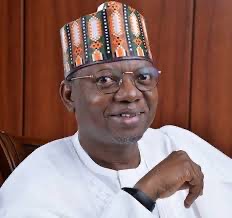
Chairman of the Senate Committee on Finance, Senator Sani Musa, has defended the Federal Government’s economic reforms amid growing concerns over budget implementation, rising fiscal pressure and unpaid domestic debts. In this interview on Channels TV’s Politics Today, the senator speaks on tax reforms, budget performance, global oil tensions and the political outlook ahead of the 2027 elections. Nathaniel Zaccheaus captures the interview
Nigeria’s economic reforms remain at the centre of national debate. The government says it is earning more revenue, yet there are complaints about poor budget implementation and unpaid contractors. From what you have seen in the Senate, what exactly is going on?
When a country embarks on major economic reforms, especially structural reforms, you should not expect results overnight. These things take time. This administration has taken bold steps. One of the most significant was the President’s removal of fuel subsidies. There has also been the unification of the foreign exchange market, which eliminated the distortions that previously allowed some people to exploit the difference between official and parallel market rates. In addition, the President has assented to the Tax Reform Act, which is now in operation. Beyond revenue reforms, you can also see infrastructure legacy projects taking place across the country. Previously, our revenue base was largely monolithic and heavily dependent on oil. But today, there is increasing diversification through exports and direct foreign investment. Even international financial institutions such as the World Bank and the IMF have acknowledged the pace at which Nigeria’s economy is adjusting and growing. That said, there are still challenges, particularly with domestic debt obligations such as payments to contractors. Many of the projects in the budget are capital expenditures, and the government is working to generate more revenue, especially through productivity and value addition to exports rather than merely exporting raw materials.

Some critics say the government appears confused economically. They argue that while it claims to be generating more revenue, it is still unable to meet obligations such as payments to contractors.
There is no confusion. It is important to understand how government budgeting works. A budget is a projection. It does not automatically mean that the projected revenue will exactly match the eventual revenue realised. Economic projections depend on several variables, including oil output and global market conditions. In recent years, volatility in the oil sector has affected revenue projections. For example, the National Assembly had to review the 2024 and 2025 fiscal frameworks and adjust them accordingly. The decision was taken to roll over certain components and integrate them into the 2026 fiscal structure. The reality is that although non-oil revenue has improved, Nigeria still faces challenges due to the volatility of oil income, which historically formed the backbone of our revenue.
Are you saying the government is not responsible for the slow implementation of the 2024 and 2025 budgets?
No one is condoning poor implementation. But we must look at the broader economic context. When this administration took office, it inherited significant fiscal pressures, including accumulated foreign debt that still needed to be serviced. There were also major economic disruptions from the COVID-19 period, whose effects continued into subsequent fiscal cycles. The government has also had to spend heavily on security measures and social support. After removing fuel subsidies, the government implemented measures to cushion the impact on citizens, including food interventions and other programmes. All these factors affect the pace of budget execution.
What is the implementation level of the 2024 budget?
The 2024 budget implementation is about 94 per cent, including capital releases.
And what about the 2025 budget?
That is where we encountered some challenges. To address that, the National Assembly decided to roll over the capital components of the 2025 budget into the 2026 budget cycle. This is not unusual. Budget adjustments happen in many countries when revenue realities change.
When should Nigerians expect the 2026 budget to be passed?
Hopefully, before the end of this month. The National Assembly is currently working through the budget defence process with ministries, departments, and agencies, so we expect it to be concluded soon.
There are also concerns about the government’s economic direction, particularly regarding tax reforms. How do you respond to fears that the reforms will impose heavier burdens on small businesses?
That concern is understandable, but it is based on misconceptions. The tax reform initiative is not designed to increase taxes on Nigerians. Instead, it aims to streamline the system and eliminate the multiple taxation that has burdened businesses for decades. Some of the tax laws we reviewed dated back to the 1950s and had become outdated or abused over time. The reform process seeks to simplify tax administration, reduce duplication and make compliance easier. For example, the Value Added Tax rate remains 7.5 per cent, which is relatively low compared with many countries where VAT can exceed 20 per cent.
But small businesses say the real problem is not the VAT rate but the multiple levies imposed by different government agencies.
Exactly. That is why these reforms were necessary. The objective is to remove those overlapping taxes and levies imposed by different tiers of government. Under the reformed framework, many of those duplications will disappear. Small businesses and ordinary Nigerians will begin to appreciate these changes once implementation progresses.
What is your view on the appointment of Taiwo Oyedele as Minister of State for Finance?
It is a very positive development. He has been actively involved in the presidential tax reform initiatives and has a deep understanding of Nigeria’s fiscal challenges. He brings fresh ideas and practical solutions that can help transform the country’s economic management.
Let’s talk about global developments. Rising tensions in the Middle East are creating uncertainty in the oil market. What implications could this have for Nigeria’s economy?
The situation could have both positive and negative effects. If tensions escalate in key shipping routes such as the Strait of Hormuz or the Red Sea, global oil supply could be disrupted. That could push oil prices higher, temporarily boosting Nigeria’s revenue as an oil-producing country and an OPEC member. However, such gains may be short-lived. Global instability also disrupts trade flows and supply chains, thereby affecting production and demand.
If you were to advise the government, what immediate steps should Nigeria take?
Nigeria must focus on strengthening its domestic energy capacity. We need to ensure that our refineries function efficiently and that local refining capacity is expanded. It is also important to support existing private refineries and ensure adequate fuel reserves for domestic consumption. If global supply disruptions occur, countries with strong local production will be better positioned to manage the impact.
Let’s turn briefly to politics. Some analysts believe the ruling APC could face significant challenges in the 2027 elections. Are you concerned about that?
Nigeria is a democratic country with multiple political parties, and citizens will always evaluate governments based on performance. For me, the most important thing is good governance. If a government, regardless of party affiliation, is delivering good governance, Nigerians will support it. If the current administration continues to deliver on its reform agenda and improve the economy, Nigerians will recognise that.
Do you believe Nigerians currently see good governance from the ruling party?
Nigeria is not under tyranny. We are operating a democratic system. The fact that the party controls many states and continues to attract support suggests that many Nigerians still believe in its direction. But ultimately, governance should focus on improving the country for everyone.
-

 Politics12 hours ago
Oyo 2027: Makinde moves to name successor
-
Politics18 hours ago
INEC puts voters revalidation plan on hold
-
News22 hours ago
Suspected herders kill 17 in attack on Benue community
-
Politics12 hours ago
Obidients mobilise for #OccupyINEC protest
-
Politics12 hours ago
Talks intensify as Bauchi gov delays ADC defection
-
Business12 hours ago
Bakare announces full repayment of N4bn Wema Bank loan
-
News12 hours ago
FG hikes 2026 borrowing plan by N11tn
-
News4 hours ago
Fire Service CG’s Massive Convoy Sparks Reactions