News
How poor soil testing fuels Nigeria’s building collapse crisis

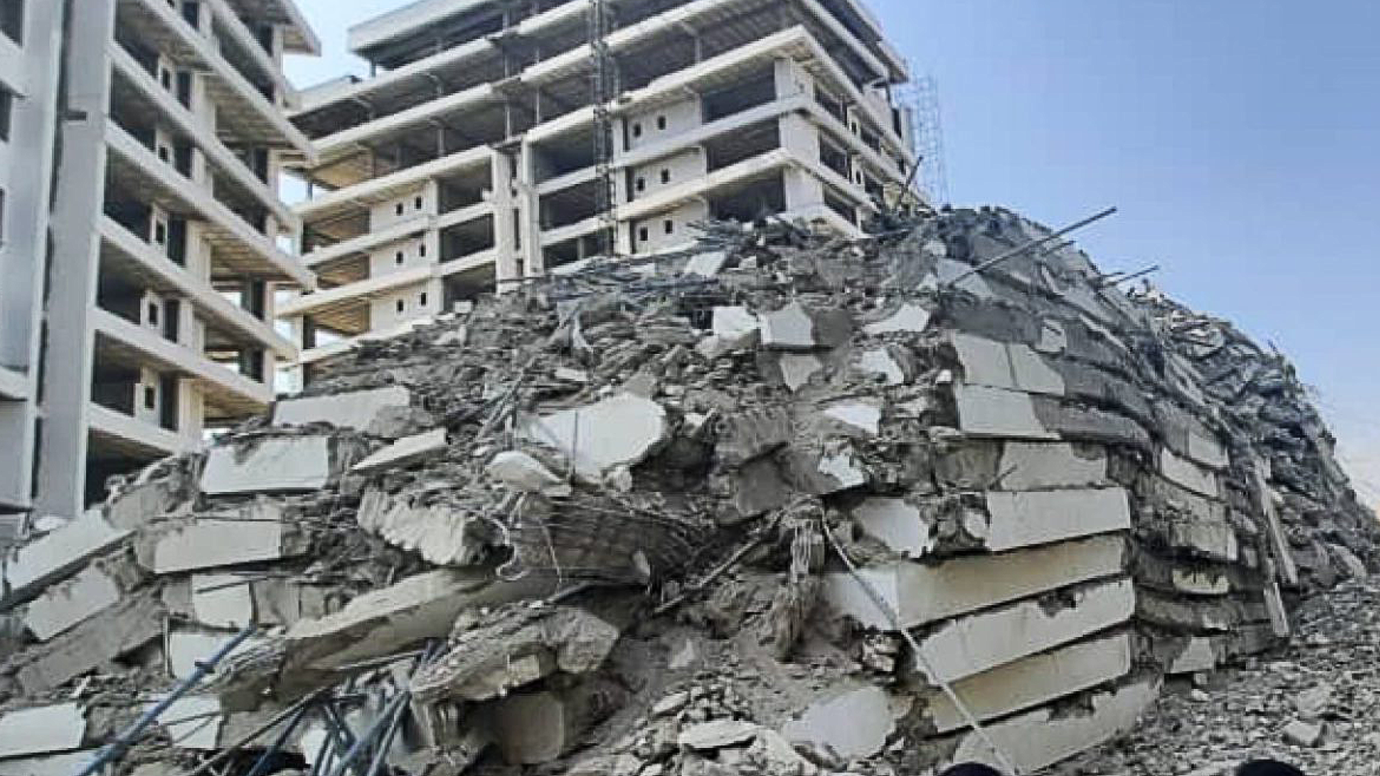
Nigeria’s building collapse crisis is not merely a technical problem but a broader societal challenge that reflects the intersection of negligence, weak governance and systemic inadequacies. Experts argue that until the country embraces rigorous soil testing, enforces accountability, and strengthens the capacity of professional firms, the foundations of its cities will remain dangerously fragile, CHINEDUM UWAEGBULAM reports.
In Nigeria, building collapse has become a recurring nightmare for residents, government authorities and urban planners. From high-rise residential apartments in Lagos to modest commercial structures in Abuja, the country has witnessed numerous tragedies in which lives and property are lost, often in circumstances experts say are preventable. At the centre of many of these incidents is a critical but frequently overlooked factor: inadequate soil testing.
Every structure begins with its foundation, and the strength of that foundation depends largely on the characteristics of the soil on which it is built. Engineers and geotechnical experts emphasise that soil testing is not merely a bureaucratic requirement but a crucial scientific process that determines whether a building can safely withstand its own weight as well as environmental stresses such as heavy rainfall, flooding, ground movement and erosion.
However, across many parts of Nigeria, proper soil investigation is often neglected. Developers, under pressure to reduce costs or accelerate construction timelines, sometimes skip detailed soil tests or commission superficial surveys that fail to identify critical issues such as weak clay layers, waterlogged ground or soils with low bearing capacity. In such cases, buildings may be erected on foundations that are inherently unstable.

According to the Standards Organisation of Nigeria (SON), inadequate soil testing is one of the recurrent causes of structural failures in the country. Without accurate soil data, engineers cannot design the appropriate foundation system for a building. As a result, structures may experience uneven settlement, cracks and gradual weakening of their structural integrity, sometimes culminating in collapse years after completion.
Statistics illustrate the scale of the problem. Nigeria recorded about 679 building collapse incidents between 1971 and 2025, resulting in at least 1,639 deaths nationwide, according to the Building Collapse Prevention Guild (BCPG). Lagos State alone accounts for more than half of these incidents due to its rapid urbanisation, high population density and intense construction activity.
More recent figures paint an equally troubling picture. Between 2022 and September 2025, around 145 building collapse incidents were recorded nationwide, with Lagos again leading in the number of cases reported. While various factors contribute to these tragedies, ranging from poor construction practices to substandard materials, experts maintain that weak foundations linked to inadequate soil investigation remain a major trigger.
Developers’ negligence
A significant driver of the crisis is the negligence of some developers. Investigations into several building collapse incidents have repeatedly uncovered shortcuts in the construction process. Developers may ignore soil investigation reports, engage unqualified contractors or rely on poor engineering advice to cut costs.
In rapidly growing cities such as Lagos, Abuja and Port Harcourt, a “build fast, sell fast” culture has emerged in parts of the real estate sector. Speed and profit often take precedence overdue diligence, including thorough geotechnical investigations that determine whether the ground can support the intended structure.
Experts note that some developers wrongly assume that if neighbouring buildings stand firmly, their own structures will face similar conditions. However, soil composition can vary significantly within short distances. Differences in groundwater levels, soil layers and compaction can affect the bearing capacity of a plot even within the same street.
When these variations are ignored, buildings may suffer from differential settlement—where one section of the structure sinks faster than another, leading to structural cracks and eventual failure.
Government oversight gaps
While developers bear substantial responsibility, regulatory authorities are also under scrutiny for weak enforcement of building standards. Building control departments in several states are often understaffed and underfunded, limiting their ability to conduct thorough inspections or verify compliance with building regulations. In some instances, building permits are issued without comprehensive verification of soil test reports or structural designs.
Weak monitoring systems allow projects to proceed without proper oversight. Even when irregularities are identified, enforcement actions may be delayed or inconsistently applied. This allows potentially unsafe buildings to remain standing until structural failure occurs.
Industry watchers note that penalties for violating building regulations are often insufficient to deter malpractice. Without stronger sanctions and stricter monitoring mechanisms, some developers continue to bypass essential safety procedures.
Professional firms under pressure
Concerns also extend to the capacity of some professional firms responsible for geotechnical investigations. Although Nigeria has highly qualified engineers and geotechnical experts, not all firms possess modern testing equipment or adequate technical capacity.
In certain cases, reports are produced using outdated methods or insufficient field investigations. There have also been allegations of “table-top reporting,” where soil investigation reports are prepared without proper site testing. Such practices undermine professional standards and compromise the reliability of geotechnical data used for structural design.
The result is a vicious cycle in which developers exploit regulatory weaknesses while some professionals struggle to resist commercial pressure. This situation ultimately increases the risk of structural failure.
The human and economic toll
The consequences of building collapse extend far beyond structural damage. Each incident carries devastating human and economic costs. Lives are lost, families are displaced and livelihoods are destroyed. Survivors often face long-term trauma, while communities are left grappling with the aftermath of rescue operations and property loss. Hospitals become overwhelmed treating injured victims, and disputes over insurance claims or compensation frequently arise.
Financial losses from collapsed buildings can run into billions of naira. Beyond the immediate economic impact, repeated incidents also erode public confidence in the construction and real estate sectors. Yet, experts insist that many of these tragedies are avoidable through strict adherence to professional standards and proper engineering procedures.
Experts highlight compliance gaps
President of the Building Collapse Prevention Guild (BCPG), Sulaimon Yusuf, said soil testing is common practice for major infrastructure projects but often ignored in private residential developments.
According to him, while high-rise buildings, bridges and federal road projects typically undergo rigorous geotechnical investigations, many self-built residential projects skip the process.
“In major urban centres like Lagos or Abuja, we see higher compliance for high-rise structures, but there is a dangerous gap in the residential sector,” he said.
“Developers often bypass soil testing because they view it as an unnecessary upfront cost rather than an insurance policy. There is also the false assumption that because a neighbour’s house stands, the soil on their own plot must be identical. This ignores the natural variation in soil layers.”
Yusuf added that although Nigeria has capable geotechnical professionals, the industry still struggles with quackery and fabricated reports. “To bridge the capacity gap, we need greater investment in automated testing equipment that provides digital and tamper-proof logs. This ensures the soil samples analysed in laboratories actually originate from the construction site,” he explained.
He also emphasised the need for continuous training of geotechnical engineers and technicians to strengthen professional standards.
Yusuf, a former General Manager of the Lagos State Physical Planning and Development Agency (LSPPDA), acknowledged that Lagos authorities have made some progress by making soil test reports mandatory for buildings above certain heights.
However, he believes stronger enforcement is required. “We must move towards a strict ‘No Soil Report, No Development Permit’ policy for all categories of building projects,” he said.
“Integrating digital portals where soil reports are uploaded and verified by registered engineering consultants before construction begins would be a major step forward.”
Structural engineers warn of foundation failures
Former President of the Nigerian Institution of Structural Engineers (NIStructE), Dr Victor Oyenuga, said ignoring soil testing is essentially inviting structural failure.
“Anyone who fails to conduct soil testing for major works or even minor works in poor soil areas is preparing the structure for possible collapse,” he said.
According to him, many developers underestimate the technical complexity involved in producing a soil investigation report. “The cost of soil testing is actually very small compared with the overall construction budget,” he explained.
“In one government project valued at about N2 billion in 2010, the soil investigation cost roughly N350,000, which was about 0.0175 per cent of the total project cost.”
Despite this relatively small expense, Oyenuga said some developers still consider the cost excessive because they do not understand the extensive fieldwork, laboratory analysis and engineering responsibility involved in producing the report.
He noted that in coastal areas such as Lekki in Lagos or parts of Port Harcourt, the soil is often soft and waterlogged, making geotechnical investigations particularly important. “In such environments, failure to carry out proper soil investigation can lead to serious settlement problems or structural failure,” he said.
“A building that experiences excessive settlement has effectively failed structurally because it can no longer perform its intended function safely.”
Lack of national standard
The first female Chairman of the Nigerian Institution of Civil Engineers, Dr Omolola Adetona, also pointed to gaps in Nigeria’s regulatory framework governing soil testing.
According to her, the country lacks a unified national standard mandating geotechnical investigation for all building projects.
“Requirements vary across states, and in many cases they are poorly enforced or absent entirely,” she said. “This leaves the decision largely in the hands of clients and contractors, leading to inconsistent practices.”
She explained that large commercial developments or government projects usually undergo soil investigations because consultants and regulators insist on them. However, small-to-medium residential developments often bypass the process.
“Many clients underestimate the importance of soil testing and assume the ground is suitable simply because it looks stable,” Adetona said.
Construction practices also matter
Another engineer, Dr Aji Tijani, stressed that while soil investigation is critical, building collapse can also result from poor construction practices even when soil conditions are favourable.
He noted that developers sometimes attempt to reduce construction costs by cutting corners during the building process. “The key factor is cost reduction,” Tijani said.
“Developers often try to eliminate anything that increases construction costs, including soil testing.”
However, he warned that structural failures may also occur if contractors deviate from approved engineering designs. “In some cases, constructors change the concrete mix, use reinforcement bars of the wrong diameter or alter the number of structural reinforcements specified in the design,” he explained.
“Such deviations weaken the building and increase the risk of collapse.” Other factors that may compromise structural integrity include the use of unsuitable water for concrete mixing, poor construction supervision and unauthorised changes to a building’s intended use or number of floors. (Guardian)
-

 News23 hours ago
Vehicles Destroyed As CNG Bus Explodes At Kaduna Park
-
News24 hours ago
BREAKING: Tinubu Approves N3.3trn Plan To Tackle Electricity Crisis
-
Politics23 hours ago
ADC Dismisses David Mark’s Resignation Rumour
-
Politics11 hours ago
Oyo 2027: Makinde moves to name successor
-
News23 hours ago
Troops Deal Major Blow To Bandits, Kill Warlord’s Son, Key Commanders
-
Politics16 hours ago
INEC puts voters revalidation plan on hold
-
News20 hours ago
Suspected herders kill 17 in attack on Benue community
-
Politics11 hours ago
Obidients mobilise for #OccupyINEC protest