Business
World’s fourth-largest refinery shut down in UAE after drone attack

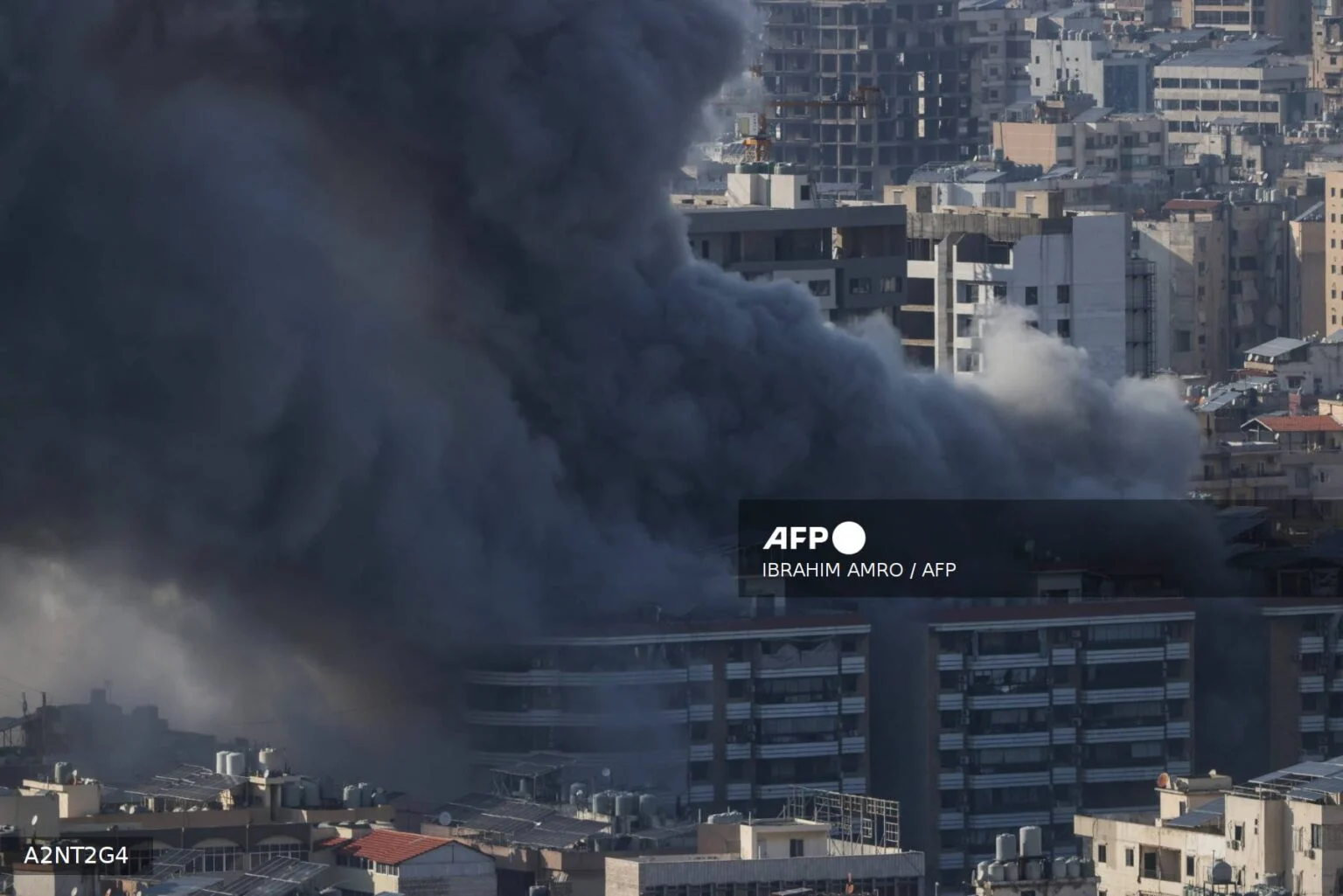
One of the world’s largest refineries in the UAE was shut as a “precaution” after a drone attack nearby, a source said, while Saudi giant Aramco warned of the war’s devastating consequences on oil.
Aramco CEO and president Amin H. Nasser warned the war could have “catastrophic consequences” on oil markets and called for reopening the Strait of Hormuz—which normally carries about 20 per cent of global oil supplies but has been closed by the conflict.
Tehran appears to be attempting to knock major Gulf refineries offline as it tightens its chokehold on the Strait of Hormuz in a quest to inflict maximum pain on the global economy.
“The Ruwais refinery has halted operations out of precaution,” the source said, requesting anonymity to discuss sensitive matters.

Earlier, the Abu Dhabi Media Office said a drone attack caused a fire in Ruwais Industrial City in the emirate of Abu Dhabi.
Neither the source nor the authorities said whether the refinery had been hit.
State-owned oil company Adnoc describes its Ruwais facility as “the world’s fourth-largest single-site refinery.”
The Middle East war has now severely destabilised supplies. Iran has fired at energy installations across the Gulf, including Aramco’s sprawling Ras Tanura facility, which halted some operations.
The massive complex on the Gulf coast is home to one of the Middle East’s largest refineries and is a cornerstone of the Saudi energy sector.
Saudi oil fields have also been targeted.
A driver working at the Ruwais industrial complex told AFP he was picking up staff who were ordered to evacuate.
“Just as we were about to leave, we saw two more bursts of fire rising from the complex, with loud sounds like explosions,” he said, requesting not to be named.
‘Chain reaction’
“The disruption has caused a severe chain reaction in not only shipping and insurance, but there’s also a drastic domino effect on aviation, agriculture, automotive and other industries,” Nasser told a media call to announce Aramco’s 2025 earnings.
“There would be catastrophic consequences for the world’s oil markets the longer the disruption goes on and the more drastic the consequences for the global economy.
The oil-rich Gulf has borne the brunt of Iran’s attacks in response to US-Israeli strikes that sparked the Middle East war, with Tehran targeting US assets but also civilian infrastructure, including energy facilities and airports.
“While we have faced disruptions in the past, this one by far is the biggest crisis the region’s oil and gas industry has faced.”
“It’s absolutely critical that shipping resumes in the Strait of Hormuz,” Nasser said.
Oil prices have swung wildly over supply disruptions, rocketing 30 per cent on Monday before plunging again on comments from US President Donald Trump that the war may soon end.
“The Gulf energy sector is getting whacked from multiple angles,” said Robert Mogielnicki, a non-resident scholar at the Arab Gulf States Institute.
“Energy facilities being targeted, export capability through the strait is hampered, and storage capacity is filling up,” he added.
‘Dangerous precedent’
Iranian attacks have already forced state-owned QatarEnergy, one of the world’s largest producers of liquefied natural gas, to halt production last week and declare force majeure.
Energy producers in Kuwait made similar declarations, which are a warning that events beyond their control may lead them to miss export targets.
Nasser was speaking as Aramco reported a 12.1 percent decline in net income in 2025 after higher supply, US tariffs, and other economic headwinds weighed on revenues.
The Saudi giant, which launched a record initial public offering in 2019, also announced a first-ever share buyback programme of up to $3 billion over 18 months.
Also on Tuesday, Qatar’s foreign ministry spokesman Majed al-Ansari warned that attacks on energy facilities “on both sides, are a dangerous precedent… it will cause repercussions throughout the world.
Throughout last year, the oil alliance OPEC+—of which Saudi Arabia is a key member—oversaw an increase in production, eroding prices.
AFP
-

 Politics16 hours ago
CAN petitions Sanwo-Olu over alleged marginalisation of Christians in Surulere politics
-
African News16 hours ago
‘Maintain low profile’ — FG issues advisory to Nigerians in South Africa after protests over ‘Igbo king coronation’
-
Politics16 hours ago
Ex-Kano Deputy Gov Gawuna Resigns From APC, ‘To Meet Kwankwaso’
-
Politics16 hours ago
HURIWA asks DSS to arrest Igboho over threats
-
News16 hours ago
Military gets N2.3tn special funding amid security crisis
-
News16 hours ago
Tinubu Appoints New CAC Chairman, Fills Vacant Positions At Population Commission
-
Politics16 hours ago
Kwankwaso: Our Database Experienced Surge Within 24 Hours – ADC
-
News16 hours ago
3 Killed, Houses Set Ablaze As Bandits Raid Zamfara Community