Business
Oil Export Facility Threat May Further Raise Prices

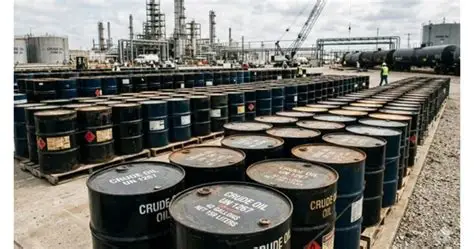
Oil prices may continue to rise when markets open on Monday, as the U.S.-Israeli conflict with Iran enters its third week, threatening oil infrastructure and keeping the Strait of Hormuz closed in what is the largest supply disruption in the world.
The International Energy Agency announced Sunday that over 400 million barrels of oil reserves will soon hit the market in a record release aimed at curbing price spikes from the Middle East conflict.
Reserves from Asia Oceania will be released right away, while those from Europe and the Americas will become available by the end of March, the agency said.
Brent and U.S. West Texas Intermediate crude prices have jumped over 40 per cent this month, hitting their highest levels since 2022, after U.S.-Israeli strikes on Iran led Tehran to halt shipments through the Strait of Hormuz, a vital passage for about a fifth of the world’s oil supply.
To keep things moving smoothly, U.S. President Donald Trump asked allies to send warships to help protect the vital Strait of Hormuz. The Wall Street Journal reports he’s planning to announce a coalition to escort ships through the region as soon as this week.
Trump threatened additional strikes on Iran’s Kharg Island oil export hub after the United States targeted military sites there on Saturday, prompting a defiant vow of further retaliation from Tehran.


Iranian drones struck a major oil terminal in Fujairah, United Arab Emirates, shortly after the attacks on Kharg.
“This marks an escalation in the conflict,” JP Morgan analyst Natasha Kaneva said.
Besides the UAE’s Fujairah, Saudi Arabia’s Ras Tanura export terminal and Abqaiq oil processing facilities have been listed as critical and highly vulnerable energy facilities in the Gulf, JPM analysts said.
Oil loading operations at Fujairah have resumed, a Fujairah-based industry source told Reuters on Sunday.
Fujairah, outside the Strait of Hormuz, is the outlet for about 1 million barrels per day of the UAE’s flagship Murban crude oil – a volume equal to about 1% of world demand.
Global oil supply is expected to fall by 8 million barrels per day in March due to disruptions to shipping while Middle Eastern producers have cut output by at least 10 million bpd, according to the International Energy Agency.
U.S. Energy Secretary Chris Wright said on Sunday he expects the war with Iran to end within “the next few weeks”. Oil supplies will rebound and energy costs will decline afterwards, he added.
Meanwhile, the Trump administration has rebuffed efforts by Middle Eastern allies to start diplomatic negotiations, according to three sources familiar with the efforts, while Iran has rejected the possibility of any ceasefire until U.S. and Israeli strikes end, dimming hopes of a quick end to the conflict.
-

 Politics19 hours ago
INEC puts voters revalidation plan on hold
-
Politics13 hours ago
Oyo 2027: Makinde moves to name successor
-
News23 hours ago
Suspected herders kill 17 in attack on Benue community
-
Politics13 hours ago
Obidients mobilise for #OccupyINEC protest
-
Politics13 hours ago
Talks intensify as Bauchi gov delays ADC defection
-
Business13 hours ago
Bakare announces full repayment of N4bn Wema Bank loan
-
News13 hours ago
FG hikes 2026 borrowing plan by N11tn
-
News5 hours ago
Fire Service CG’s Massive Convoy Sparks Reactions