Politics
Succession Scramble: The race for Lagos heats up as Tinubu orders ambitious aides to step down

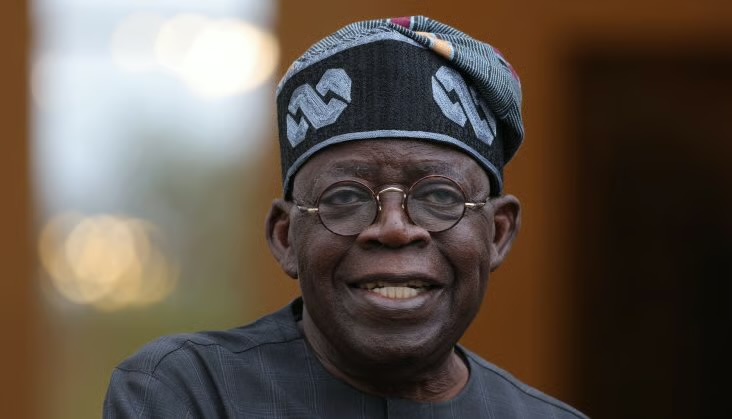
President Bola Tinubu’s directive that political appointees seeking elective office in 2027 must resign by 31 March is more than an administrative instruction.
It is an early signal that the federal government is edging into open political season – and that ministers and top aides with state-level ambitions may soon have to show their hand.
A circular issued on Tuesday and signed by Secretary to the Government of the Federation, George Akume, said the order was intended to align with electoral provisions requiring appointees to step down ahead of party primaries.
With the Independent National Electoral Commission having fixed 23 April to 30 May for party primaries, the directive compresses the timetable for would-be contenders in states where governorship succession is already drawing intense interest.

Organised speculation vs quiet preparation
The immediate effect is to sharpen attention on a small group of cabinet members and presidential aides whose names have circulated for months in Lagos, Oyo and Bauchi.
Some have openly declared ambition. Others are still operating in the zone between organised speculation and quiet preparation. But together they offer an early map of where Tinubu’s administration could begin to bleed into 2027 state politics.
The most sensitive of those theatres is Lagos.
No state is more politically symbolic for Tinubu, and none is watched more closely for signs of his preferred succession formula.
Since leaving office as governor in 2007, Tinubu has remained the dominant force in Lagos politics, shaping the emergence of Babatunde Fashola, Akinwunmi Ambode and Babajide Sanwo-Olu.
The pattern has often favoured loyalists with technocratic polish over politicians with overly independent structures of their own.
That helps explain the sustained attention on Hakeem Muri-Okunola, Tinubu’s principal secretary.
A long-time member of the president’s inner circle, Muri-Okunola has been linked to Tinubu’s political orbit for nearly two decades, having served as his personal assistant during his years as Lagos governor.
He later held senior roles in Lagos, including Head of Service, before moving to Abuja.
His profile fits much of what Lagos succession under Tinubu has tended to reward: administrative experience, personal loyalty and a relatively controlled political image.
His supporters have in recent months become more vocal, and a recent State House photograph featuring Tinubu, Governor Sanwo-Olu and Muri-Okunola only added to speculation.
Tinubu’s blessing
At his departure from Lagos service, Sanwo-Olu described him as a “brother, worthy partner and confidant”, language that reinforced the sense that he remains deeply embedded in the state’s power structure.
Yet his strengths are also his limitations. Muri-Okunola’s candidacy, if it comes, would depend heavily on Tinubu’s blessing.
He is not known for commanding an independent grassroots machine of the sort that can defy the centre.
In Lagos, that may not be fatal, but it does mean he remains less a declared contender than a powerful possibility.
Femi Gbajabiamila, Tinubu’s chief of staff, represents a different kind of Lagos proposition. Unlike Muri-Okunola, he has a long electoral record and a stronger conventional political profile.
He served in the House of Representatives for two decades, rose through the ranks to become Speaker, and built a durable base in Surulere.
His backers point to his legislative experience, visibility and constituency-level projects as evidence that he combines competence with political reach.
Gbajabiamila has therefore remained a constant presence in discussions around the 2027 Lagos governorship race, but his assets may also complicate his case.
If Tinubu’s historical preference in Lagos has been for disciplined and loyal managers rather than heavyweight politicians, Gbajabiamila’s stature may cut both ways.
Recent rumours that he had been replaced as chief of staff by Muri-Okunola – publicly denied by the presidency – only fed perceptions of tension, whether real or exaggerated, around his place in the president’s circle.
For now, he remains a serious name, but not an inevitable one.
Downplaying talks of resignation
A third Lagos figure, education minister Tunji Alausa, occupies a more ambiguous position. His relationship with Tinubu reportedly dates back to the pro-democracy struggle of the 1990s, when both men were associated with the National Democratic Coalition, or NADECO.
He is said to have supported exiled activists during the Abacha years while based in the US, and his longstanding ties to the president have helped keep his name in Lagos succession conversations.
His supporters have recently sought to present him as a gubernatorial option. But unlike Adelabu in Oyo, Alausa has publicly downplayed talk of imminent resignation, insisting on social media that he remains focused on his work.
That does not rule out future ambition. It does suggest either caution or a lower level of operational readiness than some of the speculation implies.
If Lagos is the most politically loaded contest, Oyo offers the clearest case of declared ambition.
Power minister Adebayo Adelabu has openly said he intends to contest the Oyo governorship in 2027.
A recurrent aspirant since 2019, he has made little effort to disguise his sense that the office should eventually be his.
Speaking recently to supporters, he cast his ambition in explicitly turn-by-turn terms: “I have paid my dues. In 2019, I was in the race alongside Seyi Makinde; same thing in 2023. In 2027, God has ordained that it is my turn.”
That sort of language leaves little room for ambiguity. Adelabu is not a speculative name being floated by allies.
He is an active aspirant with a political lineage to match, as the grandson of the late Adegoke Adelabu, one of the most famous figures in Oyo’s political history.
The question in his case is not whether he wants the job. It is whether repeated runs strengthen his claim through persistence or expose a pattern of near-misses.
Early mobilisation
Bauchi presents a different picture again, with two federal figures seen as possible successors to Governor Bala Mohammed, who is due to complete his second term in 2027.
Health minister Ali Pate has long been associated with governorship ambition in the state. He sought the office under the PDP in 2015, explored another route in 2019, and also contested for the APC ticket ahead of the 2023 election.
That repeated interest makes him more than a speculative mention. Tuesday’s public endorsement by the Pate Youth Ambassadors Initiative was another sign of early mobilisation.
Still, his political strength remains easier to infer than to measure. Pate has national and international policy stature, but the governorship is not won on résumé alone.
His earlier failures suggest both persistence and unfinished business.
Foreign affairs minister Yusuf Tuggar is also widely seen as weighing a Bauchi bid.
A former member of the House of Representatives and later ambassador under Muhammadu Buhari, Tuggar has maintained a visible political presence in the state and has emerged as a vocal critic of the current governor.
That has naturally invited the view that he is laying the groundwork for a future run.
Supporters have already begun making regional arguments on his behalf, including the case for power shifting to Bauchi North.
His network, built in part around the Tuggar Foundation, gives him a visible local platform. But as with Pate, the evidence points more to positioning than declaration.
Taken together, these names reveal the first consequence of Tinubu’s directive.
It forces a distinction between declared ambition, serious preparation and political trial balloons.
It also suggests that the president is unlikely to allow federal office to serve indefinitely as a holding bay for appointees testing state-level waters.
That matters most in Lagos, where the eventual choice will be read not only as a succession decision but as a statement about how Tinubu now wants to manage power from the centre.
Does he still prefer the disciplined technocrat with deep personal loyalty? Or does a more conventional political heavyweight have a chance?
The answers are not yet clear. But the deadline for resignation means the questions are no longer theoretical.
In Lagos, Oyo and Bauchi, 2027 has started to move from murmured ambition to formal political sorting.
(The Africa Report)
-

 Politics24 hours ago
Despite INEC warnings, ADC constitutes 361-member convention planning committee
-
Business24 hours ago
Lafarge Africa proposes name change to HBM Nigeria at April 30 AGM
-
Politics13 hours ago
No APC guber hopeful has been anointed in Lagos…. but I’ll back eventual pick – Jandor
-
News22 hours ago
BREAKING: House of Representatives member dies
-
African News24 hours ago
Ghana to cut fuel taxes, levies to curb rising pump prices
-
News24 hours ago
Troops got intelligence three days before Benesheik attack – Zulum
-
Metro19 hours ago
Military personnel arrested after exchanging blows during Tinubu’s visit to Bayelsa
-
 Politics14 hours ago
From Privilege To Politics: Elite’ Children In 2027 Race