Business
£746m deal with Nigeria to save British steel coys from collapse, says PM Starme

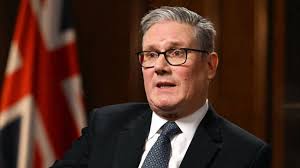
British Prime Minister Keir Starmer has clarified that the £746 million agreement signed between the United Kingdom and Nigeria was primarily aimed at preventing the collapse of British steel companies, raising fresh questions about the deal, which was earlier presented as a major infrastructure boost for Nigeria.
In a post on his X (formerly Twitter) handle during President Bola Tinubu’s visit, Starmer said, “Today, we’ve signed a historic deal between the UK and Nigeria, providing steel for the construction of ports in Lagos. This will support thousands of skilled British jobs with hundreds of millions invested into the British economy.”
He further disclosed that British Steel had faced threats of closure since last year, necessitating, he said, “decisive actions” by his government to stabilise the sector.
“This is a historic deal,” Starmer noted. “It not only strengthens UK-Nigeria relations but also ensures the continued growth of British manufacturing and the protection of thousands of skilled jobs.”

Starmer’s comments appear to contrast with the earlier narrative surrounding the agreement, which was widely publicised as a £746 million deal to refurbish Nigeria’s major ports in Lagos.
Last week, both countries announced the agreement following bilateral talks in London, where President Tinubu described the engagement as “very thrilling and significant” in strengthening economic cooperation.
The deal was framed as a loan or grant as part of broader efforts to modernise infrastructure at the Apapa and Tin Can Island ports, key assets in Nigeria’s trade ecosystem.
Nigeria’s Minister of Finance, Wale Edun, had explained that the agreement aligned with the administration’s priorities on infrastructure and economic development, noting that such partnerships would help attract investment, create jobs and reduce poverty.
However, further scrutiny, according to newsweekng.com, suggests the arrangement may be more complex than initially portrayed.
For British Steel, the contract represents a transition from recovery to long-term sustainability. CEO Allan Bell described it as a “record-breaking” agreement that underscores confidence in UK manufacturing.
Tim Reid, CEO of UKEF, described the deal as a milestone in UK-Nigeria relations, noting that it would bring over £200 million back into British businesses. He added that the agreement lays the groundwork for deeper economic ties and expanded opportunities for UK exporters across Africa.
Similarly, the UK’s Business and Trade Secretary, Peter Kyle, praised the agreement as a “major win” for British industry, aligning with the country’s broader steel strategy to boost domestic production and exports.
In an analysis, public affairs commentator, Dr Lemmy Ughegbe, noted that the £746 million facility is not a grant but a structured financing mechanism backed by UK Export Finance and tied to specific projects.
He observed, “The facility is designed to support the refurbishment of the Apapa and Tin Can Island ports. Yet the deal is also mutually beneficial, with a significant portion of the contracts expected to flow to British companies, including support for the UK’s own industrial sector.”
-

 Metro20 hours ago
Man threatens to release Kano governor’s nude videos, photographs
-
Sports20 hours ago
Harry Kane crowned 2026 Ballon d’Or winner
-
World News20 hours ago
Trump hits back at Obama over Saddam ‘Cheesecake Factory’ jab
-
News20 hours ago
OPHK troops destroy ISWAP enclaves in Lake Chad, kill 16 terrorists
-
Business20 hours ago
Microsoft offers voluntary exit packages to 60,000 staff
-
Politics20 hours ago
‘He was trained in sanitation’ — Shettima says Atiku can’t govern modern economy
-
Politics20 hours ago
FACT CHECK: How Tinubu’s Image On Bread Was Edited To Depict Obi
-
Politics18 hours ago
INEC uploads voters’ register online after outcry