News
Workers threaten strike over delayed 40% peculiar allowance

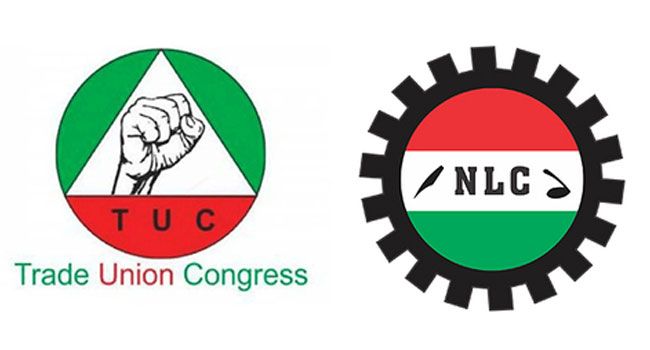
Federal civil servants, under the Joint National Public Service Negotiating Council, have issued a March 31 ultimatum to the Federal Government over delays in implementing the 40 per cent peculiar allowance linked to the N70,000 minimum wage.
The workers warned that failure to meet the deadline could trigger industrial action, raising concerns about a potential nationwide disruption of government activities as frustration mounts among thousands of affected employees.
In a strongly worded letter addressed to the Executive Chairman of the National Salaries, Incomes and Wages Commission, the National Chairman and National Secretary of JNPSNC, Benjamin Uyantomni and Olowoyo Gbenga, respectively, decried what they described as an “undue delay” in issuing the necessary circular and salary templates required for the implementation of the allowance.
According to the union, despite submitting a detailed proposal to facilitate the seamless rollout of the allowance, the process appeared to have stalled within the commission.

“The National Leadership of the JNPSNC is constrained to draw the attention of the management of the NSIWC to the undue delay in issuing the appropriate circular and salary templates required to facilitate the payment of the 40 per cent peculiar allowance,” the letter read.
The union further recalled that it had formally written to the commission as far back as September 1, 2025, but lamented that no action had been taken since then.
“This deliberate inaction has denied thousands of public servants their rightful entitlement,” the union stated, noting that the allowance forms a critical component of the new wage structure approved by the Federal Government.
The JNPSNC added that the approval had already been transmitted to the NSIWC by the Head of the Civil Service of the Federation, yet implementation remained stalled, fuelling suspicion and dissatisfaction among workers.
At a meeting held on March 9, 2026, attended by leaders of affiliate unions, the council resolved to demand immediate action, warning that the patience of workers had been “severely overstretched.”
“Accordingly, we demand a positive response on or before Tuesday, March 31, 2026. Failure to comply will leave the council with no option but to take necessary action. No retreat, no surrender,” the letter added.
The dispute comes amid the Federal Government’s approval of a new national minimum wage of N70,000, following prolonged negotiations with organised labour unions.
The wage increase was intended to cushion the effects of rising inflation, fuel subsidy removal, and the broader cost-of-living crisis that has significantly eroded workers’ purchasing power.
However, beyond the headline wage increase, implementation has been fraught with delays, inconsistencies, and disputes over additional components such as allowances and consequential adjustments across different cadres of the public service.
The 40 per cent peculiar allowance is particularly significant because it is designed to address disparities in pay and compensate for job-specific conditions within the federal civil service.
Its delay has therefore amplified concerns that the broader wage reform may not fully translate into real income gains for workers.
The ultimatum by the JNPSNC signals a potentially wider labour unrest brewing within Nigeria’s public sector, especially at a time when economic pressures are intensifying.
Inflation remains elevated, and the real value of wages continues to decline, meaning delays in implementing agreed benefits have immediate and tangible consequences for workers.
-

 News18 hours ago
Nigerian Population Commission Faces Scrutiny Over N129.5billion Funds Released For Census That Never Held
-
News19 hours ago
Court dismisses cyberbullying charge against Sowore, releases passport
-
World News18 hours ago
Middle-East War: US Is Negotiating With Itself, Says Iranian Military Spokesperson
-
Business22 hours ago
BREAKING: Court nullifies CBN’s sack of Union Bank’s board, restores core shareholders
-
Metro19 hours ago
Your selective outrage is troubling — Sowore fires back at NBA
-
Metro18 hours ago
Supreme Court Ends 20-Year Legal Battle For 96 Teachers Unlawfully Redeployed By Benue Over ‘Non-Indigene’ Status
-
Politics19 hours ago
2023 Election: Obi shouldn’t have been allowed to contest – Justice Ayo Salami
-
Politics24 hours ago
2027: Obi–Kwankwaso talks rekindle fresh plot to unseat Tinubu