Business
Ghana, Cameroon, Côte d’Ivoire … How the Iran war is accelerating Dangote’s expansion

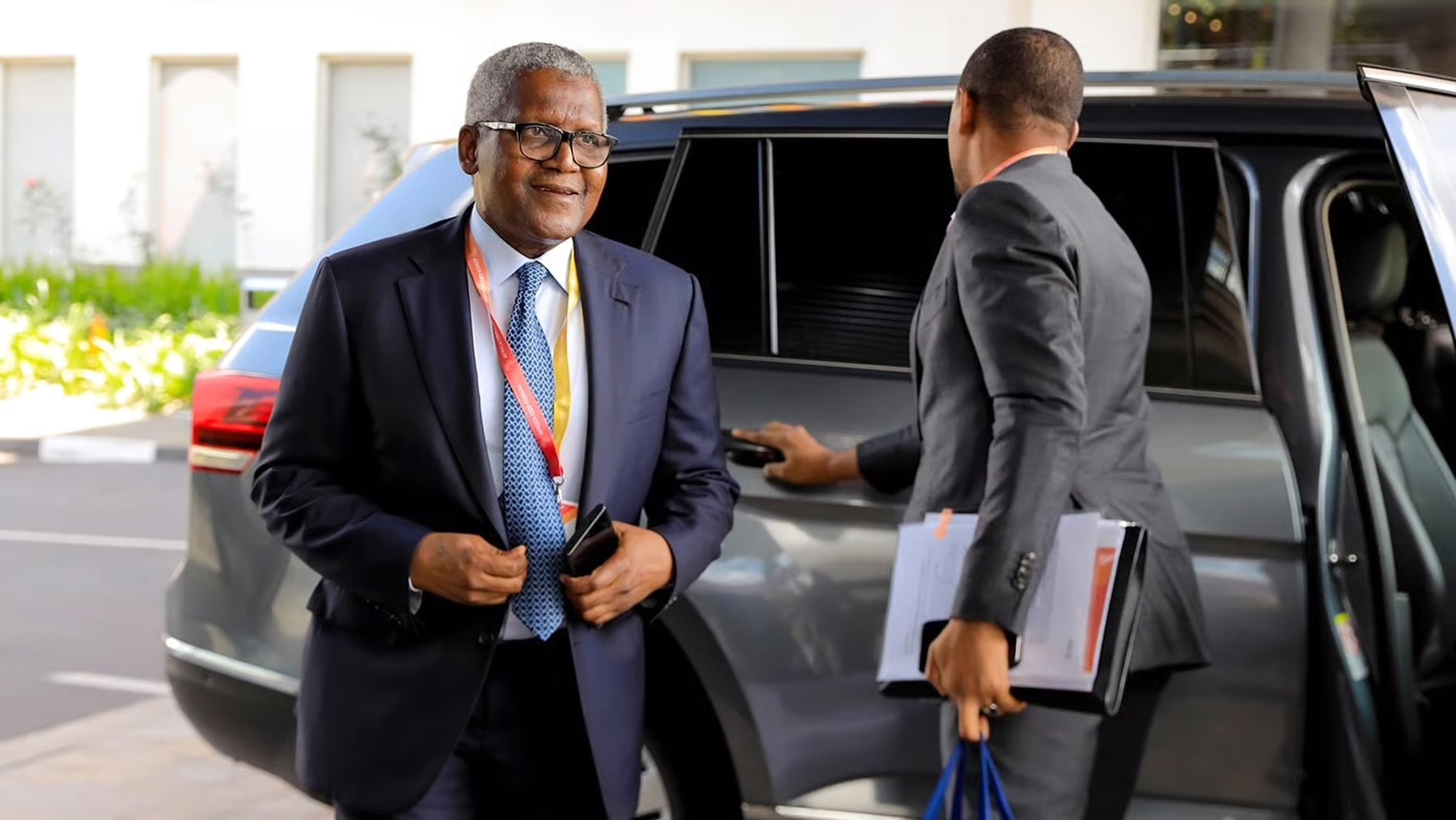
Dangote Petroleum Refinery is accelerating its push to become a regional fuel hub, with new export sales underscoring its growing role in Africa at a time when Middle East tensions and Red Sea disruptions are reshaping traditional product flows to the continent.
On Monday, the refinery announced that traders had successfully sold 12 cargoes, amounting to 456,000 tonnes of refined products, mainly petrol, on a free on-board basis, to international buyers supplying Côte d’Ivoire, Cameroon, Tanzania, Ghana and Togo.
The shipments indicate a new wave of exports following the plant’s ramp-up to its full capacity of 650,000 barrels per day (bpd) in February.
From import-dependent giant to regional fuel exporter
For decades, Nigeria has been one of the world’s largest importers of refined petroleum products despite its crude oil wealth.

Dangote’s facility – Africa’s largest refinery – is changing that situation, both domestically and across the continent.
The $20bn refinery, owned by billionaire Aliko Dangote, has quickly become a major supplier of Euro 5 petrol and diesel to West Africa, a region that has long relied on imports from Europe, the Middle East and India.
In December 2024, Dangote Industries announced it exported petrol to Cameroon, Ghana, Angola and South Africa, among others.
S&P Global Commodity Insights data show that 38.3 million barrels of Dangote’s products reached global markets between January and October 2024, with West Africa accounting for about 38% – or 14.5 million barrels.
“In 2025, the majority of Dangote’s gasoline was sold domestically – consistent with the refinery’s core objective of reducing Nigeria’s dependence on imported fuel,” says Victoria Grabenwöger, crude research analyst at commodity analytics firm Kpler.
“Additional volumes were supplied to other West African markets, including Côte d’Ivoire and Ghana.”
Dangote is on track to more than double its refining capacity to 1.4 million bpd by 2028, a scale that would position the complex among the world’s largest refining centres.
Middle East shocks and a shifting fuel map
The refinery’s export expansion in Africa comes as attacks affecting traffic through the Strait of Hormuz unsettle global refined product trade.
“The Dangote Refinery produces more than enough diesel and gasoil for Nigeria. When it exports, those barrels typically remain in West Africa, but it has exported to other regions as well,” Gary Clark, associate editorial director for EMEA clean refined products at S&P Global Energy, said at a webinar last week.
He notes that West Africa still imports products such as diesel and petrol from Asia, Russia and Europe.
“You have the Dangote Refinery producing more than enough jet fuel and diesel for the region, which is positive from a security-of-supply standpoint,” Clark said. “However, for gasoline, there is an import dependency in West Africa.”
If West Africa needs to supplement Dangote petrol supplies with imports, it will increasingly have to compete with Asia – and potentially the US – for European cargoes, he said.
Clark adds that jet fuel and diesel supply are the most immediately affected by disruptions in the Strait of Hormuz.
‘Refine, baby, refine’
Anibor Kragha, executive secretary of the African Refiners & Distributors Association, tells The Africa Report that Africa’s energy demand is projected to jump by 55%-60% by 2040.
“The bottom line is that 90%-95% of Africans will never see a barrel of crude oil in their lives. But they must use gasoline, diesel and LPG,” he said in an interview in Abuja last month.
“That’s why I say ‘refine, baby, refine’ – because you must add value to the crude.”
He mentions McKinsey data indicating that Africa requires the equivalent of six more Dangote refineries to meet projected demand, while OPEC estimates an additional 3.2 million bpd of capacity is necessary.
“The population is growing rapidly, and that will drive demand. If we don’t have more refining capacity, we’ll have to keep importing and losing foreign exchange,” Kragha says.
He advocates for a mix of strategies, from large regional hubs like the expansion of Senegal’s SAR refinery to smaller, localised solutions for stranded crude.
“The goal is a robust intra-African oil and gas market that guarantees energy security and meets our growing demand for petroleum products,” he adds.
(The Africa Report)
-

 Business4 hours ago
CBN blacklists top loan defaulters
-
News4 hours ago
Power Outage Bites Harder
-
Metro21 hours ago
Woman Who Delivered Quintuplets In Kano Dies
-
Business4 hours ago
32 banks meet recapitalisation requirements before deadline – CBN
-
Politics4 hours ago
APC Convention: FG Shuts Roads, Asks Civil Servants To Work From Home
-
News4 hours ago
Tinubu expands CNG initiative to include electric vehicles
-
News4 hours ago
Zamfara CPG Commander Who Survived Bandits’ Ambush Is Dead
-
News2 hours ago
Nigeria’s heat crisis: Power failure, fuel costs trigger public health, financial crises