Business
Top 9 chokepoints controlling the world’s oil supply

Global oil does not travel freely across open oceans. It passes through a handful of narrow, high-risk routes that shape energy markets, influence prices, and expose supply to disruption.
In the first half of 2025, about 104.4 million barrels of crude oil and petroleum liquids were transported daily. Nearly 80 percent moved by sea, much of it through a small number of strategic chokepoints.
Here are the top 9 chokepoints controlling the world’s oil supply

1. Strait of Malacca — the world’s busiest oil route
Carrying roughly 23.2 million barrels per day, the Strait of Malacca is the single most important maritime route for oil trade. Linking the Indian and Pacific Oceans, it serves as the shortest path between Middle Eastern producers and Asian consumers, particularly in East and Southeast Asia. Any disruption here would force costly and time-consuming detours.
2. Strait of Hormuz — the most sensitive passage
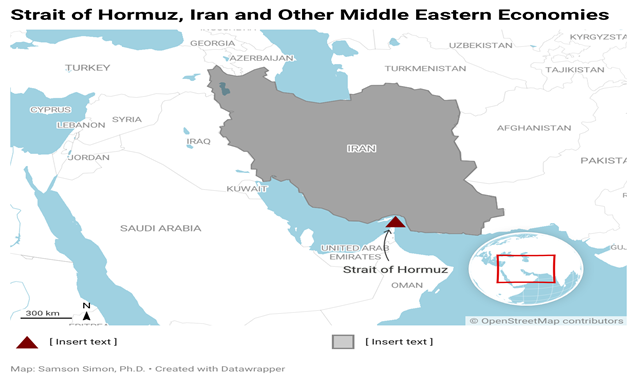
With about 20.9 million barrels passing through daily, the Strait of Hormuz sits at the heart of global energy security. Positioned between Iran and Oman, it connects the Persian Gulf to open seas. Its strategic importance makes it a constant focal point in geopolitical tensions, with even minor instability capable of rattling global markets.
3. Cape of Good Hope — the strategic fallback
Handling around 9.1 million barrels per day, the route around the Cape of Good Hope is less a chokepoint than a fallback option. Ships often divert here when other routes — particularly the Suez Canal — become risky or congested, adding distance but ensuring continuity of supply.
4. Suez Canal and SUMED pipeline — the vital shortcut
Together moving about 4.9 million barrels daily, this corridor provides a direct link between Europe and Asia. The Suez Canal allows tankers to pass between the Mediterranean and the Red Sea, while the SUMED pipeline offers an alternative when ships are too large for the canal.
5. Danish Straits — Northern Europe’s gateway
Also accounting for roughly 4.9 million barrels per day, the Danish Straits connect the Baltic Sea with global markets. They are essential for Russian and Northern European oil exports, making them strategically significant in regional energy flows.
6. Bab el-Mandeb — a fragile but crucial link
Transporting about 4.2 million barrels daily, it connects the Red Sea to the Gulf of Aden, making it essential for trade between Europe and Asia.
7. Turkish Straits — a black sea bottleneck
With about 3.7 million barrels per day flowing through, this passage is critical for oil exports from the Black Sea to international markets.
8. Panama Canal — a smaller but strategic route
Handling around 2.3 million barrels daily, it supports trade between the Atlantic and Pacific, particularly for the Americas.
9. Non-maritime routes — the hidden backbone
Beyond sea routes, about 24.6 million barrels per day move through pipelines, rail, and land systems, offering crucial alternatives to maritime transport.
(BusinessDay)
-

 Business12 hours ago
CBN blacklists top loan defaulters
-
Business12 hours ago
32 banks meet recapitalisation requirements before deadline – CBN
-
News12 hours ago
Tinubu expands CNG initiative to include electric vehicles
-
News12 hours ago
Power Outage Bites Harder
-
Business11 hours ago
Dangote refinery reduces ex-gantry petrol price by N75 to N1,200 per litre
-
News12 hours ago
Zamfara CPG Commander Who Survived Bandits’ Ambush Is Dead
-
Politics12 hours ago
APC Convention: FG Shuts Roads, Asks Civil Servants To Work From Home
-
News11 hours ago
Nigeria’s heat crisis: Power failure, fuel costs trigger public health, financial crises