Politics
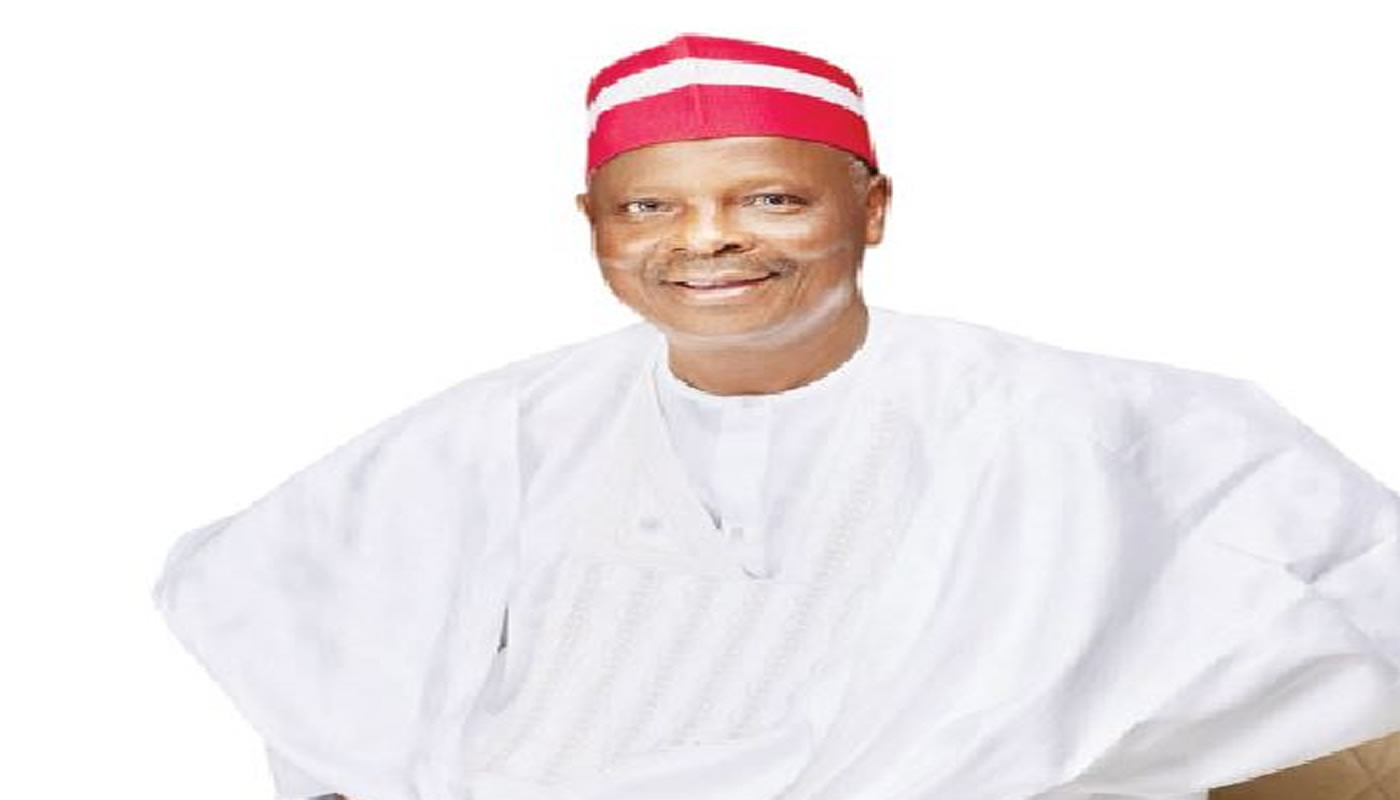
Kwankwaso: ADC gears up for 2027 showdown with Tinubu

As Nigeria inches toward another defining electoral cycle, ADEBAYO FOLORUNSHO-FRANCIS reports that early permutations ahead of the 2027 presidential election are already reshaping the country’s political landscape
At the heart of the unfolding drama is a fresh push by three of the opposition’s most formidable figures—Atiku Abubakar, Peter Obi, and Rabiu Musa Kwankwaso—to close ranks under a common platform and mount what could become the stiffest challenge yet to President Bola Tinubu.
The trio, who ran separately in the 2023 presidential election, collectively secured over 15 million votes but fell short individually, allowing Tinubu to clinch victory in a tightly contested race. Now, under the emerging coalition talks anchored on the African Democratic Congress, there is renewed optimism among opposition stakeholders that a unified front could alter Nigeria’s political trajectory.
But beneath the optimism lies a complex web of competing ambitions, ideological differences, and entrenched political structures that could either make or mar the alliance.

The 2023 presidential election is the basis for the current coalition calculations. The Independent National Electoral Commission declared Tinubu the winner, with a total of 8,794,726 votes. He defeated Atiku, who received 6,984,520 votes, and Obi, who secured 6,101,533 votes. Kwankwaso finished with 1,496,687 votes.
The results, announced by the then-INEC Chairman, Prof. Mahmood Yakubu, in the early hours at the International Collation Centre in Abuja, immediately sparked controversy. Agents of the Peoples Democratic Party, Labour Party, and the New Nigeria Peoples Party rejected the outcome, walking out of the collation process and refusing to sign the result sheets.
Their objections were rooted in allegations of electoral irregularities and claims that the process failed to meet the standards set by the Electoral Act 2022. The opposition insisted that the election be cancelled and a fresh poll conducted.
Despite the protests, Tinubu fulfilled the constitutional requirement of securing at least 25 per cent of votes in two-thirds of the states, underscoring what analysts described as a fragmented but decisive victory.
The voting pattern also exposed deep regional and political divides. Obi dominated in several southern states, particularly in the South-East and parts of the South-South, while Atiku maintained strength in the northern regions. Kwankwaso’s influence was largely concentrated in Kano and its environs, reflecting his grassroots appeal.
For many observers, the outcome highlighted a critical weakness within the opposition—disunity.
This is not the first time these political heavyweights have attempted to align forces. In 2019, Kwankwaso defected from the All Progressives Congress and supported Atiku and Obi, who ran on the PDP platform. That alliance, however, failed to unseat the incumbent at the time.
Fast forward to the present, and the dynamics appear both familiar and altered. Kwankwaso’s reported alignment with Atiku and Obi under the ADC suggests a renewed determination to avoid the pitfalls of vote splitting.
Yet, the question remains: what has fundamentally changed?
In the aftermath of the 2023 election, Tinubu struck a conciliatory tone, extending an olive branch to his opponents. He urged Atiku and Obi to join hands with him in nation-building, stating that while they were rivals during the election, they were never enemies.
“I will serve you; be your servant and not your leader. I will work with you and make Nigeria a great country,” Tinubu said in his acceptance speech at the APC Presidential Campaign Council headquarters in Abuja.
However, the opposition was unmoved.
The Labour Party’s vice-presidential candidate, Yusuf Datti Baba-Ahmed, vowed to challenge the outcome through legal and peaceful means, describing the election as unjust. Similarly, the PDP, through its campaign council spokesman, Senator Dino Melaye, pledged to reclaim what it termed a “stolen mandate”.
Those reactions underscored the deep mistrust that has continued to define post-election politics in Nigeria and now feeds into the coalition narrative ahead of 2027.
Over the last one year, the African Democratic Congress has been positioned as a neutral platform capable of accommodating diverse political interests.
Supporters of the coalition argue that the ADC offers a fresh start, free from the baggage of legacy parties like the PDP and APC. For them, it represents not just a political vehicle but a symbol of a broader movement to “rescue” Nigeria from its current challenges.
A chieftain of the NNPP, Ladipo Johnson, expressed confidence in the coalition’s prospects in an exclusive interview with The PUNCH, arguing that public dissatisfaction with the current administration could work in the opposition’s favour.
“No, I fancy their chances because in 2023, a lot of people who voted for President Bola Tinubu are now disappointed. They voted for promises that haven’t been fulfilled and seen the naira depreciate. They’ve seen inflation increase, and insecurity has increased in the country.
“So more than anything else, it is President Tinubu who would have lost supporters, not Peter Obi, Kwankwaso or Atiku. That is the situation,” he said.
On concerns about whether the trio could genuinely work together, Johnson dismissed doubts as wishful thinking by the ruling party.
“They’ll work together. I don’t know why people feel they won’t work together. I think it is the APC that is hoping that there’ll be some sort of disagreements there. But they are going to work together.”
He also downplayed fears of post-primary fallout within the ADC.
“I think that any issues they have will be settled. I believe that they have decided to come together and make sure that they give the people of the country an alternative platform. And so that will keep the party going even after the primaries.”
Echoing similar optimism, Obi’s former campaign spokesman and National Coordinator of the Obidient Movement Worldwide, Dr Yunusa Tanko, argued that the coalition could surpass the 15 million votes recorded in 2023.
“We are optimistic that if the three of them agree to work together, they could even get more than the combined 15 million votes they got in 2023. With a concerted and concentrated effort, they can get far more considering the level of poverty and hunger in the system,” he said.
Tanko painted a grim picture of the current socio-economic climate, citing rising poverty, unemployment, insecurity, and energy challenges as factors that could galvanise voters.
“The youth are in pain and cannot secure jobs. The electricity situation in this country is at its highest load. So, what indices do we have of the standard of living? It is not ensured in Nigeria. So, this is the kind of accumulated anger that Nigerians should also look at before they cast their vote in 2027,” he noted.
He also questioned the low voter turnout relative to Nigeria’s population, saying, “In a country of over 200 million Nigerians, among which 98 million are registered voters, and probably going to about 100 million. So why settle for 15 out of 98 million potential voters? If comparing the indices that everybody will vote, just like what we have in India, we should be talking about 50 to 60 million.”
Dismissing claims that the opposition figures had lost momentum, Tanko insisted they were becoming more organised.
“They are even getting better organised now, realising the situation that the country needs to be salvaged. It is a serious issue looking at everybody in the face.”
However, not everyone shares the optimism surrounding the proposed alliance.
Political analyst, Dr Alada Mohammed, warned that personal ambitions could undermine the coalition before it gains traction.
“The coming together of the two or three giants may not necessarily be a good omen. In the sense that the way they play politics in Nigeria, what we have is the permanent interest of the individual, not the interest of the party per se,” he said.
According to him, overlapping political bases could also pose a challenge.
“Kwankwaso has a stronghold in the north, likewise Atiku. Peter Obi also commands the votes in the South-East. And they have their different interests to pursue. So, in a situation where they are not able to crystallise their interests, we should not expect anything much.”
He further highlighted the structural advantage enjoyed by incumbents.
“In Nigerian politics, it is not always easy to defeat power. APC has been planning for 2027, manoeuvring its way. All the machinery that should be in the election is under the control of the APC,” Mohammed explained.
He claimed that the battle ahead goes beyond party politics.
“The game we are looking at is not just intra-party politics alone, but inter-party politicking has started. We want to advance our own party and bring down the other party.
“So, there are several obstacles in the way of ADC coming to power or defeating the APC.”
At the core of the coalition strategy is a simple arithmetic: combine the votes of Atiku, Obi, and Kwankwaso, and the opposition stands a stronger chance of victory.
However, political arithmetic in Nigeria is rarely that straightforward.
Voters are not always transferable assets, and alliances do not automatically translate into electoral gains. Ethnic, religious, and regional considerations often play a decisive role in shaping voting behaviour.
Moreover, questions of leadership within the coalition could prove contentious. Who leads the ticket? Who steps down? How are party structures harmonised?
These are issues that have historically derailed similar efforts in Nigeria’s political history.
Beyond allying, sustaining it through party primaries and into the general election presents another layer of complexity.
Political parties in Nigeria are often plagued by internal crises, defections, and litigations, particularly during primary elections.
For the ADC, managing the ambitions of three heavyweight politicians while maintaining party cohesion will be a delicate balancing act.
Yet, supporters argue that the stakes are high enough to compel compromise.
The emerging coalition reflects a broader shift in Nigeria’s political landscape, where traditional party loyalties are increasingly being challenged by issue-based politics and voter dissatisfaction.
The rise of movements like the Obidient Movement has demonstrated the potential of grassroots mobilisation, particularly among young voters.
At the same time, economic challenges and governance concerns are reshaping voter expectations, creating an opening for opposition forces to rebrand and reposition themselves.
As the countdown to 2027 continues, the proposed alliance between Atiku, Obi, and Kwankwaso represents both an opportunity and a test for Nigeria’s opposition.
It is an opportunity to correct the mistakes of the past, present a united front, and offer voters a credible alternative.
But it is also a test of political maturity, strategic thinking, and the ability to subordinate personal ambitions for a common goal.
For now, the coalition remains a work in progress—promising yet uncertain.
Whether it will crystallise into a formidable force capable of unseating an incumbent president remains to be seen.
What is clear, however, is that the battle for 2027 has already begun. (Punch)
-

 African News7 hours ago
‘Maintain low profile’ — FG issues advisory to Nigerians in South Africa after protests over ‘Igbo king coronation’
-
News21 hours ago
Germany did not reject my ambassadorial nomination, says Fani-Kayode
-
Politics7 hours ago
Ex-Kano Deputy Gov Gawuna Resigns From APC, ‘To Meet Kwankwaso’
-
African News21 hours ago
Violence erupts in South Africa over Igbo traditional ruler’s coronation
-
News23 hours ago
Germany rejects Tinubu’s appointment of Femi Fani-Kayode as ambassador over rabid ethnic, religious slurs – Report
-
News6 hours ago
3 Killed, Houses Set Ablaze As Bandits Raid Zamfara Community
-
Politics7 hours ago
CAN petitions Sanwo-Olu over alleged marginalisation of Christians in Surulere politics
-
News6 hours ago
Tinubu Appoints New CAC Chairman, Fills Vacant Positions At Population Commission