Business
Nigeria’s solar boom hits cost wall as China ends export subsidies

…To take effect April 1
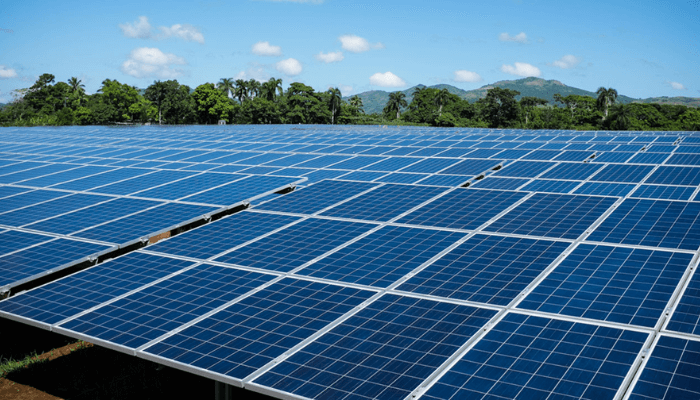
Nigeria’s fast-growing solar power sector is facing a new constraint as China moves to dismantle the export subsidies that once made renewable hardware historically cheap.
For years, developers and households across Africa’s most populous country benefited from a flood of low-cost Chinese solar modules, which underpinned everything from rooftop installations in Lagos to mini-grid projects in the country’s underserved north. Now, that pricing dynamic is shifting.

BusinessDay’s findings showed Beijing will end value-added tax rebates on solar panel exports from April 1, 2026 and gradually phase out incentives for battery manufacturing, a move that analysts say will lift costs across Nigeria and other African countries, where most equipment is imported.
The consequences matter most in Nigeria, where millions suffer some of the world’s most acute power shortages, with several households and businesses running diesel generators at a cost that has long made solar an attractive alternative.
“We are likely to see solar panel prices increase in Africa because most of the inputs come from China,” Wangari Muchiri, an energy analyst focused on the continent’s clean energy sector, told AP news. “Removing the rebate will add to existing costs, especially when you consider shipping, logistics, and other import fees.”
Fierce competition among Chinese manufacturers sent module prices crashing from roughly $0.25 per watt in 2022 to as little as $0.07 per watt in 2025, a collapse that made solar the cheapest source of energy across much of the world but left many producers nursing heavy losses.
Beijing, now trying to drain industrial overcapacity and pivot toward more sophisticated technologies, has pulled back the subsidies that enabled that pricing.
John van Zuylen, chief executive of the Africa Solar Industry Association, said the “entire recent solar boom was built on artificially cheap Chinese pricing.
“That era is now ending,” van Zuylen said.
For Nigerian buyers, the most likely outcome is a slow upward drift in what they pay, not a single dramatic spike that would freeze projects overnight.
“When a structural rebate is removed, exporters typically either absorb the cost, raise prices, or reduce discounting,” van Zuylen said. “African countries will likely feel this as a gradual upward shift in pricing rather than a single dramatic spike.”
Even so, the ripple effects through Africa’s project pipeline could be meaningful. “It will increase project costs slightly and might delay the project construction pipeline due to supply chain shortages and contractual changes, stockpiling rush, congestion in shipment for countries heavily reliant on Chinese imports,” said Sonia Dunlop, chief executive of the Global Solar Council.
Developers who had locked in earlier pricing assumptions may find their numbers no longer add up.
Batteries Present the Harder Problem
If higher panel prices are a manageable headache, the phaseout of battery storage incentives may prove to be a more serious complication.
Storage is what transforms solar from a daytime supplement into something approaching reliable electricity, a distinction that matters enormously across a continent where power demand runs around the clock and grid infrastructure is thin.
“Batteries matter more than panels for Africa because storage is what makes solar reliable for off-grid and backup users,” van Zuylen said.
For most of the history of solar adoption in Nigeria, battery storage was simply too expensive to include in most installations. Systems were built to push power during daylight hours and go dark after sunset. Only recently have the economics of pairing solar with storage started to shift.
“Batteries have historically been expensive, and many solar installations in Africa were built without them,” said Basil Abia, co-founder of Truva Intelligence, a Nigerian energy research firm. “Only recently have we started seeing more systems combining solar with battery storage.”
Implications for Nigeria’s households
For ordinary Nigerians and the small business owners who have quietly built their own workarounds to an unreliable national grid, the China price reset lands at a particularly delicate moment.
Over the past half-decade, the slide in panel prices unlocked solar for a class of Nigerians who had previously been priced out entirely.
Middle-income families in cities like Lagos, Abuja, and Port Harcourt who could not afford the N3 million to N5 million that a decent solar system once cost began to find the numbers workable as prices fell.
Micro-businesses, the hair salon running clippers, the roadside welder, the phone repair shop that needs a screen on all day, made the switch in large numbers, calculating that the upfront cost would pay itself back within two to three years against what they had been spending on generators and petrol.
If battery prices rise as Chinese incentives are withdrawn, the full solar-plus-storage package becomes harder to justify for the household on a tight budget.
Fewer will buy panels and batteries together. The result is a slower transition away from generators, and from the noise, the fumes, and the fuel bills that go with them, a daily reality that Nigerians in every income bracket know with an intimacy that no energy statistic quite captures.
For businesses, the stakes are somewhat different but no less concrete. A manufacturing outfit or cold-storage operator that invested in solar to stabilise its cost base has already locked in its gains.
But the medium-sized enterprise that was building a case to its board for a solar retrofit, pointing to falling prices and short payback periods, now has to update those projections. Approvals that looked straightforward six months ago require a fresh look today.
The policy shift in Beijing is also forcing a longer-term conversation about Africa’s industrial strategy. Nearly all of the solar equipment installed across the continent is imported, almost entirely from China, a dependence that leaves African energy projects exposed to decisions made in Beijing’s ministries and boardrooms.
Despite significant aspirations, local solar manufacturing capacity across Africa remains thin. The combination of weak domestic demand signals, limited access to capital, and the inability to compete with Chinese prices has made it difficult to build industries from the ground up. The removal of Chinese subsidies narrows the pricing gap, but doesn’t close it.
Abia argued that the moment contains an opportunity, even if it arrives with costs attached.
“The VAT removal will slow, but not reverse Africa’s clean energy transition,” he said. “Countries that use this moment to accelerate local manufacturing will emerge stronger. Those that do not will remain exposed to Beijing’s next industrial policy adjustment.” (BusinessDay)
-

 Politics12 hours ago
CAN petitions Sanwo-Olu over alleged marginalisation of Christians in Surulere politics
-
African News12 hours ago
‘Maintain low profile’ — FG issues advisory to Nigerians in South Africa after protests over ‘Igbo king coronation’
-
Politics12 hours ago
Ex-Kano Deputy Gov Gawuna Resigns From APC, ‘To Meet Kwankwaso’
-
News12 hours ago
Military gets N2.3tn special funding amid security crisis
-
Politics12 hours ago
HURIWA asks DSS to arrest Igboho over threats
-
News12 hours ago
Tinubu Appoints New CAC Chairman, Fills Vacant Positions At Population Commission
-
Opinion10 hours ago
Built with public funds, priced beyond the public: Rethinking student housing
-
Politics12 hours ago
Kwankwaso: Our Database Experienced Surge Within 24 Hours – ADC