News
Tinubu misses March deadline as lawmakers extend 2025 capital budget

…Authorities give conflicting signals
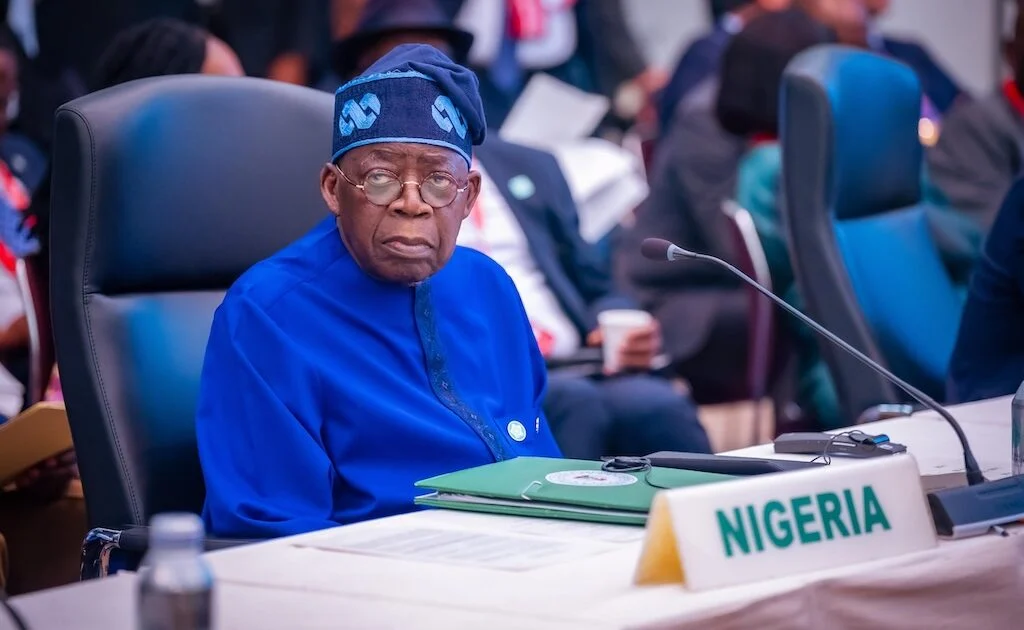
President Bola Tinubu has failed to meet his self-imposed March 31 deadline to end Nigeria’s overlapping fiscal cycles. While the National Assembly passed the 2026 budget on Tuesday, lawmakers simultaneously extended the capital component of the 2025 budget to June 30, effectively preserving the rollover system the presidency sought to eliminate.
The 2026 appropriation bill was approved at 68.3 trillion naira, marking a sharp 9 trillion naira increase over the initial proposal submitted in December. This expansion comes as the government prepares to spend across two distinct fiscal frameworks for at least another quarter.

Tinubu had announced in December that all existing budgets would be concluded by March 31, 2026, in a bid to address inefficiencies associated with running multiple budgets concurrently. However, the extension approved by lawmakers effectively preserves elements of the rollover system the policy sought to eliminate, raising questions about the coherence of the fiscal policy direction.
The National Assembly passed the amendment bill extending the implementation of the 2025 capital budget during plenary on Tuesday, citing the need to allow more time for the release and utilisation of funds allocated to Ministries, Departments and Agencies (MDAs).
Analysts note that operating under multiple budgets creates uncertainty for infrastructure planning, social service delivery, and security funding, while also sending mixed signals to investors monitoring fiscal discipline.
The mixed policy signals have raised concerns among economists and fiscal experts. While the presidency had earlier directed MDAs to conclude all rolled-over spending by the March deadline, other officials adopted a more flexible approach.
Doris Uzoka-Anite, now minister of state for budget and planning, had previously, while serving as minister of state for finance, directed MDAs to roll over 70 percent of their 2025 capital allocations into the 2026 fiscal framework, leaving just 30 percent for implementation before the March deadline—effectively maintaining a rollover system within the transition plan.
Officials at the Budget Office also acknowledged the uncertainty surrounding the timeline. Olajuwon Afolabi, spokesperson for the Budget Office of the Federation, said it was difficult to give a definitive answer on whether the deadline could be met. “I can’t give a yes or no answer to that,” Afolabi said. “But looking at the fact that even the 2026 budget is yet to be passed, we can infer. That’s all I can say for now; the budget is still a work in progress,” he had told BusinessDay.
The President’s directive had been backed by Senate President Godswill Akpabio, who indicated that lawmakers would align with the March 31 timeline. However, delays in legislative processes, including prolonged budget defence sessions and scheduling setbacks, pushed the passage of the 2026 budget beyond the deadline. The Appropriation Committee faced repeated disruptions, including the unavailability of its chairman, Solomon Adeola Olamilekan, who has been occupied with political campaigns in Ogun State.
Economists say the missed target highlights structural weaknesses in Nigeria’s fiscal framework.
Charles Sani noted that while policy direction can be set at the executive level, implementation depends on broader institutional alignment. “The President has the power to make a pronouncement, but the implementation framework is the issue,” Sani said. “If you’re going to make a change, it’s not just going to be by way of fiat; it has to involve discussions with the stakeholders, the Budget Office, and also the legislative arm.”
He added that political considerations could further slow implementation, particularly in a pre-election environment where agencies and lawmakers are incentivised to maximise spending under existing allocations.
“They may not come out very plainly to say we are negating the President, but their body language and the speed at which things are carried out will relax,” he said.
Analysts further warn that unless systemic reforms are implemented, future budget cycles could continue to experience delays, undermining both public service delivery and investor confidence.
Paul Alaje, finance expert and chief economist at SPM Professionals Associates Ltd had told BusinessDay that the sluggish budget defence activities showed that the fiscal calendar remains out of sync.
“By March, the lifespan of 2025 should cease,” Alaje said. “But the process of going to the National Assembly is what we are still witnessing.” He warned that procedural delays continue to undermine budget credibility. “What all of this tells us is that there is no shortcut to processes,” Alaje said. “We cannot be having budget defence in February and March and be expecting that budget to be passed as at when due.”
Concerns are further compounded by weak capital releases as data from the Budget Office shows that out of N18.53 trillion appropriated for capital expenditure in 2025, only about N834.8 billion was released between January and July, representing just 7.72 percent of the expected pro rata benchmark.
Alaje said such gaps between appropriation and actual releases weaken fiscal effectiveness. “If we truly want to have a functional budget cycle, the suggestion would be beyond proclamation,” he said.
“Revenue sources must be clear, the purpose for spending must be clear, and transparency around the budgeting process must be clear.”
Despite assurances from the Office of the Accountant-General that warrants have been issued to MDAs and implementation of part of the 2025 budget will proceed, analysts say the continued rollover of capital spending underscores the difficulty of aligning fiscal policy with execution.
Shamseldeen Ogunjimi, the Accountant-General of the Federation, had assured that the Government Integrated Financial Management Information System had been fully restored and that “warrants have already been issued to MDAs and Treasury House will commence implementation of the 30 per cent component of the 2025 budget by the end of next week.” (BusinessDay)
-

 News24 hours ago
9.2 million Nigerians benefit as FG disburses N688bn
-
Business23 hours ago
Nigeria’s solar boom hits cost wall as China ends export subsidies
-
Opinion23 hours ago
Built with public funds, priced beyond the public: Rethinking student housing
-
Sports2 hours ago
Italy to miss third straight World Cup after shoot-out defeat to Bosnia
-
Business17 hours ago
FCMB Capital Markets tops FMDQ Sponsors’ League Table in 2025 with ₦1.53 trillion in Debt Capital Market Transactions
-
News15 hours ago
BREAKING: Senate approves Tinubu’s $6bn loan request
-
News15 hours ago
Fresh Killings: We’re Acquiring Weapons To Smash Criminals, Says Tinubu
-
News1 hour ago
Tinubu Moves For New Loans, Debt To Hit N195trn