Business
Food price surge dampens Easter mood for Nigerians

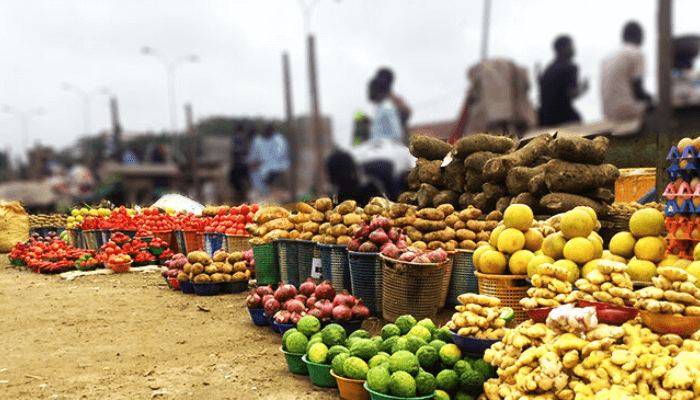
Rising transportation and production costs are tightening the grip on supply chains, sending food prices soaring just as Nigerian households prepare for the Easter festivities.
What was meant to be a season of celebration has become a lesson in budgeting, as a recent BusinessDay market survey reveals that many families are aggressively scaling back their spending to cope with the eroding value of their income.
In Lagos’ Mile 12 Market, the price hikes are steep. The “Easter basket” is looking significantly lighter this year as essential ingredients reach record highs.
A big basket of tomatoes in Mile 12 Market of Lagos has risen by 46 percent to an average of N60,000, up from roughly N41,000 in early March. Similarly, prices of a bag of fresh pepper have risen by 74 percent to N80,000 from an average of 46,000 in early March.

A 50kg bag of rice currently sells for around N61,000, up from an average of N56,000 in January. The price, however, depends on brand and grain size. While a carton of ‘orobo’ chicken is now sold for N54,000, compared to N50,000 weeks ago.
The sharp rise in food prices within weeks is driven by higher fuel costs, which have pushed up transportation expenses amid escalating tensions between the United States and Iran.
Victoria Ada, a retired Lagos school teacher, told BusinessDay that the irregular rise in food prices is taking a toll on struggling Nigerians who are only trying to survive.
“Every day you go to the market, food prices have risen. One cannot adequately plan with a fixed income,” she said.
“Two weeks ago, I bought a kilo of frozen chicken for N5,500; today it is N6,000. How can I budget or celebrate Easter with my family if I’m not even sure of what prices will be by the weekend?”
Interviews polled by BusinessDay point to the same reaction: many Nigerians are indifferent about Easter, except for the work break that comes with it.
For Oluwaseun Okiki, a shop manager, Easter marks a season of celebration, but a low purchasing power is affecting his sales.
“Usually by this time, people would have started buying drinks against the weekend when Easter is celebrated, but so far, that is not the case. Sales are still like nothing is happening,” Okiki said.
The price pressure is highly influenced by heightened tensions around the Strait of Hormuz that have disrupted global oil flows, pushing up crude prices. Across the world, this development has dire consequences. Oil prices have jumped to their highest levels since 2022, and in Nigeria, fuel prices now range around N1,300 per litre.
Mummy Amoke, a frozen food trader in Lagos, said energy costs are eating into her profits, forcing her to pass on the costs to her customers. She said that the surge in food prices is not the fault of traders but market forces.
“I cannot even buy turkey from the market because the price is so high. A carton ranges around N100,000. How do I sell and make profits at the same time?” she said.
Reverse in food inflation
At the beginning of the year, food prices across Nigeria were affordable. The National Bureau of Statistics (NBS) data showed a consistent stability in food inflation across both urban and rural communities.
Food inflation also dropped to a single digit of 8.89 percent in January, the first single-digit figure since May 2015.
However, since the US-Iran war began in February 2026, prices of food have peaked, and food inflation has reversed from single-digit wins, rising to 12.12 percent in February 2026.
What fuel rise means for food prices
Whenever fuel prices rise in Africa’s most populous nation, food prices also rise. This is because petrol-reliant vehicles are used to ferry agricultural products from rural areas to townships and state markets. And truck drivers often raise their fares each time petrol prices rise.
“The impact of logistics for every bag of produce coming from the North that you buy in Lagos is about 15 percent. However, with mechanised farming in the South, we can boost production and produce jobs,” Ayodeji Balogun, Group chief executive officer at AFEX, said at a recent BusinessDay conference.
As transport costs rise and purchasing power falls, many households are scaling back from their usual celebratory Easter traditions, turning what is typically a festive season into an indifferent one. (BusinessDay)
-

 Politics18 hours ago
‘I’ve never stolen government money’ — Dino Melaye reveals how he became rich
-
Metro18 hours ago
Builders unearth €9m gold loot sealed in walls of Belgian property
-
Business18 hours ago
NUPRC moves to introduce domestic crude, gas swap arrangement
-
News8 hours ago
Lakurawa terrorists kill four soldiers in Sokoto
-
Politics21 hours ago
BREAKING: Atiku sues Tinubu over ‘NYSC certificate forgery’, seeks disqualification from 2027 election
-
News18 hours ago
Abiodun completes 108-unit Buhari estate in Ogun
-
Politics9 hours ago
Osun poll: APC, Accord wage N20,000-per-vote war
-
Sports8 hours ago
Gala reject £111m, insist Osimhen not for sale