News
Funding Without Flow: Water Crisis Deepens Across States

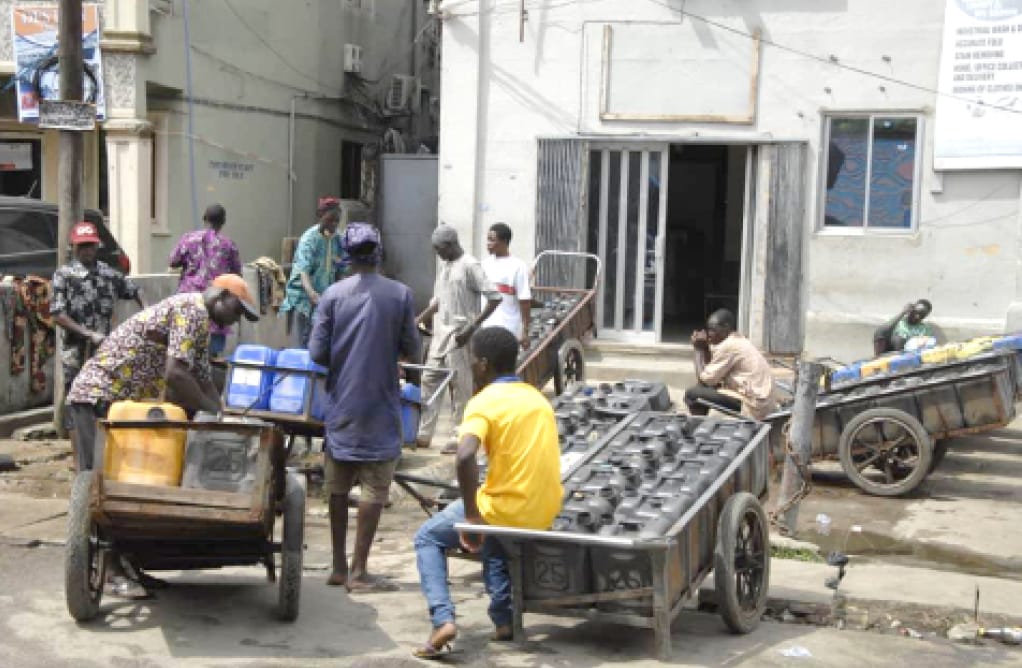
Access to clean potable water remains elusive for millions of homes across Nigeria that are either unconnected to public water service or endure dry taps, despite billions of naira that state governments claimed to have spent on water infrastructure over the years.
The sad trend has not only forced most people to fork out additional expenses from their meager incomes to buy water from vendors, but has also plunged many others, especially those in rural communities, into avoidable health crises.
From cholera, diarrhoea to typhoid fever, water-borne diseases have been the lots of thousands of households, who have to settle for unsafe water sources for drinking and domestic use, with at least 4,778 lives lost to cholera between 2020 and 2024, according to the Nigeria Centre for Disease Control and Prevention (NCDC), while over 300 deaths had been recorded as of October 2025.
A 2022 World Bank report indicates that approximately 70 million Nigerians lack access to basic drinking water, while 114 million lack basic sanitation, a crisis driven by failing infrastructure, as piped water access dropped from 36% in 1990 to 11% in 2021.

A similar report by The United Nations Children’s Fund (UNICEF) says 70% of water is contaminated at the point of consumption, with 117,000 children – the highest globally – dying in Nigeria every year from water-related illnesses.
Daily Trust reports that the reality of the public water system in many states considerably falls short of the theme of this year’s World Water Day, tagged ‘Water for People and Progress,’ marked on March 22.
Findings from major states across the six geopolitical and the Federal Capital Territory, Abuja, revealed that despite billions of naira budgeted for the water sector and grants from developmental partners such as the World Bank, most residents lack access to safe drinkable water.
Aside from budgets, other funds include a $700 million World Bank loan secured by the Federal Government under the late former President Muhammadu Buhari administration to provide water, sanitation and hygiene (WASH) facilities across the states.
Persistent water scarcity worries Kano residents
Kano State’s daily water demand is estimated at about 700 million litres, but current supply is far below this level due to aging infrastructure and inactive plants. Out of roughly 22 treatment plants, only a few ones are active, including the recently reactivated 95‑year‑old Challawa plant. In its 2026 budget, the state allocated N40.2 billion to the water sector, but Daily Trust could not ascertain details of the allocation.
Musbahu Sani, a resident of Masallacin Habibu Gwarzo in Hotoro, Nassarawa Local Government Area of the state, said for 15 years he has been living in the area without water supply.
Sani, however, said the NNPC Depot side of Hotoro is enjoying water supply from the Tamburawa treatment plant, adding that residents in the other part rely on borehole water.
“In the last 15 years in the Hotoro part where I live, we have not seen a drop of water from the public supply. Our only consolation is that people have installed solar-powered boreholes, which usually supply the neighbourhood. We only hear about the buried pipes and the purchase of water pumping machines, but no water supply here,” he said.
Ado Fela, who lives in the Gama area of Nasarawa LGA, said he spends an average of N1,200 daily to buy water from vendors.
“We rely on Mairuwas (water vendors) who sell a jerry can for between N70 and N100 and I spend an average N1,200 daily for consumption, bath, cleaning and other domestic uses. Water scarcity has been persistent and residents have learned to live with this problem in this part of Kano,” Fela lamented.
Awwalu Fagge, who lives in Ja’in Quarters, said despite its closeness to the Challawa treatment plant, the neighbourhood only gets water when there is electricity.
Another resident, Yushau Abbas, lamented that successive governments had failed to construct new water treatment plants apart from the existing Challawa and Tamburawa plants. He said the persistent water scarcity in the state is worrisome, urging the state government to prioritise water provision to ease the hardship people face.
Governor Abba Kabir Yusuf had, while reviewing the performance of the 2025 budget, said investment in the water sector was aimed at addressing the long-standing challenges of water scarcity and expanding infrastructure to underserved rural communities.

Water scarcity bites harder in Borno
Maiduguri residents say they experience severe water shortages, which cause serious hardship, particularly during high temperatures, with many relying on expensive water vendors or privately-owned boreholes by the affluent members of society.
Daily Trust reports that Governor Babagana Umara Zulum had previously launched a coordinated response to address the acute water scarcity affecting parts of Maiduguri metropolis and its environs.
The governor had approved the rehabilitation, upgrade, and construction of boreholes across various locations in the metropolis, and the conversion of 48 lower aquifer boreholes to hybrid energy systems and the construction of 50 new upper aquifer boreholes.
Also, in the 2026 approved budget, the sum of N21,353,536,000 was allocated to the state’s Ministry of Water Resources.
But our correspondent, who went round parts of the Maiduguri metropolis, reports that only some areas within the metropolis are connected to the Maiduguri Water Treatment Plant.
It was gathered that a few areas like the old GRA, Shehuri North/South, Wulari, 202 and 203, Meri, Simari, Bomari, Gwange and areas around the University of Maiduguri, are connected to the water treatment plant, where they pay a paltry sum of N300 as a monthly bill to the water corporation.
The worst-hit areas include 1000 Housing Estate, newly commissioned Mai Mala Buni Estate and other newly developed areas near the Njimtilo axis along the Damaturu Road, as well as other parts of Maiduguri metropolis.
Residents of the affected areas said they spent huge amounts on a daily basis to get water for their household needs.
A resident of one of the newly developed areas, Muhammad Bashir Bukar, said he spent about N21,000 monthly on water alone, supplied by the private water vendors, popularly called “Moya.”
“Whenever there is a blackout, the vendors jack up the price, sometimes up to N2000, depending on the location,” he added.
A resident of 1000 Estate, Modu Zanna, also said households in the neighbourhood depend on water vendors to get water for domestic usage.
He said that drilling a borehole in the area would cost between N3 million and N5 million, depending on the depth and whether the drilling is manual or machine-based.
An expert in water engineering, Engr. Ibrahim Mohammed said about one million people are living around the Njimtilo axis alone, “which means they require at least 1,000,000 gallons of water daily, but few places get access to water from the Borno State Water Corporation.”
90% of Lagos population lack access to public water
In Lagos, a city surrounded by water, millions of residents struggle daily to have access to potable water. The state battles an intractable water crisis with no end in sight.
Findings showed that daily water demand in Lagos State is estimated at 720 million gallons per day (MGD), with only 10% of its population having access to public water supply. This leaves millions of residents to fend for themselves.
A WASH report revealed that the water crisis cut across low, medium, and high-density areas in Lagos State. However, the impact is more felt in high-density areas such as Ojota, Ketu, Oworonshoki, Gbagada, Isheri, Omole Phase 1, Magodo, Opebi, Oregun, Alausa, Allen, Awolowo Way, MKO Garden, Orile, Ajegunle, and Ikoyi.
Other areas facing a potable water crisis include Makoko, Ikorodu, Alapere, Agboyi-Ketu, Ajeromi-Ifelodun, Ajegunle, and Agege, with residents forced to depend on non-public water sources such as boreholes, wells, and water vendors, whose supplies come at high costs, of low quality, and unregulated services.
Many residents who spoke on the crisis said prolonged water shortages had been affecting their daily lives. Some of them highlighted the health risks associated with unsafe water, especially during the rainy period.
At Agboyi-Ketu Local Council Development Area (LCDA), residents said many households rely on alternatives like private boreholes, wells, water vendors, and sachet water due to unreliable public water supply. They described the options as costly and sometimes unsafe.
“We rely mostly on buying water from vendors and sachet water for drinking. It is expensive, and not everyone can afford it daily. Sometimes, we even resort to well water, which is not always clean,” a resident, Mrs. Funke Adeyemi, said.
Also in Somolu and neighbouring communities, residents expressed frustration over what they described as persistent difficulties in accessing safe and affordable water.
The concerns were raised penultimate Thursday during a community outreach organised in Somolu LGA by civil society groups and water justice activists under the Africa Water Justice Network, as part of activities to mark this World Water Day.
A statement by the Help Initiative for Social Justice and Humanitarian Development in Nigeria quoted residents to have decried reliance on water vendors, often at high financial cost.
Participants were also quoted to have explained that while some households had resorted to digging boreholes, the water is often saline and causes skin irritation, forcing residents to supplement with sachet and bottled water.
Meanwhile, The Commissioner for Environment and Water Resources, Tokunbo Wahab, recently hinted that the state was exploring strategic partnerships to bridge the state’s water supply gap, enhance public access to clean and safe water, and reduce overreliance on private boreholes and wells.
He disclosed this in a statement shared on X to commemorate World Water Day, a global initiative established by the United Nations to raise awareness about the vital role of freshwater in sustaining life.
“In Lagos, we’re taking steps to improve water supply. We’re rehabilitating waterworks, investing in new infrastructure, and exploring partnerships to bring in expertise and funding. Our goal is to ensure all homes have access to clean water by 2027.
“We’re working to reduce dependence on boreholes and wells and promote water conservation. Let’s join forces to make a change. Every drop counts,” Wahab added.
At a recent event organised by WaterAid Nigeria in collaboration with the state government, the Head of Strategy and Transformation at Lagos Water Corporation, Mrs. Titilola Oridami-Bright, promised that the rehabilitation of the Ojokoro Waterworks would provide clean water to approximately 72,000 customers.
“Lagos, with over 22 million residents, faces significant water supply gaps, with only about 10 per cent currently accessing municipal water services. This project will expand equitable water access through infrastructure rehabilitation and network expansion,” she said.
Rivers fails to provide residents’ water need
Residents of Port Harcourt and other towns in Rivers State are grappling with a shortage of water due to the failure of the state government to provide residents with a public water supply.
Most residents of Port Harcourt, the state capital, solely depend on vendors and boreholes for a daily supply of water.
Successive governments in the state have been making efforts to ensure public power supply in the state and revamp some moribund State Water Corporation facilities to no avail.
Daily Trust gathered that Rivers face the water crisis some other Niger Delta states experience, as most of the lands for drilling water are polluted, requiring the commitment of the government to supply water to its citizens. Governor Siminalayi Fubara has not presented the 2026 budget due to the lingering political crisis in the state.
Rivers State, with an estimated population of 9 million, needs over 500 million gallons of water a day, which the government could barely supply. The areas worst-hit by water challenges include Rumokoro, Rumuola, Eagle Island, Borokiri Sandfill, GRA, Elelenwo, Rumuokwurushi and Trans Amadi areas – all of which have non-functioning water stations.
A resident of Rumokoro community, Tonye Victor, said a gallon of water from vendors goes for between N100 and N120.
He said, “Because of this water challenge, landlords who can drill boreholes in their compounds hike rent that low-income earners are not able to afford.
“Like what was attainable before, there were water companies that used to give water to every compound, but due to construction works, most of their pipes were destroyed and people now resort to providing water for themselves.”
Governor Siminalayi Fubara, during the celebration of World Water Day recently, promised that his administration was committed to upgrading water infrastructure, increasing access points, and promoting sustainable management of water to give the residents of the state clean and potable water.
Niger residents share dam with animals
In Niger State, despite billions of naira budgeted annually for the water sector, residents say access to clean and affordable water remains a daily struggle. The situation is worsened by unsafe water sources and rising costs.
Governor Mohammed Umaru Bago allocated the sum of N72,057,146,523.69 in the 2026 budget to improve water supply across the state, saying the investment would focus on guaranteeing consistent access to clean potable water for both rural and urban communities.
But despite the government’s repeated promises, residents of Minna and other major towns, including Suleja, said they continue to grapple with water scarcity.
Ibrahim Mohammed, a resident of 123 Quarters, Minna, the state capital, told Daily Trust that his area got water from the state water board only four times in the past nine months. He said he buys five carts of 10 jerry cans of water every week at the cost of N2,000 each.
“The last one was on February 18, 2026, the day we commenced Ramadan fasting. Due to the rising cost of water and its necessity, I have cut down on some things to meet the daily water demand,” he added.
At the heart of El-Waziri, Bosso area, is a dam that serves more than 10 communities as the primary source of drinking water. However, the water source is exposed to contamination, as animals drink from the dam while residents engage in open defecation around the surrounding mountains.
A community leader, Mallam Mahmuda Haruna, who monitors the dam, said, “I volunteer to supervise the dam for our own health. I even control animals from entering the water. With time now, the dam will dry up. When it does, we start digging the ground to get water.”
During the dry season, many wells dry up, while commercial borehole operators are unable to pump water regularly due to the epileptic power supply.
Meanwhile, the Niger State Water and Sewage Corporation has consistently linked the water scarcity, especially in Minna to vandalisation of water pumping facilities in Minna, describing it as a major setback to efforts aimed at improving water supply.
On February 28, Governor Mohammed Umaru Bago admitted that water scarcity, especially in Minna was as a result of infrastructural decay in the water board and the, increasing population of the city from the initial 150,000 people to the current 1 million people.
The governor also admitted that major reservoirs at Police Secondary School, Paida and Shiroro Hotel had not received “a drop of water” for over a decade due to infrastructural decay.
He said the plan was to change all the pipelines in Minna, desilt the Tagwai dam and create more reservoirs while in the interim deploy water tankers to distribute water to people. He added that the government was also collaborating with the World Bank to drill boreholes in communities.
Water crisis worsens in FCT
The acute water shortage hitting Nigeria’s capital since the onset of the dry season is biting harder. Our correspondents report that the worst-affected areas include the Maitama, Asokoro, Life Camp, Wuye and Jahi districts.
The situation is equally dire in suburbs such as Jiwa, Gwagwa, and Idu, as well as parts of the Abaji, Bwari, Gwagwalada, and Kuje area councils, forcing residents to rely on vendors.
Daily Trust found that public institutions within the Abuja city centre—including foreign embassies, schools, churches, and mosques—which previously enjoyed a daily supply from the FCT Water Board, have also been without water for days.
In local communities across virtually all area councils, the situation is worrisome. Residents say they trek long distances to fetch water from streams, many of which are already drying up.
Residents of Gwagwa, Idu, and Jiwa in the Abuja Municipal Area Council (AMAC) told our reporters they are forced to trek to dry streambeds to source water for household use. They lamented that taps in their homes have dried up for over two weeks, compelling them to find expensive alternatives.
In the city centre, Maitama, a resident, Ishaq Ibrahim, said, a cart of 10 20-litre jerry cans, previously sold for N800, now costs N2,000.
“The situation is terrible,” said Mrs. Ganiyat AbdulRasaq of Gwarinpa. “Some households now spend close to N5,000 a day on water. That totals nearly N150,000 a month. How much is our salary?”
A management staff member at the FCT Water Board, who spoke on condition of anonymity, revealed that a shortage of treatment chemicals has hindered supply at the Usuma Dam treatment plant.
Also, sources within the board stated that the government has failed to dredge the Usuma Dam for years.
Meanwhile, the FCT Minister, Nyesom Wike, has promised to expand the water network to satellite towns to guarantee access. During a recent visit to Gwagwalada, the minister directed the expansion of the network to Zuba, noting that ongoing projects in Bwari and Karu would be extended to other councils by 2027. (Daily trust)
-

 News21 hours ago
Vehicles Destroyed As CNG Bus Explodes At Kaduna Park
-
News21 hours ago
BREAKING: Tinubu Approves N3.3trn Plan To Tackle Electricity Crisis
-
Politics21 hours ago
ADC Dismisses David Mark’s Resignation Rumour
-
News21 hours ago
Troops Deal Major Blow To Bandits, Kill Warlord’s Son, Key Commanders
-
Politics13 hours ago
INEC puts voters revalidation plan on hold
-
News18 hours ago
Suspected herders kill 17 in attack on Benue community
-
News21 hours ago
Easter: Hardship Can’t Last Forever – Shettima Tells Nigerians
-
Politics8 hours ago
Oyo 2027: Makinde moves to name successor