News
Katsina Residents Abandon Roads Over Attacks

The resurgence of bandit attacks across Katsina State has forced residents and motorists to abandon several major routes, heightening fears that the much-celebrated local peace deals may have collapsed.
Findings show that from communities in the Dandume axis to villages along Danmusa and the Kankara–Funtua corridor, incidents of bandit invasions, abductions, cattle rustling, and displacement have surged in recent weeks.
The wave of violence, often carried out by armed men on motorcycles during late-night and daytime raids, has reversed the brief period of calm previously enjoyed in parts of the state long plagued by banditry.
The worsening situation has not only heightened insecurity but also disrupted movement, with many roads now considered unsafe for travel and dangerous for motorists.

Motorists abandon risky routes
With the recent renewed attacks, motorists have begun avoiding key highways linking Katsina to neighbouring states such as Kaduna, Zamfara, Sokoto, and other places.
Many now resort to longer and more expensive alternative routes to stay safe for fear of encountering the menace of the attackers.
A commercial driver, Aminu Babangida, said he has stopped using the Katsina to Jibia road when travelling to Zamfara State due to the renewed attacks after the peace deal, opting instead for a detour through Funtua, which adds about 250 kilometres to his journey.
“With the renewed attacks, travelling has become extremely risky, as one can never predict when or where they will strike next. Though it is not easy, we have no option but to take longer routes, which are more expensive, especially given the current fuel prices,” he said.
Similarly, travellers moving between Katsina and Funtua have abandoned major routes through Dutsinma to Kankara and Matazu to Musawa, now relying largely on the Gidan Mutum Daya axis.
They also said the route has become unsafe recently.
Malam Mustapha Shu’aibu, another commercial driver, said two days ago, they received information warning travellers along the Gidan Mutumi Daya road to be cautious after bandits were spotted in the area.
“I had to delay my trip after we received reports that the road was unsafe, as a group of bandits on motorcycles had been sighted along the Gidan Mutumi Daya–Funtua route. We waited for about an hour before getting clearance that they had left. We haven’t experienced this for months, but I fear it may be returning,” he said.
Some roads, including the Jibia–Kauran Namoda route and parts of the Kankara axis, are now widely considered unsafe, restricting movement and economic activities in the affected areas.
Economic and social impact
Residents said the development has dealt a heavy blow to local economies. Rising transport costs, disrupted trade routes, and fear of attacks have forced many traders to scale down operations or abandon their businesses entirely in affected areas.
Isa Usman Dagi, a textile merchant, said his business involves travelling across markets to display his goods, but he has now limited his movements to safer locations, a decision he said has significantly hurt his earnings.
“I used to spend days moving from one market to another, making good sales, but I have had to restrict my movement to safer areas, and that has affected my business negatively,” he said.
Farmers are also among the worst hit. Many who had returned to their farmlands during the period of relative peace are once again retreating, raising concerns over food production and livelihoods.
A farmer in Kankara said he cultivated his farm peacefully last rainy season and made significant investments to expand this year, only for the renewed attacks to disrupt his plans, leaving him in a dilemma.
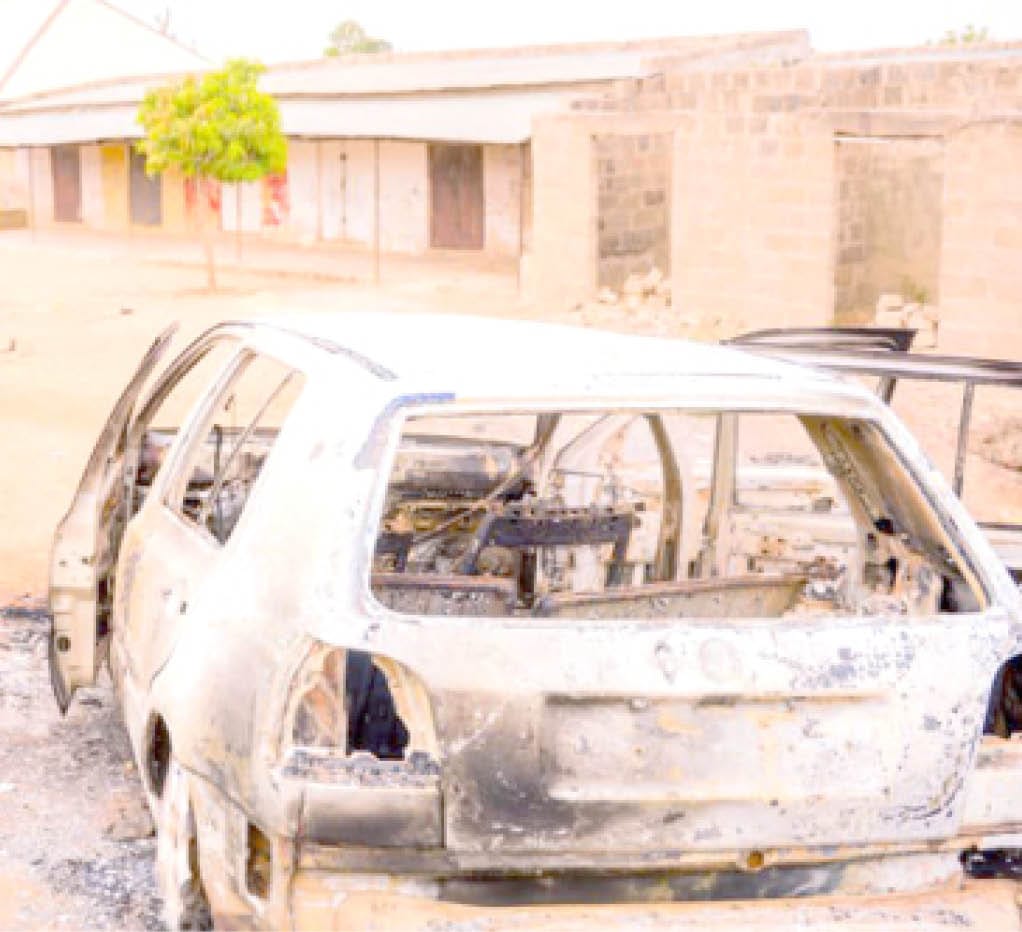
Recent incidents have highlighted the fragile nature of existing peace arrangements. In Sayaya village, Matazu Local Government Area, bandits reportedly attacked a police station, killed an officer, looted a primary healthcare centre, and carted away goods from shops.
Such attacks have raised concerns about the effectiveness of informal peace deals previously brokered between some communities and armed groups.
While these arrangements—often involving negotiations and concessions—brought temporary relief in some areas over the past year, security sources said many bandit factions either refused to participate or later violated the agreements.
For many residents, the renewed violence has shattered hopes of lasting peace. Some describe a pattern of retaliatory attacks and growing mistrust.
A resident of Matazu, Malam Lawal Yakubu, recounted how bandits rustled cattle in one area and returned days later to launch another raid, suggesting a cycle of violence.
“I am afraid that these recent events have left communities trapped between armed groups and fragile agreements that no longer guarantee safety,” he said.
The African Democratic Congress (ADC) in Katsina State has raised concerns over worsening insecurity, describing the renewed attacks as alarming and unacceptable.
The party’s state chairman, Lawal Tukur-Batagarawa, said the resurgence of violence, particularly in Matazu and Musawa, highlights the limitations of existing security strategies and the vulnerability of rural communities.
In response to the escalating crisis, Governor Dikko Umaru Radda convened an emergency Security Council meeting at the Government House in Katsina.
The meeting brought together heads of security agencies, local government chairmen, and key stakeholders to assess the situation and develop immediate measures.
Although details of the deliberations were not disclosed, the move underscores growing concern at the highest levels of government.
Security experts say the situation reflects a familiar pattern, where temporary calm achieved through negotiations or military action is often followed by renewed violence once such measures weaken.
Kano-based security analyst Ahmad Muhammad Gaya warned that without strong enforcement and sustained strategies, peace deals could embolden armed groups rather than deter them.
He stressed the need for a comprehensive approach combining military operations, intelligence gathering, community engagement, and long-term socio-economic interventions.
As attacks persist and roads remain deserted, many residents fear that the peace deals that once offered hope may have collapsed.
For now, fear has returned to many parts of Katsina, along with growing uncertainty about what lies ahead.(daily trust)
-

 News11 hours ago
Bandits Abduct Couple On Farm In Kaduna
-
Sports11 hours ago
FIFA Clears Wrexham Goalkeeper Okonkwo To Represent Nigeria
-
Politics11 hours ago
Rice, Spaghetti Won’t Save You In 2027 – Atiku Tells Tinubu
-
 Politics11 hours ago
Your Actions Bad For Nigeria’s Democracy – Kwankwaso Tells Nafiu Bala
-
News11 hours ago
Army Dismisses Claims Of Discharged Soldier, Reaffirms Troops’ Safety, Welfare
-
News11 hours ago
Residents Flee As Bandits Kill 3, Injure Others In Niger
-
Metro11 hours ago
US-based Nigerian faces five-year jail over $5m money laundering
-
Metro11 hours ago
Bandits Kill Abuja Bizman, Daughter Despite N12m Ransom Payment