Metro
EndSARS: I spent six years in Kirikiri over false firearms charge — Lagos tailor

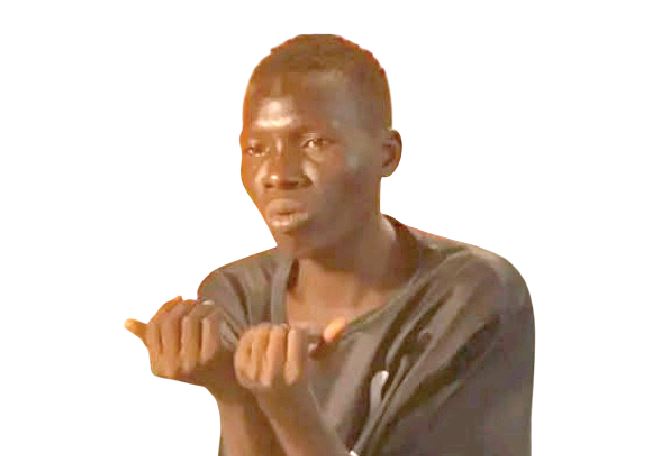
Rasheed Wasiu was arrested at the age of 17 during the 2020 #EndSARS nationwide protests. He spent six years in detention before finally regaining his freedom. Now 23, he recounts to AYOOLA OLASUPO his traumatic prison experience, and how resilience and hope for freedom defined his days in confinement
You were arrested during the #EndSARS protests. What work were you doing at the time?
As of 2020, when I was arrested, I was 17 and working as a tailor. I’m presently 23 years old.
Can you describe how you were arrested?

My friend and I were heading to our workplace to help someone repaint his house. He usually assisted a painter with such jobs, and I often went along with him, so that whatever he earned, he would share with me.
When we got to Amukoko in Lagos State, we saw some soldiers because the #EndSARS protests were ongoing. We called a friend, who told us there was no way for us to pass, so we had to return home.
When I returned home, my mum warned me not to go out again because of the protest. I was standing with other neighbours outside our compound in Zumura, Ajegunle, when two men in plain clothes came and arrested me. My mum begged them, but they ignored her. They took me to Signal Barracks at Mile 2.
What happened when you got to Signal Barracks?
I was detained for two weeks in their guardroom. The first day, my mum was allowed to visit, and she brought food for me. The next time she came, she was embarrassed and chased away. That was the last time I saw her. They said she could no longer bring food because they were supposedly feeding us, though the conditions were terrible.
Though they were feeding us, the food was terrible. The eba was always watery, and after eating, we were often beaten with belts. This continued until we were transferred to Panti, (Police Criminal Investigation Department, Yaba) where I spent two months. By the third month, we were taken to Kirikiri Prison.
Were you told why you were arrested and detained?
They didn’t tell me anything at the time. All they said was, “Shebi eyin le n ja fun EndSARS?” meaning, “So, you people are the ones fighting for EndSARS?” Later, I found out that they had written “unlawful possession of firearms” in my report. I was grouped with a few others I didn’t know, and the same charge was filed against about four of us.
Before your arrest, did you join the protesters?
As I said, I was just standing outside our house when the men came, falsely claiming I was among the protesters. That day, many people were arrested, including others who were simply returning from work.
Can you describe your experience at Kirikiri Prison?
It was extremely tough. There was no money to spend. Before my arrest, I could spend N2,000 in a day, but while in prison, N1,000 could last for three days. I learned how to manage. My faith was also strengthened as a Muslim, and I even learned some Christian songs. I learnt perseverance and contentment. On days I had nothing to sustain me, I never resorted to stealing. I trusted that by God’s grace, things might improve the next day.
What were the conditions like?
Life was harsh in Kirikiri. I started gaining weight after regaining freedom. The hygiene and living conditions were terrible. Some inmates tried to commit suicide, some became drug addicts, and many others lost their mental stability. I am grateful to have been released.
Can you describe a typical day?
We were woken around 5 am to sweep the area where we performed solat (Muslim prayers). We pray until 6 am. The Christian inmates would then carry out their morning devotion. After prayers, everyone would return to their cells. Warders would then collect our plates for breakfast, which was usually poorly prepared rice and beans or bean porridge that often contained stones.
Lunch consisted of watery eba with a bland soup, and dinner was a single milk cup of garri per person. We were locked inside from 4 pm until the following morning. Between 9 am and 4 pm, some inmates were tasked with fetching water, while I would lie down, reflecting on my life and hoping for freedom.
How many years did you spend in prison?
I spent six years, from 2020 until 2026.
What was the most difficult moment?
I survived by helping some inmates to sell their wares to earn between N500 and N1,000. The difficult aspect was the lack of freedom to act at our own will because everything had a strict schedule.
Did you form any relationships with other detainees?
Not really. I often walked alone, thinking about my life and future. Some inmates’ families thought they were missing or dead, without knowing they were in prison. My prison experience made me realise how many hidden struggles exist.
Were you able to contact family members?
No. My dad passed on in 2010, and after the warders stopped my mum from visiting, I never saw or heard from her again.
Did you ever fear you’d never regain freedom?
Yes. I only went to court once in 2025. I prayed every day, following both Islamic and Christian practices. When I was finally told I would attend court on March 4, 2026, I was surprised and overjoyed.
How has life been since your release?
It has not been easy. I believe I was destined to go through that phase, as it changed my approach to life. I was very stubborn before, but now I am different. People in the neighbourhood see me with a new character. I currently live with my aunt and have not seen my mum since my release. I am now a devoted Muslim, but I need support, as I have no work. I was a tailor being imprisoned, and I am asking Nigerians to empower me so I can be self-sufficient again. (Punch)
-

 Metro7 hours ago
Motorist ‘abducts’ traffic officer in Ondo, takes him to ‘unknown destination’
-
Politics7 hours ago
APC moots N100m presidential, N50m governorship forms
-
Politics7 hours ago
We’ve Taken Over PDP Headquarters – Pro-Wike Faction
-
Politics21 hours ago
No APC guber hopeful has been anointed in Lagos…. but I’ll back eventual pick – Jandor
-
 News8 hours ago
AfDB Approves $200m Loan For Nigeria’s Digital Infrastructure
-
 Metro7 hours ago
I Had Throat Surgery After Al Jazeera Interview – Bwala
-
News8 hours ago
‘Kenyans Earn N170,000 Equivalent As Minimum Wage’ – Atiku Lambasts Tinubu For Comparing Fuel Prices In Nigeria With African Countries
-
News20 hours ago
FULL LIST: Simon Ekpa, Tukur Mamu, IPOB… FG names 48 individuals, groups ‘linked’ to terrorism financing