News
FG to withdraw, deactivate Nigerian passports for those who denounce citizenship

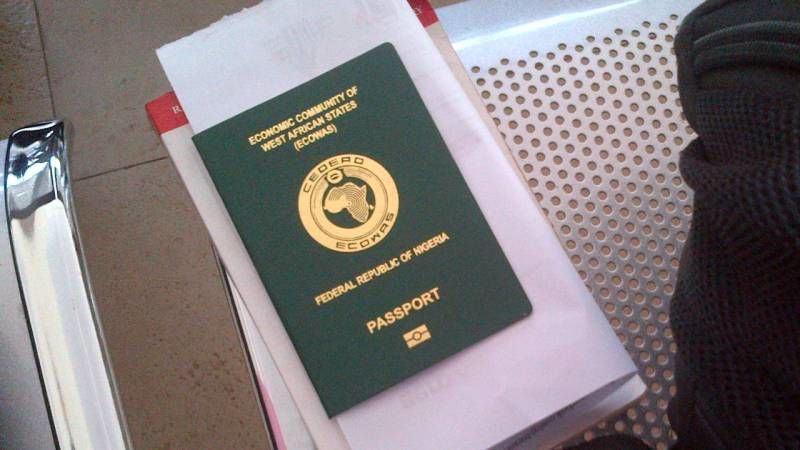
The Federal Government of Nigeria has ordered for the immediate withdrawal and deactivation of Nigerian passports held by individuals who have formally renounced their citizenship.
The NIS is expected to begin compliance checks immediately, deactivating relevant records within its database.
According to a statement signed by the Minister’s media aide, Alao Babatunde, the order applies specifically to those whose renunciation has been approved by the President, in accordance with constitutional provisions.
Tunji-Ojo explained that the move is intended to protect the integrity of Nigeria’s citizenship framework and prevent the misuse of official travel documents.

Context and legal framework
While Nigeria permits dual citizenship for those who are Nigerian by birth, individuals who voluntarily choose to renounce their nationality forfeit all associated rights. This includes access to national identification and sovereign travel documents.
The government emphasised that citizenship is the foundation of a sovereign identity; once relinquished, all attached privileges cease. Although officials did not provide specific figures on how many people have renounced their citizenship, the policy signals a move towards stricter enforcement of nationality laws.
Constitutional basis
The Minister noted that the directive is anchored in Section 29 of the 1999 Constitution of the Federal Republic of Nigeria, which details the process of renunciation. Under this law, any Nigerian of legal age may voluntarily renounce their citizenship through a formal declaration.
The process requires applicants to submit several documents to the Ministry of Interior, including:
A formal application (Form G)
A birth certificate and indigeneship letter
A sworn oath of renunciation
A letter from the country whose citizenship they are acquiring, confirming their eligibility.
A processing fee of N20,000 is required at the time of application, followed by a final payment of N50,000 upon approval.
Once the President registers the declaration, the individual officially ceases to be a Nigerian citizen.
The statement clarified:
“Any citizen of Nigeria of full age who wishes to renounce his Nigerian citizenship shall make a declaration in the prescribed manner for the renunciation”.
“The President shall cause the declaration made under subsection (1) of this section to be registered and upon such registration, the person who made the declaration shall cease to be a citizen of Nigeria.”
Strengthening border control
The Minister added that once a person is no longer a citizen, they are legally barred from carrying any sovereign Nigerian document. Continuing to hold a Nigerian passport in such circumstances is considered a breach of identity regulations.
This directive is part of a broader set of reforms introduced by the Ministry of Interior to enhance identity management and border security.
“We will continue to strengthen systems that secure Nigeria’s borders, prevent identity fraud, preserve the sanctity of Nigerian citizenship, and facilitate legitimate travel,” Tunji-Ojo stated.
-

 Metro9 hours ago
Motorist ‘abducts’ traffic officer in Ondo, takes him to ‘unknown destination’
-
Politics10 hours ago
APC moots N100m presidential, N50m governorship forms
-
Politics9 hours ago
We’ve Taken Over PDP Headquarters – Pro-Wike Faction
-
Politics23 hours ago
No APC guber hopeful has been anointed in Lagos…. but I’ll back eventual pick – Jandor
-
 News10 hours ago
AfDB Approves $200m Loan For Nigeria’s Digital Infrastructure
-
 Metro9 hours ago
I Had Throat Surgery After Al Jazeera Interview – Bwala
-
News10 hours ago
‘Kenyans Earn N170,000 Equivalent As Minimum Wage’ – Atiku Lambasts Tinubu For Comparing Fuel Prices In Nigeria With African Countries
-
News22 hours ago
FULL LIST: Simon Ekpa, Tukur Mamu, IPOB… FG names 48 individuals, groups ‘linked’ to terrorism financing